
Blend straight in the pan
You make your roasted tomato soup in a pan and want to blend it there without transferring it. The Consumentenbond describes blending in the pan as one of the ways to use a stick blender.


If you want to blend the roasted tomatoes straight in the pan and keep washing-up to a minimum, a stick blender suits this approach. For a larger quantity of liquid soup, a jug blender may be a better choice. Always check the instructions for the exact model before blending hot soup, including the permitted temperature, fill limit and lid requirements. A heating function is most useful if you also want the appliance to heat the soup.
You make your roasted tomato soup in a pan and want to blend it there without transferring it. The Consumentenbond describes blending in the pan as one of the ways to use a stick blender.
You want to blend a quantity of liquid soup evenly in a jug, and have space for the appliance and the extra washing-up. Compare the usable capacity with the amount you want to make.
You also want a heating function and need to check whether it suits your method, using tomatoes that have already been roasted. A heating programme is most relevant if you want the appliance to take care of some of the cooking too.
A good fit if: you want to blend the soup straight in the pan.
The trade-off: there’s less transferring, but the result may not be as smooth as with a jug blender, according to the Consumentenbond.
A good fit if: you want to blend a quantity of liquid soup in the jug and a smooth result matters to you.
The trade-off: the jug takes up space and means extra washing-up; check that the exact model is suitable for hot ingredients.
A good fit if: you want to prepare or heat soup in the appliance as well as blend it.
The trade-off: if the soup is already cooked, the heating function may be less useful; also check the usable capacity and cleaning instructions.
The Consumentenbond highlights the difference between blending in the pan and blending soup in a jug. The points below can help you choose an approach that suits the quantity, temperature and amount of cleaning you’re happy with.
| What to consider | What should you check? | Who should weigh this up most? |
|---|---|---|
| Blending hot soup | Check the instructions for the exact model for temperature limits, the fill limit, cooling and how to use the lid. | If I want to blend hot soup in a jug, I want to know what the manufacturer allows for my model. Around 36% of consumers say that handling hot soup safely is their main concern. |
| Blending in the pan | Check the blending foot, speed control and instructions for use with hot soup. | If I don’t want to transfer the soup, blending it in the pan better suits the way I cook. Around 29% of consumers say blending straight in the pan is their main priority. |
| Portion size and smoothness | Compare the usable capacity with your recipe and follow the temperature instructions for the jug. | If I want to blend a larger quantity of liquid soup until smooth, jug capacity matters to me. Around 21% of consumers prioritise portion size and smoothness. |
| Heating function | Check whether the exact model heats, which programmes are available and how to clean it. | If I want the appliance to heat the soup too, I look for a model with a suitable heating programme. Around 14% of consumers say this is their main concern when buying. |
Suitability for hot food varies by model. Hot liquid can create steam and splashes, and a jug not designed for that temperature could be damaged.
Before transferring the soup, check the instructions for the exact model. Let the soup cool if the instructions say to, and follow the guidance on filling and securing the lid.
Tefal lists a 2-litre jug and a usable capacity of 1.5 litres for the PerfectMix+ BL871D. These are not the same thing.
Plan your portion around the usable capacity and also check the model-specific limit for hot ingredients.
If the usable capacity is smaller than you expected, you may need to blend the soup in several batches, which means more washing-up.
The Tefal Perfectmix Cook BL83SD has hot soup programmes; the PerfectMix+ BL871D is a jug blender for hot and cold preparations. They offer different functions.
First decide whether you also want the appliance to heat the soup. If you’re already cooking it in a pan, focus on how it blends and how easy it is to clean.
The ErgoMixx MSM66110 is a stick blender for anyone who wants to blend soup in the pan.
The PerfectMix+ BL871D is a jug blender, while the Perfectmix Cook BL83SD also has heated soup programmes, according to Tefal.
The MultiQuick 7 MQ7025X is a stick blender supplied with accessories.
The SoupMaker HR2203/80 is a separate category, with programmes for making soup.
KitchenAid provides instructions for blending hot liquids in the models it covers.
The products below include a jug blender for hot preparations and stick blenders for blending. Check the temperature and usage limits for each model.
 No image available
Suited to blending soup in a jug; the product description lists a heat-resistant glass jug for hot and cold preparations.
1.5 litres usable capacity; 1200 W; touchscreen; pulse function; automatic cleaning.
 No image available
Suited to blending with a detachable stainless steel blending foot; the product description specifies a heat-resistant container and small portions for hot ingredients.
The set includes a chopper and whisk. Follow the guidance on the container you use and portion size.
 No image available
Suited to blending soup with a stick blender; the product description says not to use it with boiling liquids.
25 speeds; turbo function; splash control system.
 No image available
Suited to blending soup with a stick blender; the product description warns against blending boiling liquids.
Variable speed control; stainless steel blending foot. The product description recommends using it continuously for no more than 1 minute, then letting it rest for 1 minute.
 No image available
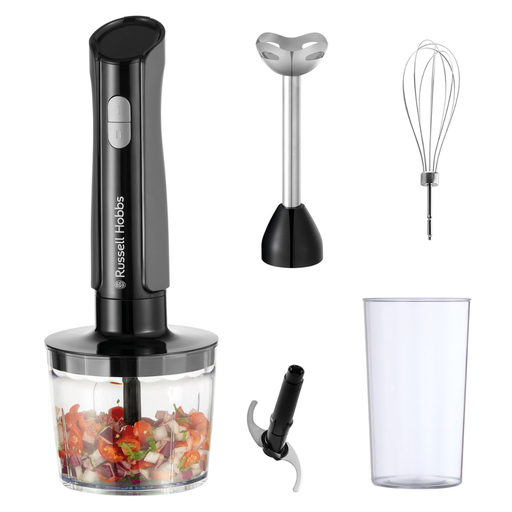
Suited to blending with a stick blender once the liquid has cooled to below 80 °C, as stated in the product description.
Two speeds; beaker included; the product description says the detachable parts are dishwasher-safe.
No. Check the instructions for the exact model. The Consumentenbond highlights a heat-resistant jug as something to look for when making soup; Philips advises against using hot ingredients in the models covered by its instructions.
Follow the filling and lid instructions for your own model. For the blenders covered in its guidance, KitchenAid recommends using a vented measuring cap, starting on a low speed and, where possible, letting hot ingredients cool first. This isn’t general guidance for all blenders.
Not if you only want to blend soup that’s already cooked. A heating programme is most useful if you also want the appliance to heat the soup; check that the exact model has this function and that its capacity suits your portion.
Electrical kitchen appliances offered for sale in the Netherlands must meet the applicable EU safety requirements and carry the required CE marking. EUR-Lex explains this CE marking requirement; check the marking and product information for the specific appliance.
The Voedingscentrum advises covering leftovers and putting them in the fridge to cool within 2 hours of cooking. Use a clean, suitable food storage container.