
Cook who wants to blend in the pan
You want to blend cooked peppers and stock straight in the soup pan, without having to wash up an extra blender jug. The Dutch Consumers' Association describes blending in the pan as a handy way to make soup.


If you want to blend cooked peppers and stock straight in the pan, a hand blender is a practical choice. The Dutch Consumers' Association points out that blending in the pan usually means less washing-up, but the texture may be less smooth. For several portions with a consistent texture, a blender jug is a good option, provided it is suitable for the temperature of the soup. A soup maker is worth considering if you want to heat and blend in one appliance; always check the instructions and usable capacity of the exact model.
You want to blend cooked peppers and stock straight in the soup pan, without having to wash up an extra blender jug. The Dutch Consumers' Association describes blending in the pan as a handy way to make soup.
You want to make soup for several people, so you’re considering the usable jug capacity, the texture you want and whether the appliance is suitable for hot ingredients. The Dutch Consumers' Association highlights heat-resistant jugs as something to consider when making soup.
You want to use a heating programme as well as blending, and check that the capacity suits the amount you usually make. The Dutch Consumers' Association notes that some blenders can heat and blend soup.
A good fit if: you want to blend cooked peppers and stock straight in the pan, especially for a smaller amount. The Dutch Consumers' Association describes blending directly in the pan as handy.
The trade-off: according to the Dutch Consumers' Association, the texture may be less smooth than when blending in a jug; start slowly to reduce splashing.
A good fit if: you want to blend several portions and a consistent texture matters to you. The Dutch Consumers' Association highlights a heat-resistant jug as something to consider when making soup.
The trade-off: you’ll need to transfer the soup to the jug and clean it afterwards; the permitted temperature varies by model.
A good fit if: you make soup regularly and want to combine heating and blending in one appliance. Tefal and Philips describe specific models with hot soup programmes.
The trade-off: check the programme and portion capacity; you’ll still need to roast the peppers first when making roasted pepper soup.
| What to consider | What to check before buying | Who should consider this most? |
|---|---|---|
| Blending in the pan | Check that the blender foot and controls are suitable for your pan, and find out how the parts should be cleaned. | If I want to blend cooked peppers and stock straight in the pan without washing up an extra jug, I’ll focus on the blender foot and controls. Around 40% of consumers prioritise blending in the pan and minimising washing-up. |
| Texture and portions | Compare the usable capacity, not just the jug’s total capacity, and check how the jug and blades should be cleaned. | If I want to make smooth soup for several lunch guests, I’ll compare the usable capacity with the amount I want to blend at a time. Around 30% of consumers prioritise a consistent texture and sufficient capacity. |
| Hot ingredients | Read the temperature limit and instructions for the exact model before transferring hot soup. | If I want to blend the soup while it’s hot, I need to know that the jug or blender foot is suitable for this. Around 20% of consumers prioritise suitability for hot ingredients. |
| Heating and blending | Check whether the model really has a heated soup programme and how much soup you can make at a time. | If I make soup regularly, I want to be able to combine heating and blending in one appliance. Around 10% of consumers prioritise an integrated heating programme. |
Some blenders can purée soup, but only certain models also have a heating programme.
Look for an actual heating programme in the specifications for the exact model. Without one, you may still need to cook the soup separately or use a pan.
Total capacity and usable capacity can differ, and the permitted temperature depends on the model.
Compare the usable capacity and read the instructions before transferring hot soup. The below-60 °C limit stated by Philips applies only to the models listed on the relevant support page.
ACM ConsuWijzer explains that your statutory guarantee applies alongside a manufacturer’s or retailer’s guarantee, and that the retailer remains responsible.
Check what any additional guarantee covers, without confusing it with your statutory rights.
MultiQuick hand blenders are an option if you want to blend cooked ingredients straight in the pan.
The VitaPower MMB6172S is a blender-jug option if you want to blend soup for several portions.
The Perfectmix+ BL811D38 and Perfectmix Cook BL83SD30 are different models with different features.
The Viva SoupMaker HR2203/80 is an example of a soup maker with soup programmes.
This selection focuses mainly on blending with a hand blender, with a Tefal blender jug also included for hot preparations. Check whether each model also heats, and read its temperature limits and instructions for use.
 No image available
According to the product information, the detachable hand blender is designed for soup; use a heat-resistant bowl and small portions with hot ingredients.
The set includes a stainless-steel blender foot, turbo function and 700 ml measuring beaker. The beaker is not confirmed as heat-resistant.
 No image available
This jug blender is a good fit if you want to blend hot preparations; check the model instructions before adding hot soup.
The product information lists a 2-litre heat-resistant glass jug with a usable capacity of 1.5 litres, a pulse button and 1200 W.
 No image available
According to the product information, this hand blender is designed for soups and sauces; the 700 ml measuring beaker is suited to smaller quantities.
The set includes a stainless-steel blender foot, stepless speed control, up to 1200 W, 15,000 rpm, a 500 ml chopper and a whisk. Use the blender for no more than one minute at a time, then let it rest for one minute.
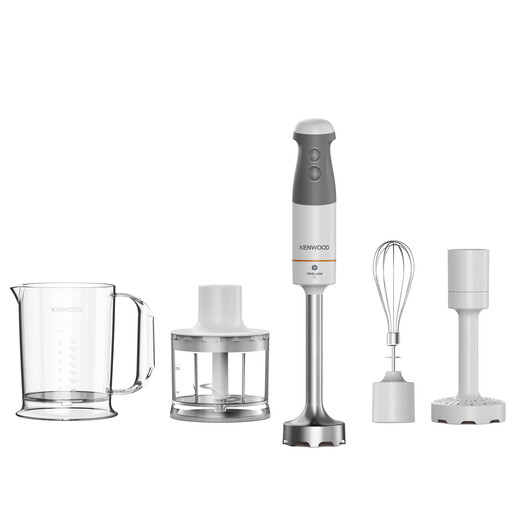 No image available
This hand blender is designed for blending with a blender foot; check which accessories are included with the version you choose.
The product information lists 850 W, a blender foot, a blender mixing attachment and a measuring beaker.
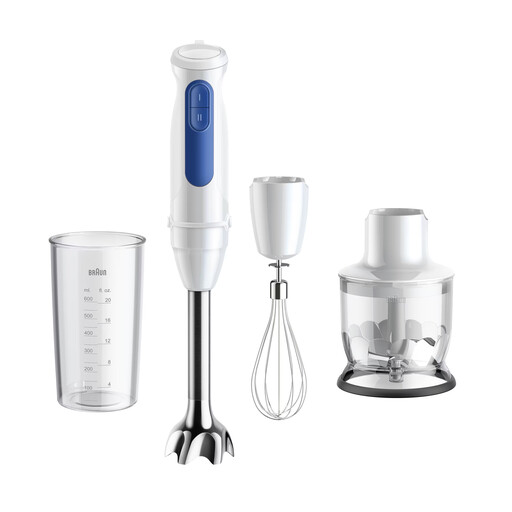 No image available
The blender foot and multiple speeds are designed for mixing and blending; according to the product instructions, don’t use it with boiling liquids.
The product information lists 25 speeds, a turbo function and PowerBell VPlus.
No, don’t assume every jug is suitable. Follow the instructions for the exact model; Philips asks users to let ingredients cool to below 60 °C for the three models listed on the relevant support page. That limit doesn’t automatically apply to other models.
Yes, blend the peppers once they’re soft enough, and add liquid if needed. The Dutch Consumers' Association recommends this to help make a smooth mixture; follow the recipe and your appliance’s instructions for the rest of the preparation.
Voedingscentrum advises not leaving leftovers out of the fridge for more than 2 hours. Cool the soup quickly, cover and refrigerate leftovers, and use them within 2 days; freeze them if you want to keep them for longer.
No. ACM ConsuWijzer explains that your statutory guarantee applies alongside a manufacturer’s or retailer’s guarantee. If a product that has been used normally breaks sooner than you could reasonably expect, the retailer is responsible for an appropriate solution; there isn’t one fixed statutory guarantee period for all blenders.
No. Electrical products covered by the relevant EU rules must carry the required CE marking. The European Commission explains that CE marking does not mean a product has been approved by the EU or another authority.