
Cooking one joint
If you want to keep track of the resting time while setting the table, a timer that counts up and down may be all you need. HEMA describes this use for model 80841225.


If you only need to time the resting period for one joint, a simple countdown timer is enough, as long as its maximum duration suits your recipe. Choose a dual timer if you want to time side dishes separately. If you also want to check how well the meat is cooked, you’ll need a thermometer with a probe, because an alarm doesn’t measure temperature.
If you want to keep track of the resting time while setting the table, a timer that counts up and down may be all you need. HEMA describes this use for model 80841225.
If you’re keeping an eye on the joint and side dishes at the same time, separate timers make it easier to keep track of each cooking time. TFA Dostmann describes two simultaneous timers for model 38.2025.
If you want to check the joint’s temperature as well as keep track of the time, look for a timer with a temperature probe. IKEA describes the FANTAST as a meat thermometer with a timer.
First, decide whether you need one timer, several timers running at once or temperature monitoring. HEMA describes a single kitchen timer, TFA Dostmann offers two simultaneous timers, and IKEA describes the FANTAST as a thermometer with a timer.
| What to consider | What to look for | Who is this most important for? |
|---|---|---|
| One resting period | Check that the timer can count down and that its maximum duration suits your recipe. The HEMA 80841225 counts down from up to 99 minutes and 59 seconds. | I mainly want to know when my joint has finished resting, without timing several dishes separately. Around 36% of consumers say keeping track of one resting period is their top priority. |
| Several dishes | Check how many timers can run at once and whether the signal makes it clear which one has finished. The TFA Dostmann 38.2025 has two simultaneous timers. | I’m cooking the joint and side dishes at the same time and want to time them separately. Around 29% of consumers say timing several dishes at once is their top priority. |
| Measuring temperature | Check whether the product has a temperature probe; a standard timer only measures time. IKEA lists a maximum measuring temperature of 250 °C for the FANTAST. | I want to check the meat’s temperature as well as the time, rather than just wait for an alarm. Around 21% of consumers say checking how well the meat is cooked is their top priority. |
| Display or alert | Decide where you’ll place the timer, then check how the chosen model can be attached, how easy it is to see and what alarm options it offers. | If I can’t keep looking at the timer while I’m cooking, I want a signal or display that will catch my attention. Around 14% of consumers say visibility, placement or the alarm is their top priority. |
A timer keeps track of time, but it doesn’t check the meat’s temperature. In its guidance on cooking food thoroughly, the Voedingscentrum distinguishes between different types of meat and cooking methods.
Before you buy, decide whether you only want to time the resting period or also measure the temperature. For the latter, choose a product with a temperature probe.
A clock with timer and stopwatch functions isn’t automatically suitable for two countdowns running at the same time. TFA Dostmann specifically lists two simultaneous timers for the 38.2025.
Check how many independent timers it has if you want to time the joint and side dishes at the same time.
The HEMA, IKEA and TFA models mentioned are supplied without batteries.
Check the type and number of batteries your chosen model needs, and test the display and alarm before your meal.
HEMA describes model 80841225 as a digital, magnetic kitchen timer for timing one thing at a time.
The IKEA models mentioned offer different features: the LJUNGPIPARE combines a clock with a timer and stopwatch, while the FANTAST is a meat thermometer with a timer.
The 38.2025 digital dual timer is designed to time two things at once.
These products are designed to help you time a roast, with temperature monitoring available on some models.
 No image available
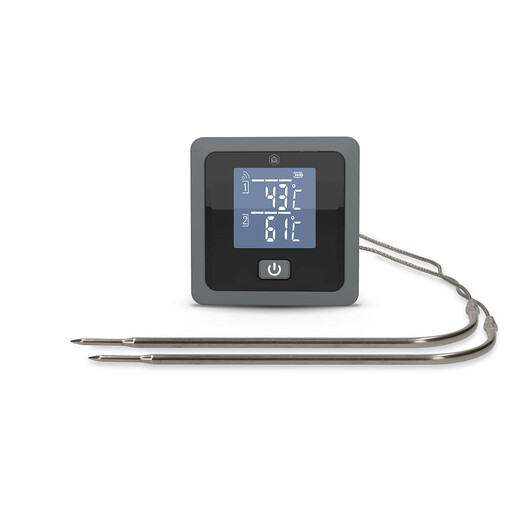
For anyone who wants to monitor the time and temperature of a roast while it cooks.
Bluetooth®, timer, LCD display, two probes, 1.20 m cable and probe clips. Two AAA batteries aren’t included; don’t touch hot probes during or immediately after use.
 No image available
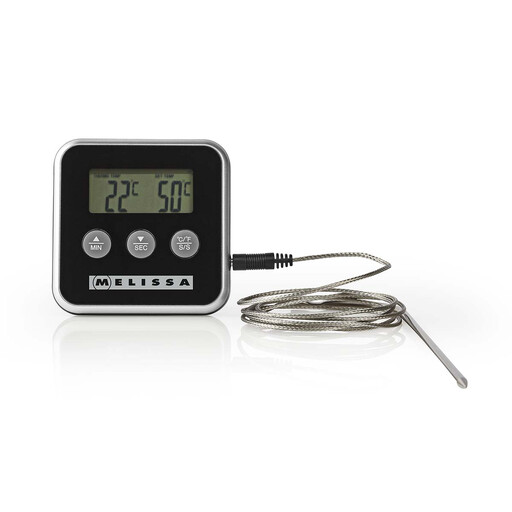
For anyone who wants to combine a timer with temperature monitoring while cooking a roast.
Measures temperatures up to 250 °C and has an LCD display. It needs one AAA battery, which isn’t included. Don’t touch the hot probe during or immediately after use.
 No image available
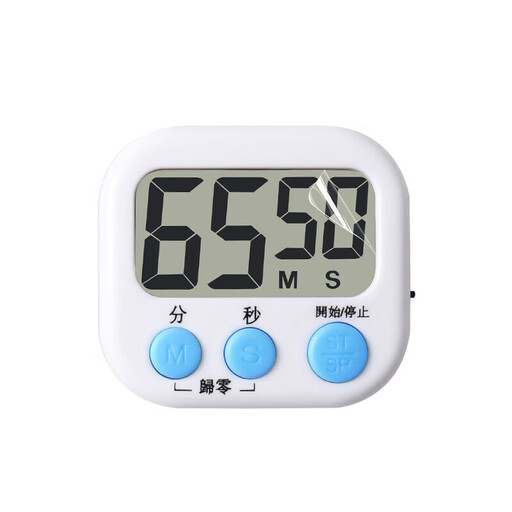
For anyone looking for a digital timer with an alarm to help prepare a meal.
Digital model with an alarm reminder.
No. A standard kitchen timer measures time, not temperature. Use a suitable thermometer if you want to check the temperature. For processed meat, such as mince and sausages, the Voedingscentrum advises checking that it is thoroughly cooked.
Don’t treat the timer alarm as proof that food can be left out of the fridge indefinitely. The Voedingscentrum advises storing leftovers covered, cooled and separately from raw products in the fridge within two hours of cooking, preferably at 4 °C.
It depends on the model: the HEMA 80841225 uses one AAA/LR03 battery, while the TFA 38.2025 uses two AAA batteries. Follow the instructions for fitting them. According to the Rijksoverheid, flat batteries shouldn’t go in the bin; you can take them to a shop or supermarket that sells batteries, for example.
In the Netherlands, you have legal rights in addition to any retailer’s or manufacturer’s guarantee. ACM ConsuWijzer explains that, subject to the applicable conditions, the seller must put right a product that doesn’t meet what you could reasonably expect. There isn’t one fixed guarantee period that applies to every purchase.
The NVWA sets out the requirements for people who sell food to consumers from home; repeated sales require a food safety plan. This doesn’t automatically mean the same business rules apply to a private, non-commercial community meal. If you’re selling food or catering, first establish what kind of activity you’re organising. A kitchen timer doesn’t replace food safety checks.