
Ristretto drinker with limited worktop space
Wants to set a short coffee volume and has very little room for a machine. Philips says the L’OR Barista system offers ristretto and an adjustable volume from 25 ml.


Start by deciding whether you want to make a short coffee with minimal effort or have more control over how it’s prepared. A pod machine can be convenient if simplicity is your priority; a portafilter machine may suit you better if you want to control the preparation and have enough worktop space. Measure the space needed to operate and maintain the machine, and factor in the capsule system and ongoing coffee costs.
Wants to set a short coffee volume and has very little room for a machine. Philips says the L’OR Barista system offers ristretto and an adjustable volume from 25 ml.
Wants to keep preparation to a minimum and is happy with a capsule system, provided the capsules are compatible with the machine. The Consumers’ Association (Consumentenbond) points out that different capsule systems are not necessarily interchangeable.
Wants more control over the coffee and how it’s made, but also needs room for the machine and the steps involved. De’Longhi and Sage describe compact portafilter machines with components and settings for manual preparation.
Suitable if: you want to make a short coffee with minimal effort; check whether the model you choose offers a ristretto volume or lets you programme one.
Consider: you’re tied to a capsule system, and the Consumers’ Association says capsules cost more than loose coffee.
Suitable if: you want to prepare the coffee and short shot yourself, and have room to use the portafilter on your worktop.
Consider: there are more preparation and cleaning steps than with a pod machine.
Suitable if: you make coffee often and value using beans with minimal effort more than having the smallest possible machine.
Consider: check whether the specific model lets you set a short enough volume and whether it will fit.
| What to consider | What should you check? | Who is this important for? |
|---|---|---|
| Short volume | Check the smallest volume setting, the default buttons and whether a custom setting is saved. | I want to make a short ristretto without having to adjust it every time; for consumers who prioritise volume, this is the main consideration, at around 25%. |
| Space and operation | Measure the width, depth and height, and check that you can access the reservoir, capsule hatch or portafilter where you plan to put it. | I have limited worktop space and want to fill and use the machine without moving everything around; for consumers who first consider the space available, this matters to around 25%. |
| Fewer steps | Compare the daily filling, emptying and cleaning, as well as the steps needed to make one short cup. | I want to make one cup quickly and handle as few parts as possible; for consumers mainly looking for a simple routine, this is the main concern for around 20%. |
| Control over preparation | Check which coffee is suitable, what volumes you can set and which accessories you need to prepare it. | I want more control over the coffee and when the preparation stops; for consumers who prioritise control over preparation, this is the deciding factor for around 15%. |
| Costs and maintenance | Compare the coffee you want to use and follow the maintenance instructions for the exact model. | I want to know what regular use means for my choice of coffee; for consumers who consider running costs first, this is the main priority for around 15%. |
A narrow machine may be deep or need extra room to operate. You’ll also need to be able to reach the portafilter or reservoir where you plan to put it.
Measure the available width, depth and height, and think about where you’ll fill and prepare the machine.
The choice depends mainly on whether you can make a useful short volume and how you prepare the coffee; pump pressure alone is not an independent assessment of flavour.
Check the volume settings and the type of coffee suitable for the exact model.
The Consumers’ Association says that capsules for Nespresso Original, Vertuo and Dolce Gusto are not interchangeable. Capsules also cost more than loose coffee.
Check which capsule system the machine uses and compare the cost with the coffee you actually want to make.
A manufacturer’s guarantee does not automatically replace your rights if a product does not work as you would reasonably expect under normal use.
Keep your proof of purchase and contact the retailer if there’s a fault. ACM ConsuWijzer explains statutory consumer rights in the Netherlands.
The L’OR Barista system is worth considering if you’re looking for a pod machine with an adjustable volume.
The Essenza Mini is a narrow Original pod machine for anyone who values a small width and simple operation.
The Dedica Style EC685.BK EX:4 is a narrow manual machine for anyone who wants to use ground coffee.
The Bambino SES450BSS4EEU1 is a portafilter machine for anyone who values manual preparation and shot-volume settings.
This selection includes portable and manual machines, pod machines and a model with a built-in grinder. For each product, check how it handles a short volume and how much space you’ll need to prepare the coffee.
 No image available
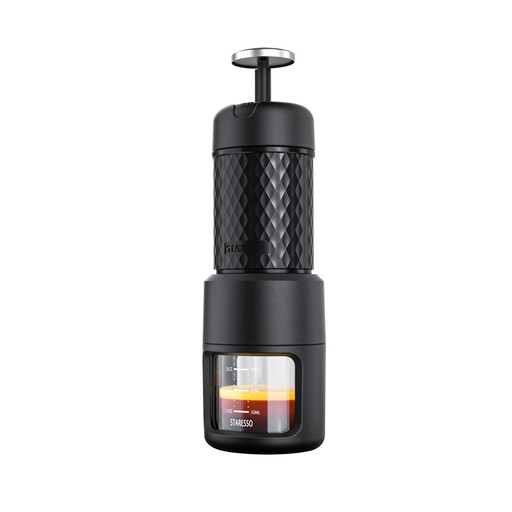
Suitable if you have little permanent worktop space and want to prepare a short coffee yourself.
Markers for 30, 60 and 90 ml; suitable for capsules or ground coffee; 304 stainless steel interior. You add hot water yourself, build up the pressure manually and take the parts apart after use for cleaning.
 No image available
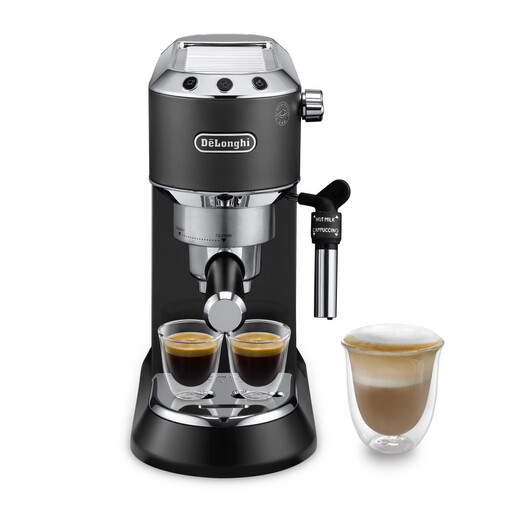
Suited to anyone who wants to prepare their own coffee and adjust the volume, with space for the steps involved in using a portafilter machine.
The product information lists it as 14,90 cm wide and 34 cm deep, and specifies ground coffee and a steam wand. According to the product information, a separate DLSC402 filter is needed for E.S.E. pods.
 No image available
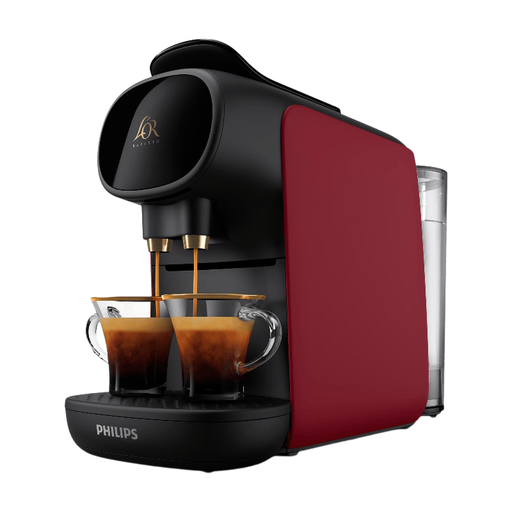
An option if you want the convenience of a pod machine and the ability to set a ristretto volume.
The product information lists a ristretto option, adjustable coffee volume and the ability to prepare two cups at once. The stated dimensions are 15,7 × 40,2 × 27,6 cm; the machine is designed for capsules.
 No image available
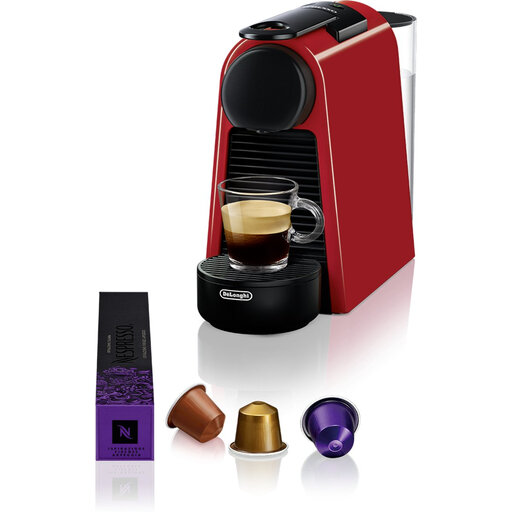
Suited to anyone looking for a narrow pod machine and willing to programme a button for a shorter volume.
The product information lists two programmable buttons, default volumes of 40 ml for espresso and 110 ml for lungo, and a width of 11 cm. The machine uses Nespresso Original capsules, which are not necessarily interchangeable with other systems.
 No image available
An option if a built-in grinder is important to you, but check carefully whether the espresso options listed suit the short volume you want.
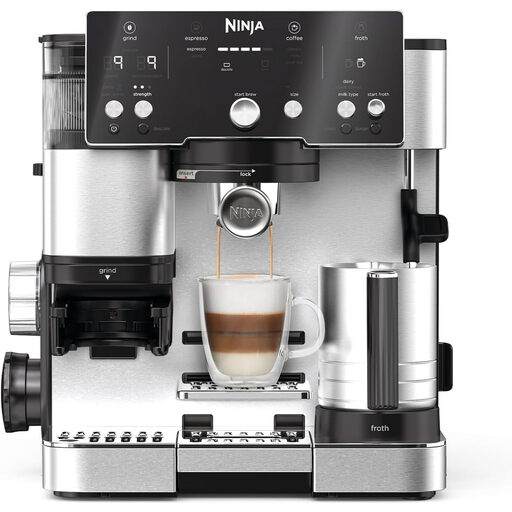
The product information lists a grinder with 25 settings and dimensions of 33,5 × 34,2 × 37 cm. For espresso, it lists Double and Quad options; no adjustable water volume is specified.
No. An espresso button does not automatically mean the machine has a separate ristretto setting. The Nespresso Essenza Mini we looked at has default volumes of 40 ml for espresso and 110 ml for lungo; Nespresso explains how to programme a button for a different volume. Philips says the L’OR Barista system offers ristretto and an adjustable volume from 25 ml. Check the exact model you’re buying.
Measure the machine itself, but also check that you can access the reservoir, capsule hatch or portafilter where you plan to put it. Follow the instructions for the specific model when descaling; De’Longhi links descaling the Dedica to its indicator light and the set water hardness.
Not necessarily. According to the Consumers’ Association, pod machines generally cost less to buy, but capsules cost more than loose coffee. Compare the machine and coffee costs over the same period, based on how often you make coffee.
If a fault occurs during normal use, contact the retailer. According to ACM ConsuWijzer, statutory consumer rights in the Netherlands depend on what you could reasonably expect from the product; there is no fixed two-year time limit that applies in every case.
Yes, CE marking is compulsory for electrical products. The Netherlands Food and Consumer Product Safety Authority distinguishes between the required marking and product testing, which is not generally compulsory for this product group. CE marking alone is not an independent safety test of the individual appliance.