
Maker with a small work surface
You film paper-cutting with your phone and want to keep your lighting and recording equipment compact. Above all, check that the holder can position the camera over your work.


Start with a steady camera set-up directly above the paper, then take a test shot to check that the cutting lines remain visible without distracting hand shadows or reflections. An adjustable ring light could suit a small work surface; if you want to position the light independently of the camera, compare it with a separate LED panel too. Before buying, check the mounting options, what’s included and the applicable CE requirements for both the light and the supplied power adapter.
You film paper-cutting with your phone and want to keep your lighting and recording equipment compact. Above all, check that the holder can position the camera over your work.
You want viewers to be able to follow your hands, the paper and the cut edges at the same time. Check the light position and shadows with a test shot.
You use different paper colours against a white background and want to adjust the colour temperature and white balance. A CRI rating alone doesn’t guarantee how colours will look in the final recording.
First, decide whether you can position the camera steadily above your work surface. Then position the light so that moving hands don’t obscure the cutting lines.
| What to consider | What should you check? | Who is this important for? |
|---|---|---|
| Visible cutting lines | Take a test shot with your hands moving; try adjusting the direction of the light or using fill light. | If my hands and scissors are in shot while I’m cutting, I want the cut edges to remain visible. Around 33% of consumers say visible cutting lines are their top purchase priority. |
| Steady overhead view | Check the reach, tilt angle and mounting options of the exact set; allow enough room for your hands and scissors. | For a directly overhead shot, I want the camera to stay above the paper without blocking my workspace. Around 33% of consumers give a steady overhead view top priority. |
| Paper colours and white balance | Check the adjustable colour temperature and use test shots under your chosen lighting to adjust the camera’s white balance. | If I film coloured paper against a white background, I want to check how the colours look on camera. Around 25% of consumers prioritise accurate reproduction of paper colours. |
| Set and power supply | Read the parts list for the version you’ve chosen and check that the power supply suits your set-up. | When I’m putting together my first filming set-up, I want to know what mounting equipment and power supply I’ll need. Around 9% of consumers give an easy-to-use set top priority. |
A holder secures your phone, but it doesn’t automatically mean the camera can reach the centre of your work surface. Versions may also differ in the parts included and their adjustment range.
Before choosing a version, compare its parts list and reach with your workspace.
For a set-up with greater reach, you may need a separate arm, clamp or suitable tripod.
The direction of the light affects shadows, while the camera’s white balance affects how white paper and coloured sheets appear in the recording.
Take a test shot with your hands moving and check both white and coloured paper.
The angle of the light and the position of your hands still determine whether shadows or reflections obscure the cutting action.
Move the light and, if needed, try adding fill light from another side.
NEEWER offers, among other products, a compact RH8B desk light and the larger RL-18 kit. Compare the set-up and what’s included to see what suits your workspace.
The LR150 is a ring light for which you’ll need to assess the positioning of the light and phone holder separately.
The Key Light Air is an LED panel and an alternative if you want to position the light separately from the camera.
Ulanzi lists ring lights for uses including video and recommends checking camera compatibility, dimming options and positioning.
These ring lights are options to consider for filming paper-cutting lessons. Check whether the mounting options and direction of the light suit your overhead view and workspace for each version.
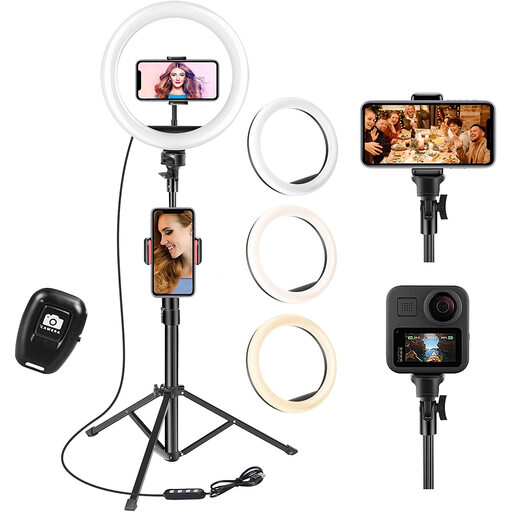 No image available
An option if you’re looking for a ring light with a tripod and adjustable lighting modes; check that the set-up allows you to achieve the camera angle you want.
According to the product name: remote control, 3 light colours and 10 brightness levels.
Before buying, check the applicable CE marking and conformity of both the light and the supplied power adapter.
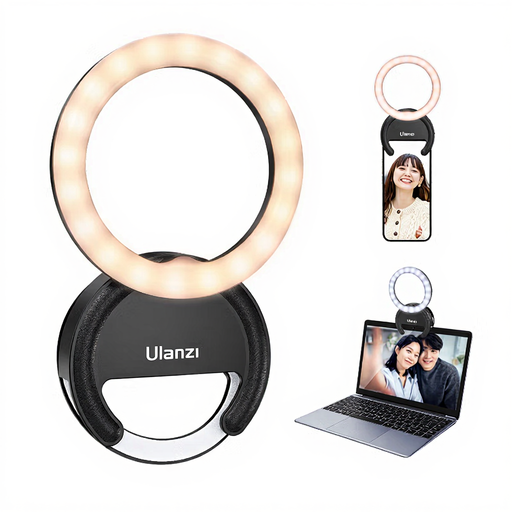 No image available
A compact option if you’re looking for a ring light for smartphone videos; use a test shot to check that the light angle suits your work surface.
According to the product name: 3 colour temperatures from 3000 K to 7000 K and 5 brightness levels.
Before buying, check the applicable CE marking and conformity of both the light and the supplied power adapter.
Not always: the holder secures your phone, but its reach and tilt angle determine whether the camera can sit above the paper without getting in the way of your hands. Check the set-up and what’s included with the exact version.
Check your camera’s white balance under the lighting you’re using to film. An adjustable colour temperature lets you fine-tune the lighting, but it doesn’t replace checking your camera settings.
Yes. The Netherlands Food and Consumer Product Safety Authority states that CE marking is mandatory for electrical products. A CE marking is the manufacturer’s declaration that the product meets the applicable requirements; it isn’t automatically proof of an independent assessment. Check the specific light and supplied power adapter.
When a Dutch consumer buys a product, it must be of satisfactory quality, and the seller is the point of contact for a solution. According to the Dutch government, there’s no fixed statutory two-year guarantee period for all products; what you’re entitled to expect depends, among other things, on the product and the information provided.
Don’t put electrical equipment in unsorted waste. According to the European Union, the crossed-out wheeled bin symbol indicates that it should be collected separately.