
Builder with a fixed overhead setup
You film building steps at one table and want to keep your hands and small parts clearly in shot. The position of the light, camera and stand therefore needs to suit your work surface.


A dimmable ring light can work well for a fixed shot of a small work surface when even, front-facing light matters more than strong shadows. For glossy parts, visible texture or hands that move across the work surface frequently, it’s worth comparing directional, diffused light or a ring light with a separate fill light. Take a test shot with your own camera and materials, and check the mounting, colour rendering and any visible light bands.
You film building steps at one table and want to keep your hands and small parts clearly in shot. The position of the light, camera and stand therefore needs to suit your work surface.
You want to control reflections and show relief or paintwork details. Compare front-facing ring light with directional, diffused light on the materials you actually film.
You discuss paint colours or differences between materials and want to keep your lighting consistent while filming. A test shot can help you judge how the colours appear on screen.
Works well when: you’re filming a small work surface and want even, front-facing light.
Consider: check for reflections on glossy paint or parts; front-facing light can make texture less pronounced.
Works well when: you want to angle the light onto your build area or avoid reflections from a ring light.
Consider: side lighting makes shadows more visible; Canon Europe describes using weaker fill light as a way to reduce shadows.
Works well when: you want to combine basic front-facing light with separate control over shadows and reflections.
Consider: you’ll need to position and adjust more lights, and make sure different colour temperatures don’t unintentionally mix.
| Factor | What to look for | Who is this most relevant to? |
|---|---|---|
| Work surface and mounting | Check the working distance, ring opening, stand position and whether the mount fits your camera or phone. | If I’m filming my hands and parts from the same tabletop setup each time, I want the camera and light to fit properly above the work surface. Around 31% of consumers put mounting and work surface first. |
| Reflections and details | Film your own materials and check for glare, shadows from your hands and clearly visible edges. | With glossy paint or small raised details, I want to be able to adjust how the light falls on the surface. Around 31% of consumers prioritise controlling reflections and keeping details visible. |
| Colour rendering | Compare the stated CRI and colour temperature for the exact version, and check the colours on screen too. | When I’m explaining paint or material colours, I want to keep my lighting and recording as consistent as possible. Around 25% of consumers prioritise colour consistency. |
| Flicker and power | Test the light with your camera and recording settings; check the power supply, stand and accessories included with the set you’ve chosen. | For a longer tutorial, I want a setup that works with my camera and has the power supply and mounting I need. Around 13% of consumers prioritise a complete setup and footage without visible light bands. |
Brightness alone doesn’t tell you how paint colours will look, and it won’t fix poor lighting direction.
Compare the stated colour rendering for the exact version, and take a test shot with your own materials and camera.
Front and side lighting reveal shadows and shape differently. Nikon explains how light and shadow affect the visibility of texture and depth.
For glossy or highly textured miniatures, compare a ring light with diffused light positioned at an angle.
Mounts, stands and accessories can vary between versions. If a required mount, adapter or power supply isn’t compatible with your chosen set or isn’t included, you may need an extra accessory.
Before buying, check exactly what’s included, as well as the mounting, connection and power supply for that version.
The LR120 and LR150 ranges comprise ring lights. The LR150 manual covers features including dimming, adjustable colour temperature and a phone holder.
The RL-18 and SRP18-2.4G are separate ring light versions with stands, making them relevant if mounting and working height are important.
SmallRig offers compact, directional LED video lights as an alternative or addition to a ring light. The P96 is one example for limited space.
The U200 is a portable, ring-shaped video light that lets you mount a phone or camera in the opening.
The Ring Light is an example of a ring light with a desk clamp and camera mount, but the manufacturer lists this model as discontinued.
This selection includes ring lights for a fixed smartphone or camera setup, as well as a separate LED video light with adjustable colour temperature.
 No image available
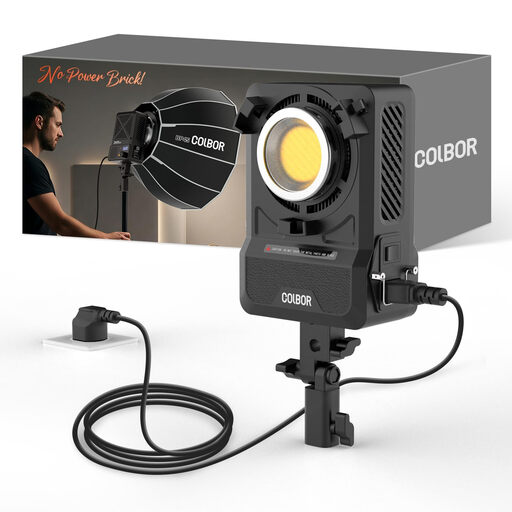
Could suit you if you want to adjust the colour temperature while filming; check that this light and your chosen setup suit your work surface.
The product description lists a built-in power supply, bi-colour 2700K–7000K, a Bowens mount, and CRI and TLCI 96+.
 No image available
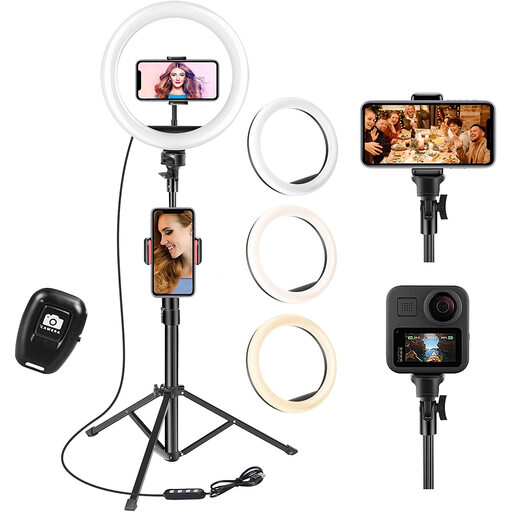
Could suit a fixed smartphone setup; check that the included holder and tripod can accommodate your camera and work surface.
The product title lists a 10-inch ring and a 63-inch tripod. The product description mentions a phone holder, remote control and three colour temperatures.
The product description also lists an adjustable tripod height of 44 cm to 156 cm and ten brightness levels.
 No image available
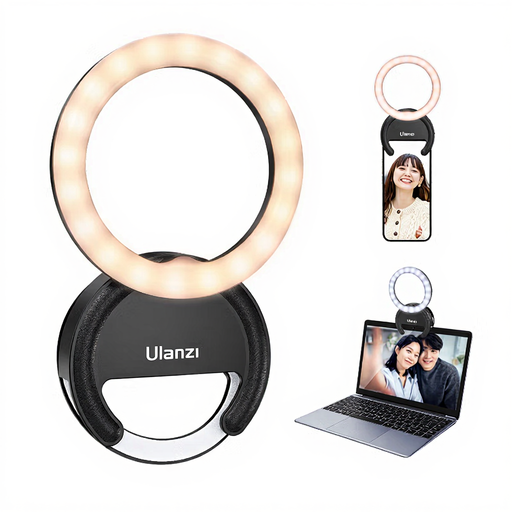
Could suit you if your smartphone is the camera; the product description says the light clips directly onto the phone.
The product title lists 3000K–7000K, three colour temperatures and five brightness levels.
Take a test shot with all the lights on and adjust the shutter speed if needed. Sony gives 1/50 or 1/100 second as possible settings for regions with 50 Hz mains frequency; results vary depending on the camera and light source.
Make sure the tripod is stable and check that the holder fits your camera or phone. The Godox LR150 manual says to keep the light dry and have repairs carried out by an authorised service centre. For other models, follow their own manuals.
No, you don’t need to buy extra cover to have statutory protection. According to the Dutch government, a product must be fit for purpose and you can contact the seller if something is wrong; there isn’t a fixed statutory two-year guarantee for every product. Extra cover is only worthwhile if the terms genuinely offer something more.
In many cases, you have 14 days to change your mind when buying online from a business. The Dutch government lists some exceptions, so check the seller and the terms of the specific purchase.
CE marking is relevant if the specific version falls under EU rules that require it. EUR-Lex describes the Low Voltage Directive as covering 50 to 1,000 V AC; a light may also be covered by other applicable rules. According to the European Commission, CE marking isn’t a general quality statement, but a mark for products where relevant EU rules require it.