
Teacher with a white studio background
Wants to show both themselves and the white background clearly on camera. Canon Europe describes background lighting as a separate lighting task in high-key photography.


If you mainly film yourself facing the camera, a dimmable ring light with a suitable camera or phone mount could be a simple option. A ring light alone won’t automatically give you an evenly white background; you may need separate background lighting for that. For colour demonstrations and changing camera angles, it’s also important to consider how adjustable the light is, the white balance and your placement options.
Wants to show both themselves and the white background clearly on camera. Canon Europe describes background lighting as a separate lighting task in high-key photography.
Mostly films one person in a fixed spot and wants a simple, dimmable setup with a suitable camera or phone mount. Benel Europe describes a ring light as suitable for direct-to-camera filming, among other uses.
Shows photographs or coloured subjects and wants to match the light colour to the camera’s white balance. Canon Europe explains that the colour temperature of the light affects the white balance setting.
Choose this if: you mainly film one teacher in a fixed spot, facing the camera.
Bear in mind: the light won’t automatically illuminate the background evenly in white.
Choose this if: a consistently white background is important and you have room for a second light source.
Bear in mind: you’ll need to position and adjust both light sources. Canon’s high-key example uses flash for photography; for video, take only the principle of lighting the subject and background separately.
Choose this if: you change location or camera angle during your lesson.
Bear in mind: check that the version you choose includes the mount or stand you need, and that its power supply suits your filming setup.
| Consideration | What should you check? | Who is this important for? |
|---|---|---|
| White background | Decide whether you only want to light yourself or can also position a separate light for the background. | If I want to keep the background evenly white, I want to be able to assess the lighting on the teacher and the background separately. Around 36% of consumers make background lighting their top priority. |
| Fixed, front-facing shot | Check whether the light, power supply, stand or clamp, and mount for your camera or phone are included with the version you’ve chosen. | If I teach from a fixed spot, I want to be able to set up the light securely and attach my recording device appropriately. Around 29% of consumers prioritise simple, front-facing lighting for a teacher. |
| Colour reproduction | Check whether you can adjust the light colour continuously, select from preset settings or use interchangeable filters. Then take a test shot and assess the white balance. | If I demonstrate photographs or coloured subjects, I want to be able to spot any colour cast and adjust the light settings accordingly. Around 21% of consumers make colour control their top priority. |
| Portable setup | Check which mounts or stands are included and whether the power supply suits the place where you’ll be filming. | If I move between locations or camera angles, I want to be able to move my lighting setup easily. Around 14% of consumers cite mobile filming as their main reason for buying. |
The teacher and the background are separate lighting tasks. A ring light that illuminates your face won’t automatically make the background evenly white.
Take a test shot of the whole lesson frame before deciding whether you need a second light source.
A separate background light also needs space for positioning.
A model name may be used for different versions. That means a tripod, phone holder or a particular way of adjusting the light colour won’t necessarily be included in every set.
Compare the full product number and the contents of the box you’ve chosen before placing your order.
The camera’s white balance also affects how colours appear in your footage.
Check a test image featuring white and the colours you plan to demonstrate during the lesson. Canon Europe explains how the colour temperature of the incoming light relates to the white balance.
The LR150 is a ring light worth considering for a fixed lesson setup where you want to adjust the light colour continuously.
The RL-18 kit could suit you if you’re looking for a ring light set that includes a floor stand and phone holder, as described.
The DVR-300DVC and DVR-160TW offer different features for those looking for adjustable continuous lighting or Wi-Fi control.
The U200 is a portable, ring-shaped video rig worth considering if you film in different places or use changing camera angles.
These Joybuy products are intended for fixed smartphone filming with a ring light or as a portable alternative video light. Separate lighting may be needed for a white background.
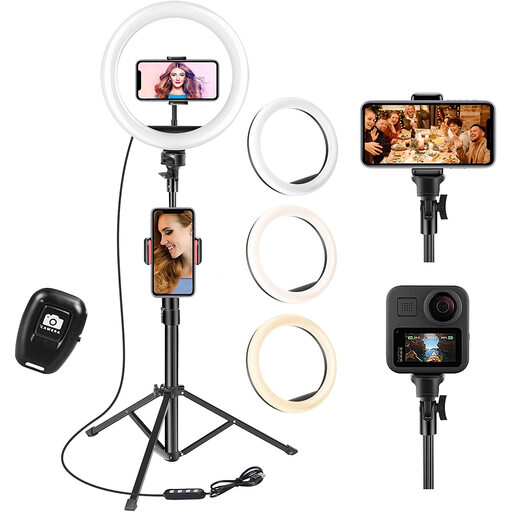 No image available
An option for a fixed smartphone setup. According to the product description, the set includes a tripod, phone holder and remote control.
The product title lists three colour settings and ten brightness levels.
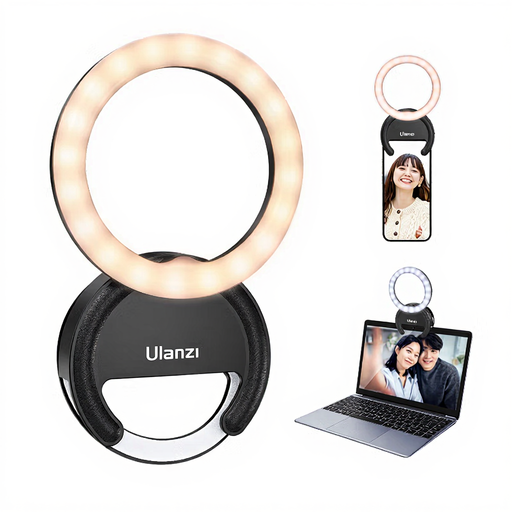 No image available
A ring light worth considering if you film directly with a smartphone; the product description says it attaches to a smartphone.
The title lists a colour temperature range of 3000 K–7000 K and five brightness levels.
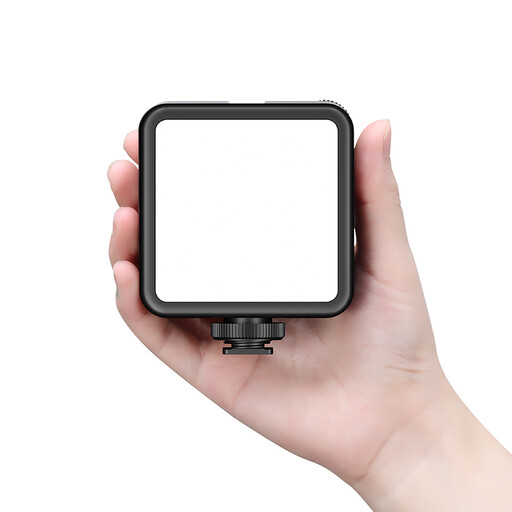 No image available
An alternative video light for anyone who wants to mount a light on camera equipment; it isn’t a ring light.
The product information lists a cold shoe mount and continuously adjustable brightness and colour temperature.
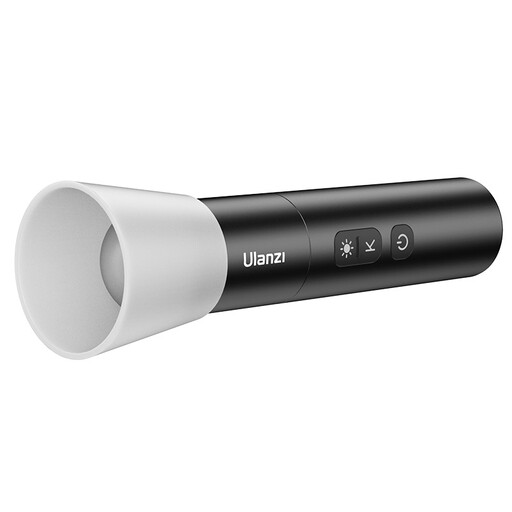 No image available
A portable alternative for video or photography when you want to be able to change the position of the light; this isn’t a ring light.
The title lists bi-colour light from 2000 K–5500 K, four brightness levels, zoom, a 2000 mAh battery and a weight of 187 g.
Not necessarily. A ring light can illuminate the teacher from the front, while a consistently white background may require separate control of the background lighting. Canon Europe’s high-key example is about photography using flash and isn’t a ready-made video setup.
Adjust the light colour if the version you’ve chosen allows it, and check the camera’s white balance using a test shot. Canon Europe explains that the colour temperature of the light affects the white balance setting.
Check that the holder and tripod are included with the version you’ve chosen and are suitable for your recording device. For the LR150, Godox advises keeping the light dry and, if necessary, having repairs carried out by an authorised service centre.
Check whether accessories such as a tripod, power supply and mounts are included with the version you’ve chosen; Benel Europe lists the tripod and an optional battery pack for the Falcon Eyes DVR-300DVC as sold separately. According to the Dutch government, many online consumer purchases come with a 14-day cooling-off period. In the Netherlands, products must also meet the legal guarantee of satisfactory quality, with no fixed statutory guarantee period.
No. According to the European Commission, a manufacturer affixes the relevant CE marking to declare that a product meets the applicable EU product requirements; it isn’t a centrally issued quality certificate for lighting. CE rules apply to product groups covered by the relevant EU legislation.