If you’re filming directly above matte paper, start by positioning your camera securely and checking that the light and mount can reach your work surface. A phone holder included with a product doesn’t, by itself, prove that the camera can be positioned above your entire drawing. For colour-critical work or glossy paper, adjustable lighting, a suitable white balance and a test recording matter more than the ring shape. Move the light source if you see reflections, shadows or bands; Canon Europe explains that white balance affects how a camera captures colours under artificial light.
Who is this choice relevant to?
Artists filming from above
You’ll want your camera or phone and lighting to stay steady while you draw. Above all, check that the mount captures the whole sheet from above; NEEWER and Hama product specifications describe their mounts, but don’t prove that every setup will fit above a drawing table.
Creators making colour-critical demonstrations
You’ll want white paper and the colours you use to remain recognisable under artificial light. Compare the light’s adjustment options and set your camera’s white balance; Canon Europe explains how white balance can help in challenging lighting conditions.
Artists using glossy materials
You might be filming on a material that reflects light and want to adjust the light angle if a reflection obscures your drawing. Ulanzi recommends checking footage for unwanted reflections or glare.
What should you look for when buying?
Ring light for a fixed setup
Choose this approach if: you use one fixed framing and the light can illuminate your work surface without the mount, tripod or light source appearing in shot.
Bear in mind: reflections on glossy materials and possible flicker with your camera settings; test for both in a recording.
Movable light beside the camera
Choose this approach if: you want to change the light angle independently of the camera, for example to move reflections out of shot.
Bear in mind: changing the angle also changes the shadows; check how your paper is lit with a test recording.
| What to consider |
What to look for when buying |
Who it matters most to |
| Mounting above the paper |
Check the mounting point, tilt, desk space and framing for your paper size. |
I want the camera to sit securely above my entire work surface, with room for my drawing hand to move freely. Around 31% of consumers prioritise stable overhead filming above all else. |
| Colours and white paper |
Compare the light settings on the exact model and film a sheet of white paper and the colours you use under your existing room lighting. |
I want paper and colours to remain recognisable in the video, not just to my eyes under the light. Around 25% of consumers prioritise colour reproduction; Canon Europe highlights the importance of white balance in challenging lighting conditions. |
| Reflections and hand shadows |
Make a short recording using your materials and hand movements; check for both glare and visible lines. |
When I draw on glossy material, I don’t want a bright spot of light to cover my lines. Around 25% of consumers prioritise reflections or hand shadows; Ulanzi recommends checking recordings for glare. |
| Flicker during video |
Test a clip at your preferred brightness and camera settings; if necessary, adjust the shutter speed or flicker reduction, if your camera supports it. |
I don’t want bands in my video when using my preferred filming settings. Around 19% of consumers prioritise video without bands; Sony describes camera adjustments that can reduce flicker. |
Common buying mistakes
-
Assuming a phone holder gives you a complete overhead setup
A holder or tripod doesn’t guarantee that the camera can sit securely above your entire work surface.
Check the mounting and framing with your table and paper before choosing a set; also see whether you’ll need a separate, suitable mount for your setup.
-
Assuming ring-shaped light never causes reflections
A visible reflection can obscure details on glossy paper.
Make a test recording of your material and move the light if the reflection appears in shot.
-
Treating a colour setting or CRI figure as a guarantee of video colours
Lamp specifications alone don’t determine how your camera captures colours under artificial light. Canon Europe explains that white balance plays a part.
Film a sheet of white paper and the colours you use with the lighting and camera settings you plan to use for your demonstration.
Relevant brands to consider
Godox
The LR150 could be worth considering if you want to match the light colour to a fixed setup. Godox lists an adjustable range of 3000–6000 K and a smartphone holder included in the box.
- Godox specifies a CRI of 90 for the LR150 and lists an adapter as included.
- This doesn’t prove that the holder is suitable for overhead filming. The manufacturer also advises keeping the product dry; check the mounting and intended location separately.
NEEWER
The RL-18 kit may be worth looking into if you’re after a set with a floor-standing tripod. For this model, NEEWER lists a ring diameter of 45 cm, CRI 95 and colour settings of 3200 K and 5600 K via filters.
- According to NEEWER, the kit combines a ring light with a tripod, phone holder and colour filters.
- A floor-standing tripod isn’t a proven solution for overhead filming. NEEWER recommends spreading the legs wide for stability.
Hama
The SpotLight FoldUp RGB 102 is a foldable smartphone set that could be useful if you want to store or move your light. Hama describes a gooseneck, ball head and three white-light settings.
- For this model, Hama lists warm white at 3000 K, neutral white at 4500 K and daylight at 6500 K.
- Check the camera angle with your table. RGB effects don’t, in themselves, offer a proven benefit when recognisable drawing colours are your priority.
Products on Joybuy
This selection includes ring lights for a fixed phone or camera setup, plus an adjustable clip-on light for positioning beside the camera; check that each model’s mounting suits your drawing table.
 No image available
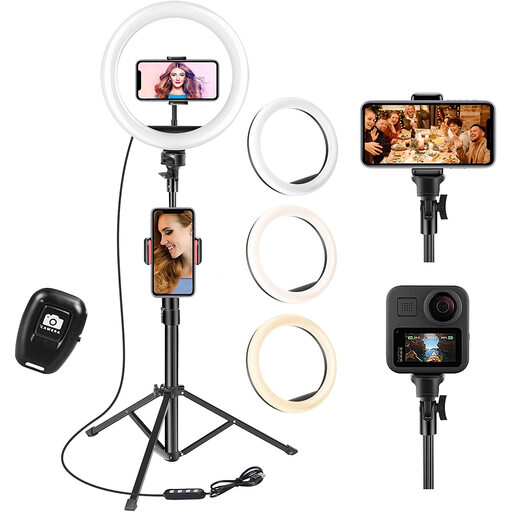
10-inch ring light with tripod
An option to consider for a fixed phone or camera setup; check for yourself whether the included mount can position your camera above the paper.
10-inch ring light, 63-inch tripod, remote control, three colour settings and 10 brightness levels.
View on Joybuy
 No image available
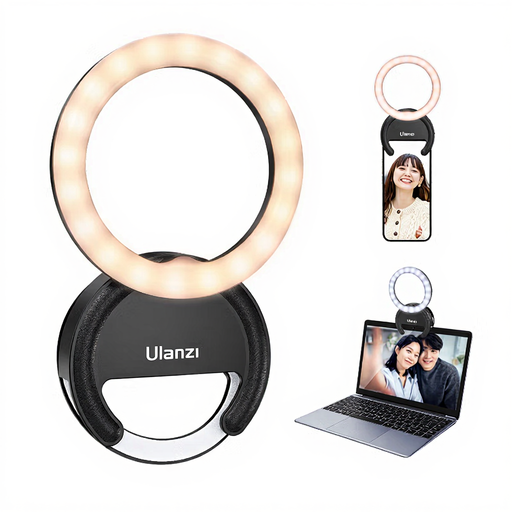
ULANZI 4-inch phone ring light
A compact option for lighting phone videos; check that the mount and light angle suit your camera setup above the drawing.
Three colour temperatures from 3000K–7000K and five brightness levels.
View on Joybuy
 No image available
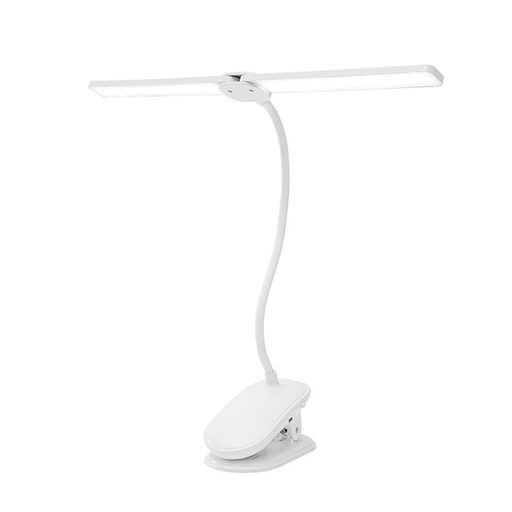
Dual dimmable LED clip-on light
An alternative for directing light from beside the camera; use a test recording to check whether it lights your drawing well enough without casting distracting shadows.
Two lamp heads, flexible goosenecks, three colour settings and stepless dimming. The product information states that the clamp fits surfaces up to 5 cm thick.
View on Joybuy
Frequently asked questions
Can I use the included phone holder to film directly above my paper?
First, check whether the holder can position your camera securely above the whole work surface. Manufacturers list phone holders and tripods, but that doesn’t establish the height, reach and stability needed for your table.
How can I make white paper and drawing colours look natural?
Set a suitable white balance and make a test recording under the lighting you’ll actually use. Canon Europe explains that a camera may record colour differently from how your eyes see it in challenging lighting conditions.
What can I do if there are horizontal bands in my video?
Use a test clip to check which light source is causing the problem and try a different shutter speed or flicker reduction, if your camera supports these features. Sony describes these options for compatible cameras; settings vary by model.
Do I need to buy an extended warranty in the Netherlands?
You don’t need to buy an extended warranty to have a legal guarantee. According to the Dutch government, the Netherlands has no fixed statutory guarantee period; assess an additional warranty by checking its terms and whether it genuinely offers extra rights.
Does a ring light need a CE mark in the Netherlands?
A CE mark is required if the specific light or adapter falls under EU rules that require this marking. Your Europe explains that the CE marking requirement depends on the applicable EU rules; the Netherlands Food and Consumer Product Safety Authority describes the voltage limits set by the Low Voltage Directive. Check which rules apply to the specific product and any adapter.


