
Filming stamps in glossy protective sleeves
You want to show the details without reflections on the protective sleeves taking over the picture. Being able to move the light may matter more than positioning it directly in front.


For overhead stamp videos, a stable camera mount and a dimmable light you can move around are a sensible starting point. A ring light placed directly around the lens won’t automatically prevent reflections on glossy sleeves. Then choose based on adjustable colour temperature, the mounting options and what’s actually included. The manufacturer’s specifications can’t predict exactly how colours or reflections will look in your footage.
You want to show the details without reflections on the protective sleeves taking over the picture. Being able to move the light may matter more than positioning it directly in front.
You want to make repeatable recordings under artificial light, so adjustable colour temperature and a fixed white balance are important. A stated CRI value alone doesn’t prove how accurately colours will appear in the finished video.
You want to browse an album hands-free with a phone or camera. The mount, working height and stability all help determine whether the setup is practical to use.
Choose this if: you’re filming with a phone and want a setup that’s easy to assemble or put away.
Bear in mind: a phone holder doesn’t automatically provide a stable mount for overhead filming.
Choose this if: you want to adjust the light height and colour regularly, and have room for a stand.
Bear in mind: you may need to buy a stand separately; check what’s included with the version you choose.
Choose this if: you’re looking for a set with adjustable working height and a mount for a phone or compatible camera.
Bear in mind: check that the mount is compatible with your equipment and can be positioned safely above your work surface.
The percentages below refer to consumers considering a ring light for filming a stamp-collecting guide under artificial light.
| Consideration | What should you check? | Who does this matter to? |
|---|---|---|
| Reflections | Check whether the light is dimmable and can be moved; make a test recording with the protective sleeve you use. | When filming a glossy sleeve, I want to stop reflections from obscuring important details. Around 33% of consumers prioritise controlling reflections. |
| Colour consistency | Compare the stated colour temperature and any CRI rating for each model; set the white balance to match the light you’re filming under. | When comparing colours across recordings, I want to be able to use the same lighting settings. Around 27% of consumers prioritise colour consistency. |
| Overhead filming | Check the mount for your phone or camera, the working height, and whether a stand or arm is included. | For hands-free filming above an album, I want the camera and mount to be stable. Around 27% of consumers make an overhead setup their main consideration. |
| Complete starter set | Check what’s included with each version: the holder, stand and power supply, as well as the connection required. | If I want to get started without extra mounting equipment, what’s already in the box matters. Around 13% of consumers prioritise a complete starter set. |
Even diffuse light can create a distracting reflection that obscures a detail.
Make a test recording and try tilting the light or placing it beside the camera. Then check again that the stamp edges aren’t in shadow.
A holder on its own doesn’t tell you whether the setup can be positioned at the right height and remain stable above an album.
Check the mount, the height required, the load capacity and which parts are included with the version you choose.
You may need a separate stand or a suitable arm for the setup.
CRI is a characteristic of the light; white balance and the lighting used also affect the picture.
Compare the specifications for the exact model and assess the colours in a test recording under the lighting you intend to use.
A compact ring light setup with a phone holder could suit smartphone filming and a workspace you want to set up quickly.
The LR150 is a larger, adjustable LED ring light for a setup where you can arrange the mounting separately.
The SRP18-2.4G is a larger set with a stand and mounts for those who want to position the light and camera together.
The U200 is a portable, ring-shaped video rig for a mobile camera or phone setup, rather than a tall ring light on a stand.
These product picks are aimed at phone videos under artificial light, including both a light on a stand and a compact light that attaches directly to your phone.
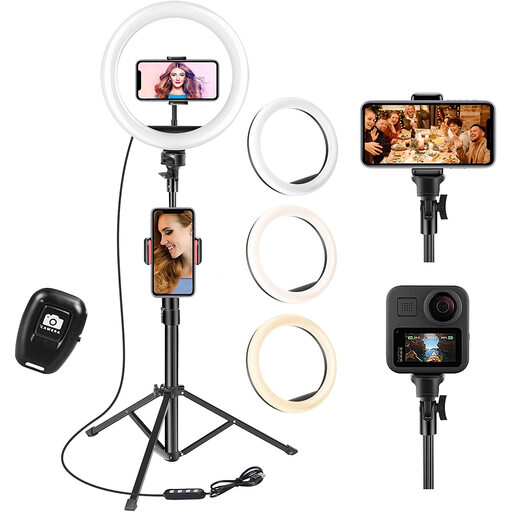 No image available
The phone holder and stand are designed for a smartphone setup; check that it’s stable before filming above an album.
Listed features: 10 inches, three light colours, ten brightness levels and an adjustable stand height of 44–156 cm.
The stated colour temperatures are 3000–6000 K.
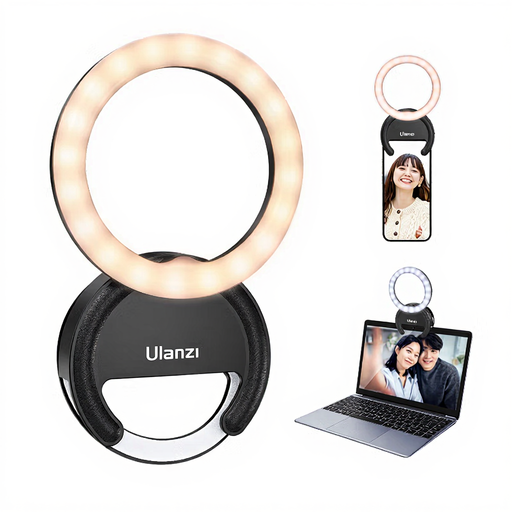 No image available
This compact light clips directly onto your smartphone. This means its position is tied to the phone, so you can’t move the light as independently to change reflections.
Listed features: three colour temperatures from 3000–7000 K and five brightness levels.
Tilt or move the light and make another test recording. Then check that the stamp edges are still visible and not in shadow.
It varies by model and version. The listed contents for the Godox LR150 include a phone holder but no stand, so check the parts included with the exact version you’re choosing.
Not on its own. A CRI rating is a characteristic of the light; you should also set the white balance to match the light you’re filming under and check the colours in a test recording.
Check the product information and the electrical specifications of both the light and its power supply. The Netherlands Food and Consumer Product Safety Authority (NVWA) sets out CE marking requirements for electrical products; the exact requirements depend on the version. For the Commodities Act Decree on Electrical Equipment, the NVWA states a rated AC voltage between 50 V and 1,000 V as the scope threshold.
For online consumer purchases, you generally have a statutory cooling-off period of up to 14 days after delivery. Check which exceptions and returns conditions apply to your purchase; the cooling-off period is separate from your rights if a product is faulty.