
Overhead filming with limited table space
You want to keep the puzzle and your moving hands in shot without a lamp base taking up space on the work surface.


If you mainly film from above and need to keep the work surface clear, look for a light with an adjustable arm and desk clamp. Check that the clamp and arm will work with your table and filming position. A light with a table stand is easier to move, but takes up space. A small phone light can be useful for close-ups, but won’t light the whole puzzle on its own.
You want to keep the puzzle and your moving hands in shot without a lamp base taking up space on the work surface.
You want to capture the details while keeping distracting reflections and harsh highlights out of shot.
You want to position and put away your camera and lighting easily, with a mount and power supply that suit your phone.
First, decide how you’ll position the camera above the puzzle and how much workspace you want to keep clear. Then check how the light falls on your own puzzle, and make sure the mounts and power supply are suitable for the version you choose.
| What to consider | What should you check? | Who is this important for? |
|---|---|---|
| Clear workspace and overhead view | Measure the edge of the table and check that the clamp, arm and camera mount can reach the position you want above the puzzle. | If I’m filming from above and have limited space, I don’t want a lamp base to get in the way of my puzzle or hands. Around 36% of consumers give top priority to a clear workspace and a usable overhead view. |
| Colours and reflections | Check whether you can adjust the brightness or light spread, and film a test with your own puzzle. | With glossy pieces, I want to see the details without bright reflections spoiling the shot. Around 29% of consumers prioritise clear details and minimal reflections. |
| Phone and camera angle | Check that the mount fits your phone and that you can point the camera where you want it. | If I’m filming with a smartphone, I want to position the camera and light so the puzzle stays in shot from above. Around 21% of consumers give top priority to phone mounting and camera angle. |
| Storage and power | Check whether the version uses a cable, adapter or battery, and what kind of mount it needs. | When I need the table again after filming, I want to be able to put the light away and connect it easily. Around 14% of consumers care most about storage, portability and having a suitable power supply. |
A light, arm and clamp don’t automatically include a phone holder or camera mount. Check the parts list for the exact version you’re considering.
Compare the included parts with the mount your phone or camera needs.
Harsh, direct light can create sharp highlights and shadows. Even with adjustable lighting, reflections depend on the angle of the light in relation to the puzzle and camera.
Film a test and try adjusting the light angle, brightness or diffusion before relying on the maximum light setting.
A compact light attached to a phone is designed for a different setup from a stable light source above an entire puzzle.
Use this type of light mainly for close-up details, and check its coverage from the distance you plan to film at.
The R10 clamp version and RH8B table version offer different ways to set up a ring light at a desk.
The LR150 is a standalone ring light for anyone who wants to combine the light source and camera mount themselves.
The LM19 is a compact magnetic phone ring light for a setup you want to put away quickly.
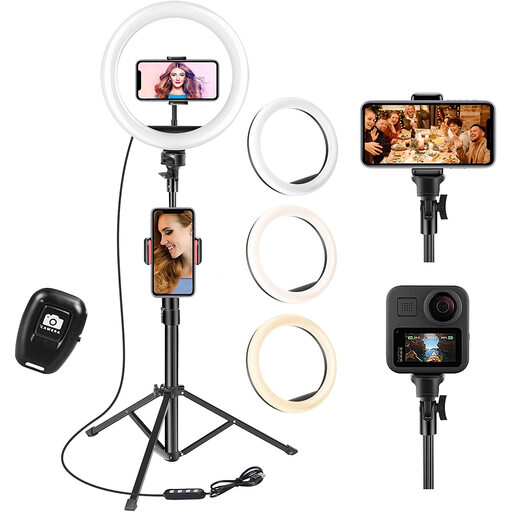
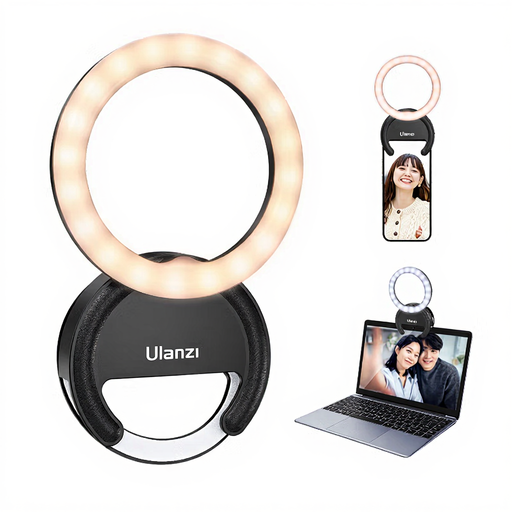
These Joybuy picks are ring lights for smartphone filming: one model with a tripod and one compact phone ring light. For an overhead view of the whole puzzle, check that your chosen support is stable and tall enough. A phone light won’t light the entire work surface on its own.
 No image available
The tripod may suit a portable smartphone setup if there’s space for its base beside the puzzle.
The product name lists a 63-inch tripod, three colour modes and ten brightness levels. The description also mentions a phone holder and remote control.
 No image available
This compact design may suit smartphone close-ups. Check the light coverage if you want to film the whole puzzle.
The product name lists three colour temperatures from 3000K–7000K and five brightness levels. The description mentions attachment to a smartphone.
Secure the camera above the part of the puzzle you want to film, and angle the light so that hands and details stay visible. A suitable arm with a desk clamp can keep the work surface clear. Check that the clamp fits the edge of your table and that the arm and camera mount can reach the position you want.
Film a test and first adjust the light angle or brightness. Adobe says diffused light can soften harsh highlights, but that doesn’t guarantee every glossy piece will be reflection-free from every camera angle.
No, the included parts vary by model and version. The NEEWER R10 clamp version reviewed lists an arm, clamp and USB cable; the Godox LR150 manual lists an adapter and phone holder, but no overhead arm. Check the parts list for the exact version you want to buy.
In many cases, when you buy online from a business, you have 14 days to change your mind; the Netherlands government advises checking the applicable terms and conditions. If the product is faulty, contact the seller to find a solution. In the Netherlands, there isn’t one fixed statutory guarantee period for all products.
Check the product information and any CE marking for the specific light and included adapter. The Netherlands Food and Consumer Product Safety Authority says the applicable regulations depend on the product; low-voltage rules apply only within the stated voltage ranges and don’t automatically apply to every USB light.