
Teachers filming from above
If you mainly film your hands, tools and clay on a table, you need a stable camera angle where the light or mount doesn’t get in the way of your work.


A ring light can help illuminate your hands and work surface evenly, provided you can position it securely at the camera angle you need. If the shape of the clay needs to remain clearly visible, also compare it with diffused light from the side. Record a short test using your own camera, clay and existing lights. Before buying, check the camera mount and whether the specific model carries the applicable CE marking.
If you mainly film your hands, tools and clay on a table, you need a stable camera angle where the light or mount doesn’t get in the way of your work.
If you need to distinguish between different clay colours under your existing artificial lighting, colour rendering and the ability to adjust the light are important considerations.
When teaching shapes and surface texture, the direction of the light can affect how clearly shadows and texture appear on camera.
Suitable when: you want to illuminate your hands and work surface evenly and have a suitable mount for your camera and filming angle.
Consider: fewer shadows can make the image easier to see, but may also make the texture of the clay less visible.
Suitable when: you need shapes, indentations and surface texture to remain clear on camera.
Consider: you’ll need to position the light more carefully to avoid shadows that are too dark or distracting.
Suitable when: you already have useful light from the side and want to soften shadows on your hands or work surface.
Consider: dim the ring light and test the combination to check the clay’s colour and for any banding in the video.
| What to consider | What should you check? | Who is this important for? |
|---|---|---|
| Stable overhead view | Check the mount, adjustable angle, tripod stability and clear space above the table. | If I’m filming my hands and work surface from above, I want the camera to stay stable without blocking my workspace. Around 29% of consumers prioritise a useful overhead view. |
| True-to-life clay colour | Check the stated CRI and adjustable colour temperature, and assess the image using your own camera and clay too. | If my lesson shows different clay colours, I want to be able to see them clearly under my artificial lighting. Around 24% of consumers give true-to-life clay colour top priority. |
| Visible texture | Check whether you can adjust the direction of the light or dim the lamp; compare it with diffused side lighting. | If I’m explaining techniques and surface texture, I want shapes and indentations to remain visible on camera. Around 24% of consumers prioritise visible texture. |
| Working with existing lighting | Check the brightness and colour controls, and record a test video with all the lights on. | If my work table is already lit, I want to be able to balance the additional light with it and check the result on camera. Around 23% of consumers prioritise this combination. |
A phone holder on its own doesn’t tell you whether the light and camera can sit above your table without getting in the way. Components and adjustable angles vary between models.
Check what’s included in the exact set and whether the mount suits your device, table and preferred camera angle.
Depending on the set, you may need a separate suitable mount or a different tripod for your filming angle.
Bright front lighting can reduce the shadows that help show the texture of clay. Brightness alone also doesn’t tell you how colours will look.
Compare the dimming controls and stated colour rendering, and test the clay with the light in the position you plan to use.
Other LED or fluorescent lights can also affect what the camera records. A claim about one light doesn’t tell you what the full setup will look like on video.
Record a short test with all the lights on and review the footage.
It may take extra time to balance your existing lighting for filming.
The RP18B Pro is a ring light kit with a tripod, aimed at anyone looking for a larger, adjustable light source and a complete setup.
According to the manual, the LR150 has adjustable light colour and brightness, and comes with an adapter and phone holder.
The LUMIS Comfort Bi-Color is a kit with a rotating ring, phone holder and tripod for a phone setup.
Ulanzi offers products including the U200 Ring Light Video Rig and a compact LM19 phone ring light. The right design for you will depend on your camera and work surface.
These picks are ring lights for phone videos, with adjustable lighting or a phone setup included. Before buying, check whether the specific model carries the applicable CE marking.
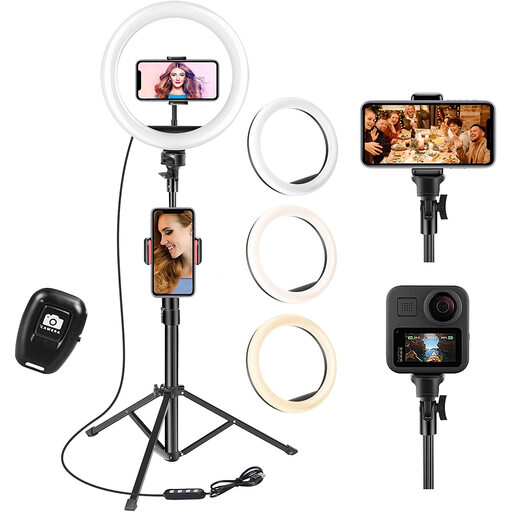 No image available
Could suit phone videos if you want to assess the included setup and lighting modes for your camera angle.
The title lists three colour settings and ten brightness levels. The product description mentions a phone holder; check whether the specific model carries the applicable CE marking before buying.
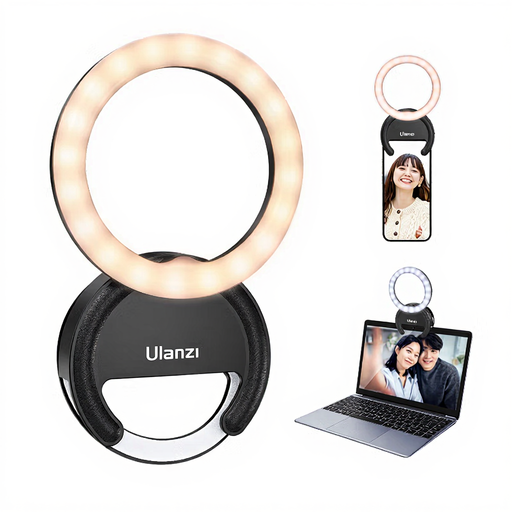 No image available
Could suit a compact phone video setup. Check that the size and mount are right for your filming distance and work surface.
The product title lists three colour temperatures from 3000 K to 7000 K and five brightness settings. Before buying, check whether the specific model carries the applicable CE marking.
Not always. A ring light can create very few shadows, making texture less clear. To see indentations and rounded shapes, compare a test recording with diffused light from the side. This is a practical consideration, not a test result for a specific model.
First, position the camera, your hands and the work surface where you want them. Then adjust the brightness and colour of the light. Record a short video with all the lights on and check the clay’s colour, the shadows and whether there’s any banding in the footage.
For online purchases in the Netherlands, you generally have a 14-day cooling-off period, subject to legal exceptions, according to the Dutch government. You’re also entitled to a product that meets reasonable expectations. There’s no fixed statutory warranty period, and the retailer is your point of contact if something is wrong.
According to the Dutch government, electronic devices placed on the market in the EU must carry the applicable CE marking. Check this for the specific light and power supply; a brand name or general product description doesn’t confirm that a particular model complies.