
Teacher filming from above
Wants to keep the paper and cutting movements in a single, steady shot. The mounting options and available workspace will determine which set-up is right.


First, find a stable position for the camera directly above the paper; a phone holder or tall tripod alone won’t guarantee a top-down view. A ring light can illuminate the work surface, but test it with your own paper, hands, camera and workspace lighting to check that details and colours are clear, reflections and flicker are not a problem, and everything stays in shot.
Wants to keep the paper and cutting movements in a single, steady shot. The mounting options and available workspace will determine which set-up is right.
Wants to position the light and camera without getting in anyone else’s way. A table clamp or base needs enough suitable space.
Wants to check colour differences and distracting reflections in the recording; adjustable lighting and a test clip can help.
A good fit when: you want to film a defined area of the table from above and can position the arm outside the cutting area.
Bear in mind: check the downward camera angle, phone holder and stability with your phone in place.
A good fit when: you have room for the base or use a separate camera mount.
Bear in mind: a tall tripod won’t automatically provide a horizontal arm above the paper.
A good fit when: a test recording shows that the ring light causes reflections, hands hide details or parts of the sheet aren’t properly lit.
Bear in mind: the light and camera need separate mounts and adjustments.
| Concern | What to check before buying | Who is it important for? |
|---|---|---|
| Stable top-down view | Check the camera angle, reach, phone width and stability in the set-up you plan to use. | If I want to film paper and cutting movements from above, the holder needs to stay steady and the arm must not block the work surface. Around 36% of consumers prioritise a stable top-down view. |
| Visible cutting details | Record a test clip of the whole sheet while you cut; check the edges and shadows from your hands, too. | If you want cut-outs and cutting movements to be easy to see, check that the whole sheet remains clear in the frame while you work. Around 29% of consumers prioritise visible details on the paper. |
| Space and positioning | Measure the table edge and available space; keep cables out of the work area. | At a shared table, I want to keep the arm, base and cables out of my cutting area and everyone else’s. Around 21% of consumers focus mainly on space and positioning. |
| Colour, reflections and flicker | Film using your own camera and paper, with the workspace lights on; check the colour, reflections and any banding. | If the colour of the paper matters in the video, I want to see how the light and camera work together. Around 14% of consumers prioritise colour and a recording free from interference. |
A tripod may extend to a great height without being able to hold the camera horizontally above the paper.
Check whether the exact model can keep the camera directly above the paper without getting in the way of your hands.
If the set doesn’t include a suitable overhead arm, you may need a separate camera mount.
A light reading taken at a particular distance won’t necessarily tell you how evenly the edges of your work surface will be lit.
Only compare readings taken on the same basis, and check coverage with a test recording of the whole sheet.
Reflections or banding may only become visible when you use the full recording set-up alongside the workspace lighting.
Make a test clip with the lights that will be on during the lesson, and watch it back on the camera you plan to use.
The N31 is a clamp-mounted table set-up for top-down phone recording; the R10 has a table stand and a rotating phone holder.
The Ring-10 Topshot is designed for top-down filming, with an adjustable arm and phone holder.
According to Rollei, the LUMIS Comfort Bi-Color is a set with a ring light, phone holder and extendable tripod.
According to Godox, the LR150 is a larger ring light with a power adapter and smartphone holder, for a set-up where the light and camera mount are planned separately.
This selection includes ring lights with a tripod or direct phone mount, as well as compact video and fill lights; some are alternatives to a ring light. Check whether the camera angle and mounting options of each model are suitable for top-down filming.
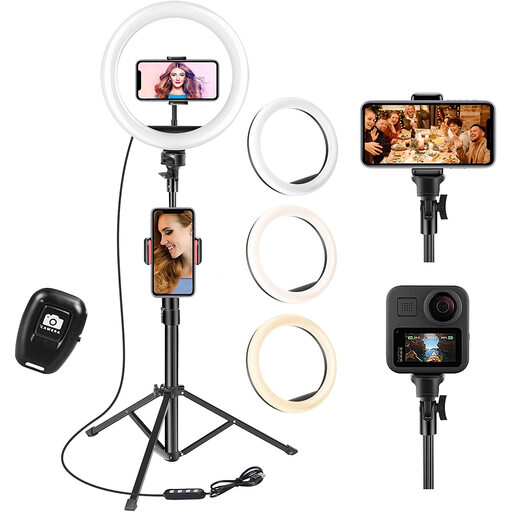 No image available
Suitable for smartphone video if you want to use a tripod and phone holder in your set-up; check whether the camera can be positioned above the paper.
The product title lists a remote control, three colour settings and ten brightness levels.
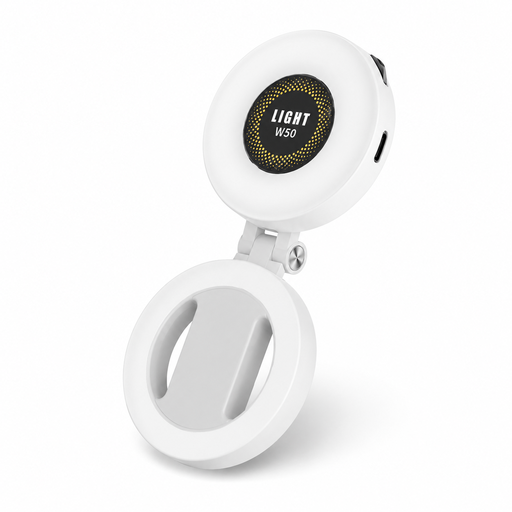 No image available
Could suit smartphone video if you’re looking for a compact, magnetically attached phone light; check that the mount is compatible with your phone.
The product title lists CRI 95+ and compatibility with iPhone and Android devices; this is not an independent measurement of colour reproduction.
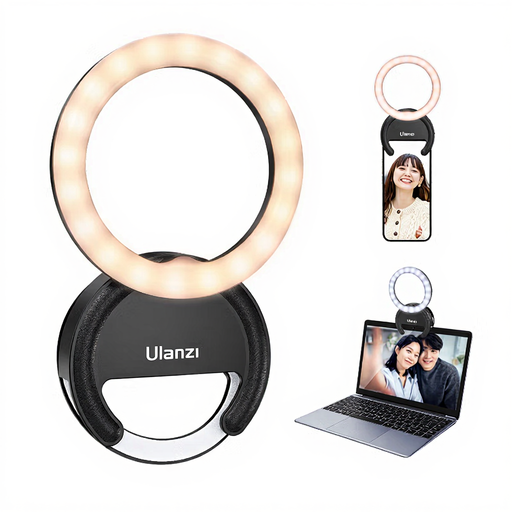 No image available
Suitable for direct lighting on a smartphone; check that the mount leaves enough room to film the paper and your hands.
The product title lists three colour temperatures from 3000 K–7000 K and five brightness levels.
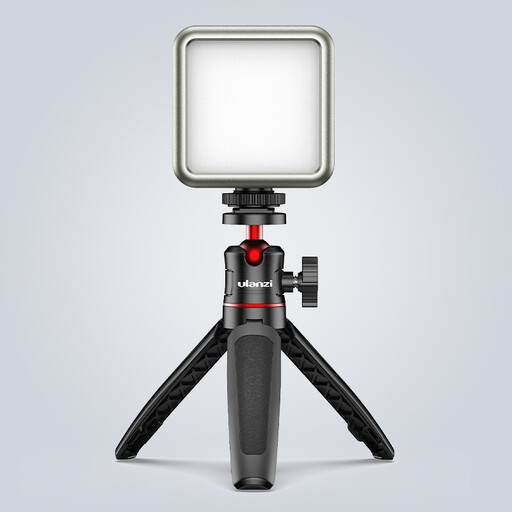 No image available
Can be used as a separately positioned fill light; check how you can mount it beside the camera and outside the cutting area.
The product title lists dimming, a range of 2500 K–9500 K, a magnet on the back and a 2000 mAh battery. The product information also mentions a metal surface for magnetic mounting and a 5 V adapter; don’t look directly into the LED from close up.
 No image available
Could suit a compact, separately positioned fill light; check which mount you need to direct the light onto the paper.
The product title lists a 500 mAh battery and magnetic mounting; the product description also mentions a 1/4-inch thread.
Position and check the phone first, so the paper and cutting movements stay in frame. Then adjust the brightness and angle of the light with a test clip, and check the edges of the paper and any reflections.
No. Check the edge and available space on the specific table. For example, NEEWER lists a maximum clamp opening of 5.5 cm for the N31; that figure won’t necessarily apply to other models.
Test the light with the existing lighting and your own camera settings. Canon Europe explains that some LED and fluorescent lights can cause banding during electronic recording; using a ring light on its own doesn’t rule this out.
The Dutch Data Protection Authority considers recognisable images to be personal data. If you film and publish on behalf of a business or organisation, you need a lawful basis to do so; according to the regulator, consent is often the obvious choice at events. A recording kept solely for private use may fall under the exception for personal or household use.
If employees work in the workplace, Arboportaal says the employer must provide lighting that poses no risk to health and safety. This is not a general minimum specification for every ring light or hobby workspace.