
Miniature painter filming from above
You want your hands, paintbrush and miniature to fit in a steady overhead frame, without the light getting in the way of your workspace.


For a miniature painting class, keeping the camera, light and your hands steady in frame matters more than the size of the ring light alone. Choose between a compact arm and a larger light on a tripod based on your workspace, then check paint colours and reflections with a test recording. For the exact version, also check the applicable product documentation: the models listed here do not confirm compliance.
You want your hands, paintbrush and miniature to fit in a steady overhead frame, without the light getting in the way of your workspace.
You demonstrate colour choices and mixing techniques, and want to check your lighting settings and camera white balance during the class.
You might be filming metallic or varnished areas, for example, and want to check in a test recording whether a ring-shaped reflection obscures any details.
Best for: filming with a smartphone above a small workspace when an integrated arm is important.
Check: make sure the arm leaves enough room for your hands and that the holder fits your phone.
Best for: a setup where you can position the light and camera separately and want to illuminate a wider area around the miniature.
Check: a larger tripod takes up space and doesn’t automatically give you a clear overhead angle.
Best for: a test recording where glossy paint reflects the shape of the ring, or when you want to show more texture.
Check: reassess the shadows and colours in frame after moving the light.
| What to consider | What to look for when buying | Who should prioritise this? |
|---|---|---|
| Stable overhead filming | Check the phone width, holder, arm reach or tripod, and whether there’s enough space for your hands. | I want to keep my hands and the whole miniature in frame without the light taking up my brush space. Around 33% of consumers prioritise a stable overhead setup. |
| True-to-life paint colours | Compare the adjustable colour temperature and brightness of the exact version, then test it with your own camera and paints. | When I explain colours and mixing techniques, I want to see how my camera captures the paint under the chosen light. Around 27% of consumers give control over paint colours top priority. |
| Reflections on glossy paint | Make a test recording of a glossy detail and, if necessary, try a different light angle or diffused light. | I want metallic or varnished details to remain clear when they reflect the light. Around 20% of consumers prioritise reducing reflections. |
| Power supply and recording time | Check which adapter, cable, battery and tripod are included with the version you choose. If you’re recording video at different brightness levels, make a short test recording. | When I record a class, I want a power setup that suits the planned recording and to know which parts are included in the kit. Around 20% of consumers prioritise power supply and recording time. |
A holder alone doesn’t guarantee that the camera and light can both create the frame you want on your table while leaving enough room for your hands.
Mark out where the miniature, your hands and the camera will go on your worktable, then check that the arm, clamp or tripod suits the layout.
The light source and white balance setting affect how the camera captures colours; product specifications alone don’t show how your paint will look on camera.
Make a test recording with the camera settings you plan to use, then assess the colours on the screen you’ll use to show the class.
The models and kits described differ in their power supply and included parts. A standalone light and a full kit aren’t the same purchase.
Read the parts list for the exact version and compare it with your existing camera and table mount.
If the version you choose doesn’t include a required battery, support or holder, you may need to arrange one separately.
The statutory cooling-off period and consumer protections don’t automatically apply in the same way to a business-to-business purchase.
Before placing your order, decide whether you’re buying as a consumer or a business, and check the terms that apply to your purchase.
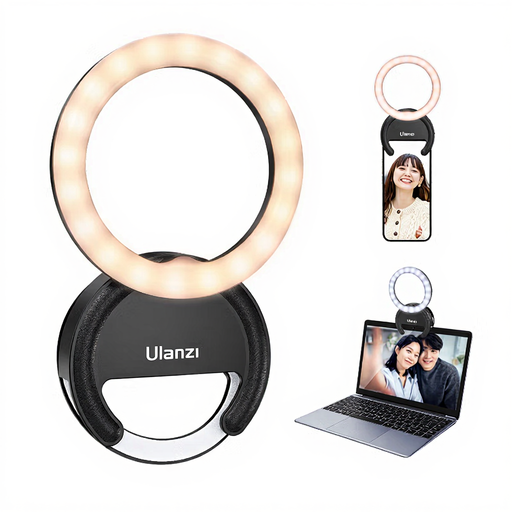
The Ring-10 is described as a compact setup with an adjustable arm for overhead phone filming. The U200 is a different, portable ring light; the standalone light and vlog kit are separate versions.
The RP18B Pro is a larger ring light kit for anyone who can position the light and tripod separately and wants to adjust the lighting settings.
The LR150 is an adjustable ring light for a setup with an external power supply.
These options are intended for phone filming with a ring light and a tripod or phone holder. Check which product requirements apply to the exact version, and ask about the CE marking and EU declaration of conformity if needed; Ondernemersplein explains manufacturers’ obligations for devices that meet the applicable requirements.
 No image available
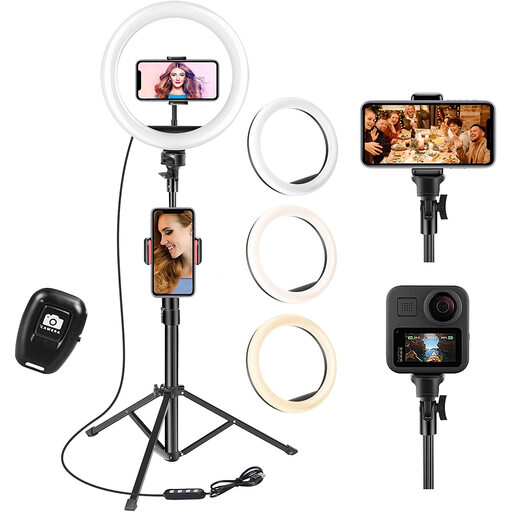
An option if you want to use a phone holder and ring light on a tripod; check that the tripod suits your overhead framing.
The product title lists a remote control, three colour modes and ten brightness levels. The product description gives a range of 3000–6000 K.
 No image available
An option if you film with a phone and want to adjust the lighting settings; check how the light attaches to your table setup.
The product title lists three colour temperatures from 3000–7000 K and five brightness levels.
First, position your phone or camera above your painting area and check that both hands and the whole miniature remain in frame. Then adjust the light. If you’re using an arm or clamp, check that it suits your table, the required reach and the load.
The light source and white balance setting affect how the camera captures colours. Make a test recording under the light you plan to use and adjust the white balance accordingly; an adjustable Kelvin range alone doesn’t guarantee accurate colours.
Check a test recording of the glossy detail and, if necessary, change the angle or distance of the light, or try diffused light from another direction. Then reassess the shadows and colours.
No, what’s included varies by model and version. For example, the Godox manual lists an adapter and phone holder for the LR150, while Ulanzi distinguishes between a standalone U200 light and a kit with extra parts. Check the parts list for the exact version.
Not automatically: according to Ondernemersplein, the statutory 14-day cooling-off period applies to consumers for certain purchases, including online purchases, but not necessarily to a business order. Statutory consumer protection also doesn’t apply in the same way to business-to-business sales, so check the terms that apply to your purchase.
The relevant European product rules apply to electrical devices placed on the market in the Netherlands. Ondernemersplein explains that manufacturers must affix a CE marking and draw up an EU declaration of conformity when the applicable requirements are met. The rules that apply depend in part on the electrical and any wireless features of the exact version.