
Builder with a dark side to their workspace
Films small components next to a window and wants to brighten the shadow side without replacing daylight. Nikon USA explains how daylight can change in intensity and colour throughout the day.


If the window is already lighting the scene well, try placing a white card on the shadow side first. Changing daylight can shift during a shoot, as Nikon USA explains. A dimmable ring light is an option if you need extra light and can position it outside your workspace. However, soft, frontal light can affect how texture and reflections appear compared with side lighting, as Adobe explains. Using your own camera and materials, compare a short clip lit by the window and a card with one lit by a dimmed ring light.
Films small components next to a window and wants to brighten the shadow side without replacing daylight. Nikon USA explains how daylight can change in intensity and colour throughout the day.
Wants to show joints, surfaces and small building steps clearly, while balancing soft light, visible texture and reflections. Adobe explains how direct light can create harsh shadows and bright highlights.
Films over a worktable and wants to position the camera, light and hands securely without blocking the build. Ulanzi recommends considering the table, reach and stability when choosing a desk camera mount for your final setup.
First, decide whether you simply want to supplement the window light or actively control the direction of the light. Then check that you can capture fine details and reflections, and have enough space around the worktable.
| Consideration | What to check before buying | Who is this important for? |
|---|---|---|
| Fill light when window light changes | Try a white card first. If you choose a lamp, check that you can adjust its brightness and direction. | If mainly the side of your build facing away from the window is dark, you’ll want to brighten just that side. Around 31% of consumers with this buying need prioritise it. |
| Texture and reflections | Consider the angle of the light and take test shots of joints, surfaces and shiny parts. | If you want to keep small details clear without distracting reflections, compare soft fill light with more directional lighting. For around 25% of consumers, showing fine details is the top priority. |
| Positioning around the worktable | Check the table edge, reach, load capacity and which mount is included in the chosen set. | When filming from above, the camera, light and your hands all need to fit around the build area. For around 25% of consumers, having a clear, stable worktable matters most. |
| Video quality and light colour | Test the footage with your own camera settings and the dimming levels you plan to use. | If you need consistent, usable video, also check for banding or flicker; colour adjustment alone doesn’t guarantee this. Video quality is the top buying priority for around 19% of consumers. |
Soft frontal light can reduce shadows, but the direction of the light also helps reveal shape and texture.
Film the same building step first using window light and a white card, then with a dimmed ring light. Compare the joints, surfaces and shiny parts.
Accessories and mounting parts can vary by model and package version.
Compare the full model name and the contents of the specific offer with the manufacturer’s documentation.
The stated light colour doesn’t tell you whether a lamp will work well with your camera at every dimming level.
Before a long shoot, record a short test video using your own camera settings and the dimming levels you want.
The LR150 is worth comparing if you’re looking for continuously adjustable fill light.
The RL-18 kit is a useful reference if you want to compare larger ring lights with a tripod.
The U200 is worth considering if a portable ring-shaped rig and a mounting point are important to you.
The LUMIS Comfort Bi-Color is worth comparing if you’re setting up a permanent filming space with a phone holder and tripod.
An older recommendation to bear in mind, rather than a starting point for a new purchase.
These product picks focus on dimmable ring lights for extra illumination while filming.
 No image available
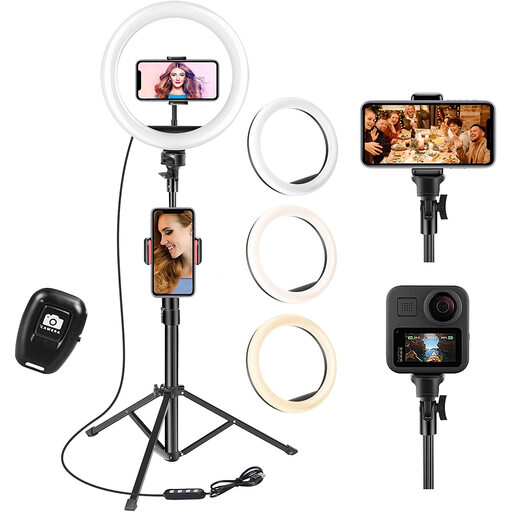
Could suit a filming setup where you want extra light and a phone holder.
The product title lists a 10-inch ring, a 63-inch tripod, a remote control, three colour modes and ten brightness levels.
 No image available
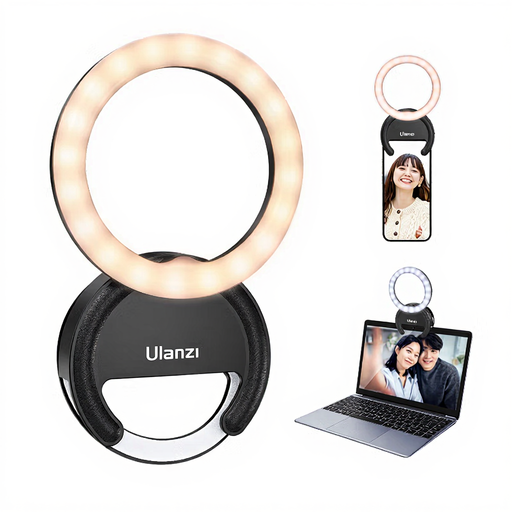
A compact ring light to consider if you want to adjust the lighting while filming with a phone.
The product title lists three colour temperatures from 3000–7000 K and five brightness levels.
No, not if the window already lights the scene well enough. If mainly the side facing away from the window is dark, try using a white card to reflect the window light first. Adjustable artificial light can be useful if the daylight changes during a long filming session.
Make sure the camera, your hands and the build don’t get in one another’s way. Check whether a clamp will fit on the table edge or whether a tripod can stand outside the work area. Also assess the reach and load capacity in its final position.
Record a short test using the camera and light settings you plan to use for your tutorial, including the dimming levels you want. Sony Support explains that flicker or banding can appear in footage; that alone doesn’t mean a particular ring light model has this problem.
Online consumer purchases generally come with a 14-day cooling-off period after delivery, subject to statutory exceptions. If a product breaks sooner during normal use or doesn’t meet what you could reasonably expect, statutory consumer rights may apply, and the seller is responsible for providing an appropriate solution.
Check which requirements apply to the specific lamp and any mains adapter. The NVWA explains CE marking and the relevant product rules. The Low Voltage Directive covers, among other things, rated AC voltages between 50 V and 1000 V and rated DC voltages between 75 V and 1500 V. This information doesn’t automatically confirm that a specific offer complies with the rules.