
Filming coin details
You want to capture relief and surface details clearly, but shiny metal or a plastic coin holder can reflect the light. Artemis Collection and Nikon explain how reflections can affect photos of shiny, detailed objects.


An adjustable ring light is a practical choice if you switch between filming yourself and filming the workbench during a coin tour, and have room for a stable setup. Shiny coins and plastic holders can reflect frontal ring light, so record a test clip first and see whether movable or diffused light works better. Also check that the camera and light can be positioned securely above the table.
You want to capture relief and surface details clearly, but shiny metal or a plastic coin holder can reflect the light. Artemis Collection and Nikon explain how reflections can affect photos of shiny, detailed objects.
You want to set up your camera, light, coins and hands within the available space, while keeping the walkway clear and being considerate of other users.
You switch between close-ups of coins and shots of yourself speaking, and want to be able to move the lighting to another spot in the workshop.
Start by recording a test clip of a shiny coin and, if relevant, a plastic holder. Then choose a light and support that suit your preferred camera angle and the space available on the table.
The percentages below offer a general indication of the main concerns for consumers considering a ring light for this type of coin tour.
| What to consider | What to look for when buying | Who might find this more important? |
|---|---|---|
| Reflections and relief | Test with a shiny coin and, where relevant, a coin in a holder. Check whether you can tilt the light or move the light source separately. | If I’m filming shiny coins or coins in a plastic holder, I want to be able to move reflections without losing sight of the relief. That’s why around 36% of consumers say reflections are their main concern when buying. |
| Stable camera angle | Measure the available table space and check the camera, light and tripod mounts separately. | At a shared table, I want to position the camera, light and my hands securely without blocking the walkway. For around 29% of consumers, a stable overhead view is the main concern when buying. |
| Colour reproduction | Check the light controls on the exact model and record a test clip with the workshop lights on. Also check your camera’s white balance. | If the existing workshop lights stay on, I want to be able to assess the coins’ colour on camera and check the white balance. Around 21% of consumers prioritise colour reproduction. |
| Portability and power | Check the power source, what’s included in the set you choose, and whether the stated battery life suits your filming plans. | When I move between workstations, I want to know whether the light works without a mains socket and whether the set includes the holders I need. Portability and power are priorities for around 14% of consumers. |
Shiny metal and plastic holders can reflect light. A ring light gives you less freedom to direct reflections individually.
Before choosing, record a test clip with the coin that’s hardest to light and try different lighting directions.
A holder secures your phone, but it doesn’t prove that the camera, light and tripod can be positioned securely above the table.
Check the mounting points, working height and contents of the exact set, and measure the space available.
The Rollei LUMIS Comfort has three colour modes, while the Godox LR150 has an adjustable range. Even with adjustable lighting, you still need to check your camera’s white balance.
Compare the controls on the exact model and record a test clip with the lights you’ll have on while filming.
The features listed apply to the specific models mentioned; they are not a recommendation for the brand as a whole.
The LR150 is a mains-powered ring light for setups where you want to adjust brightness and colour temperature.
The RL-18 55W kit is an option if you’re looking for a larger ring with a tripod and phone holder.
The LUMIS Comfort Bi-Color is designed for filming with a phone, with a compact set and a swivelling ring.
The U200 is a ring-shaped video rig for tours where you move the light and camera more often.
These Joybuy product picks are aimed at filming with a phone and ring light: a set with a tripod or a compact light that clips onto a smartphone.
 No image available
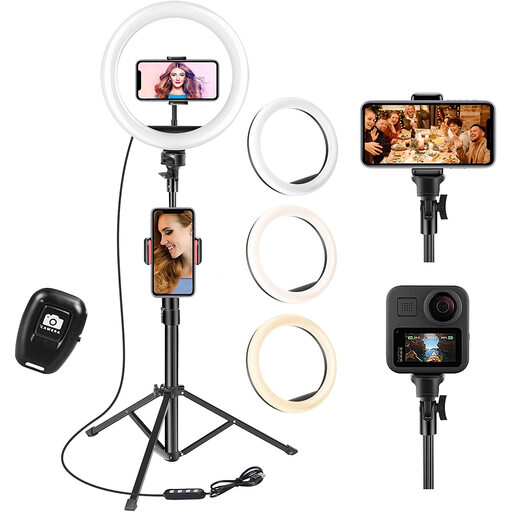
This set is designed for filming with a phone at a workbench. Record a test clip to check whether the light direction creates distracting reflections on coins.
The ring has a diameter of 10 inches. The set includes a 63-inch tripod, a phone holder, three colour modes and ten brightness levels.
 No image available
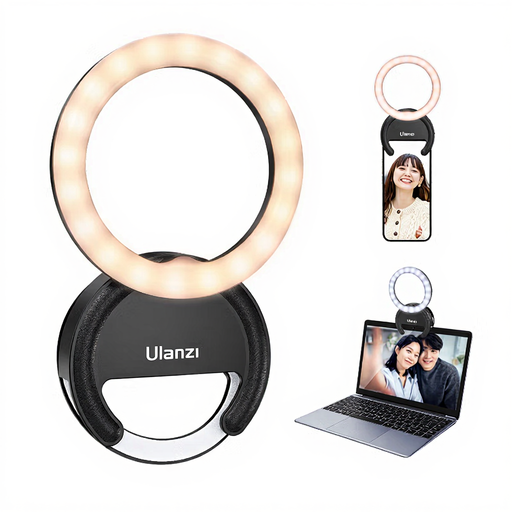
This light clips directly onto a smartphone and is suitable for filming on a mobile phone. Check that the clip fits your device, then record a test clip to assess reflections on the coins.
The product name lists three colour temperatures within the 3000 K–7000 K range and five brightness levels.
No, a ring light isn’t suitable for every coin-filming setup. Its shape and frontal position can create unwanted reflections or make the image look flat. Test it with a shiny coin and, if relevant, a plastic holder, then change the light direction or use diffusion if needed.
A phone holder alone doesn’t prove that the light, holder and tripod can be positioned securely and without obstruction above your coins. Measure your workspace and check the mounting points and contents of the exact set.
Record a test clip with the lights you’ll have on while filming, and check your camera’s white balance. Adjustable colour temperature can help you match the lighting, but it won’t correct an incorrect white balance automatically.
It depends on who is filming and how the footage will be used. The Dutch Data Protection Authority says that identifiable people in footage count as personal data. The exception for strictly personal or household use doesn’t apply to wider publication or business use. For this kind of filming, check which GDPR lawful basis applies, and don’t film others recognisably until you’ve checked the requirements.
For many consumer purchases made online from a business, you have a 14-day cooling-off period, although there are exceptions. The Dutch government also states that the Netherlands has no fixed statutory warranty period; if a product is faulty, the seller is your point of contact.