
Artist with limited desk space
Wants to film their hands and paper from above without a tripod base taking up workspace. NEEWER lists a maximum clamp opening of 5.5 cm for the N31; check that it fits your desk edge.


For a small drawing desk, a ring light with a desk clamp and arm can save workspace, provided the desk edge and arm reach are suitable. If you don’t have a suitable clamp, a lamp with a table base may be an alternative, but the base takes up space. Also check the camera angle, lighting, and the included holder and power supply: a ring light or tall tripod does not guarantee that your phone can be positioned directly above the paper.
Wants to film their hands and paper from above without a tripod base taking up workspace. NEEWER lists a maximum clamp opening of 5.5 cm for the N31; check that it fits your desk edge.
Wants to consider colour rendering when differences in paper or art materials need to show up on camera. Godox specifies a CRI of 90 for the LR120, but that figure alone doesn’t tell you what the finished video will look like.
Wants to get started with few separate components, so checks whether a phone holder, stand and suitable power supply are included with the chosen version. The Godox LR120 manual lists a phone holder and a USB power requirement; Rollei lists a phone holder and tripod for the LUMIS Comfort Bi-Color.
First work out how to position the camera above your drawing surface. Then assess the lighting on your own materials, and finally check which components and power supply you’ll need.
| What to consider | What should you check? | Who should pay particular attention? |
|---|---|---|
| Overhead view and workspace | Measure the desk edge and check the arm’s reach and phone position. NEEWER lists a maximum clamp opening of 5.5 cm for the N31. | If you want to film your hands and paper from above without a base on your small work surface, a suitable clamp and stable camera angle are important; around 36% of consumers put this first. |
| Shadows and reflections | Check whether you can dim and adjust the light; make a test recording with your own paper and materials. | As your hand moves across the paper while you draw, you’ll want to keep details visible and spot distracting reflections. For around 29% of consumers, this is their main purchasing concern. |
| Colour rendering | Compare the stated CRI and colour temperature for the exact version, and assess the results with your own camera. Godox lists a CRI of 90 and 3000–6000 K for the LR120; NEEWER lists CRI 85+ and three colour temperature settings for the N31. These are manufacturer specifications, not the results of a direct test. | If you’re explaining differences in paper or art materials, you’ll want to assess both the light and the finished footage. Around 21% of consumers make colour rendering their top priority. |
| Components and power supply | Check the list of included components and the power requirements for the exact version. The Godox LR120 manual specifies a USB adapter rated above 5 V/2 A and does not list a tripod among the included components. | If you want to get started without extra research, you’ll want to know in advance which holder, stand and power supply you need. Around 14% of consumers prioritise a complete kit that’s ready to connect. |
A phone holder and extendable tripod don’t prove that the camera can reach above the paper.
Before buying, check the arm’s angle and reach with the dimensions of your drawing surface in mind.
The position of your hand, the light and the surface of your materials all affect what the camera captures.
Make a test recording with your own paper and materials, and adjust the angle or brightness if needed.
The lamp, phone holder, mount and power supply aren’t included in the same combination with every version.
Compare the list of included components and connection requirements for the exact model. For the Godox LR120, the manual lists a phone holder and USB power with an adapter rated above 5 V/2 A.
A tripod isn’t included in the listed components for the LR120, so you may need to arrange a suitable mount yourself.
The N31 is a desk-clamp ring light with a flexible phone holder, designed to keep your work surface as clear as possible.
According to the product description, the Topshot Ring-10 combines a table base, adjustable arm and phone holder for overhead shots.
The LR120 is a standalone USB ring light with a phone holder, for anyone who chooses or already has a suitable mount.
The LUMIS Comfort Bi-Color is a kit with a phone holder and extendable tripod, for anyone who also wants to use the light away from their drawing desk.
This selection includes a 10-inch ring light with tripod and a compact ULANZI ring light for phones. For both, check whether you can achieve the camera position you want above your drawing surface.
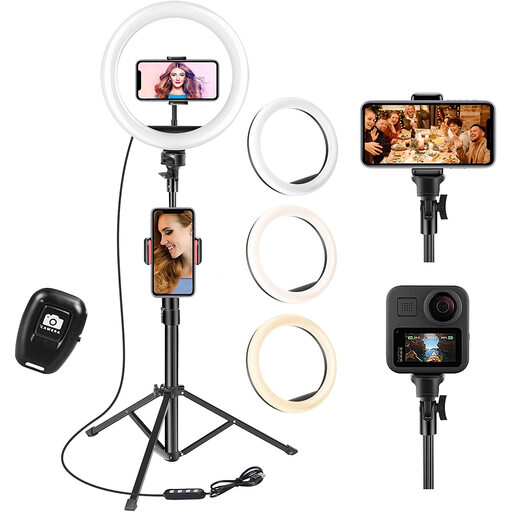 No image available
Could be a good fit if you want a tripod setup; check in advance whether you can position the phone above your drawing surface.
10-inch ring light, remote control, three light colours and ten brightness settings.
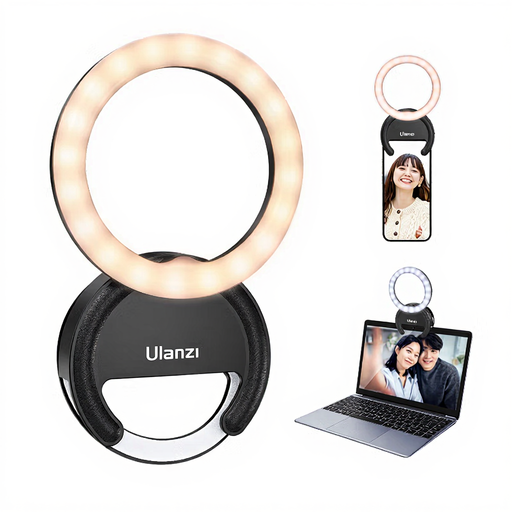 No image available
A compact option if you want to use a ring light with your phone; check that the mount suits your phone and recording angle.
Three colour temperatures from 3000K–7000K and five brightness settings.
No, not automatically. Check whether the phone holder and arm can reach above the centre of your paper; an adjustable lamp or tall tripod alone doesn’t prove that they can.
Make a test recording with your own materials and adjust the angle or brightness if needed. Ulanzi advises watching out for unwanted reflections when filming with ring lighting.
Check the list of included components and follow the power requirements for the exact version. The Godox LR120 manual lists a phone holder and USB power with an adapter rated above 5 V/2 A, but no tripod among the listed components.
Before filming, check that the clamp, arm and phone are firmly secured and fit properly on the desk edge. Don’t use the Godox LR120 in damp conditions.