
Artist using an overhead camera
Wants to film the entire work area without the light or mount getting in the way of drawing; a suitable, stable mounting solution is essential.


First, decide where to position your camera and how large your drawing area is. Then look for a light that can be mounted securely in that position and has adjustable brightness. A ring around the camera suits a front-lit setup, but if the paper reflects light or the dark background gets illuminated, choose a mount that lets you position the light separately from the camera. Also check what’s included with the version you’ve chosen, and only compare lux figures when they use the same measuring distance.
Wants to film the entire work area without the light or mount getting in the way of drawing; a suitable, stable mounting solution is essential.
Wants pencil strokes or colours to remain visible without distracting reflections, and needs to be able to adjust the light angle. The result also depends on the paper, camera and setup.
Films small parts of a drawing up close with a phone or camera, and could consider a compact ring if the mount and recording time are suitable.
First, decide how the camera will sit above the work area and how much space you need. Then choose the mount and light angle, and make sure the controls and power supply suit your materials and recording time.
| What to consider | What should you check? | Who is this important for? |
|---|---|---|
| Lighting the entire drawing area | Check the diameter, dimming controls and stated light output at the specified measuring distance. Assess how evenly the light is distributed by making a test recording of your own work area. | I want the corners of my drawing paper to remain visible too; a bright centre isn’t enough. Around 33% of consumers give full coverage of the drawing area their highest priority. |
| Mounting the camera and light | Check the mounting thread, holder, load capacity and clamp opening. Also check whether a tripod is included and whether the setup will fit above your table. | When filming from above, I want to secure the camera and light firmly without my hands being obstructed above the paper. Around 27% of consumers prioritise overhead mounting. |
| Controlling reflections and the background | Check whether you can tilt the light or position it separately from the camera. Make a test recording with your paper and background. | When using glossy paper, I want to be able to direct reflections away and stop unwanted light from falling on the dark background. For around 20% of consumers, this control is their top buying priority. |
| Colour settings and recording time | Check the colour temperature, power supply and any included adapter. If it runs on a battery, compare the stated run time with the length of your recordings. | For longer takes, I don’t want to have to stop unexpectedly, and I want to be able to adjust the light colour. Around 20% of consumers prioritise colour settings or recording time. |
A socket for a light stand doesn’t automatically mean a stand is included with the version you’ve chosen. This can matter if you want to position the light above your work area.
Check exactly what’s included with the version on offer, and make sure the mount suits your table and camera.
An overhead setup may require a separate tripod or a suitable desk mount.
Without the same measuring distance, a light output figure doesn’t tell you how the lights compare over your drawing area.
Note the measuring distance for each stated lux figure, and only compare figures measured on a suitably consistent basis.
A small size doesn’t tell you whether the power supply will last for a full demonstration.
Check the stated battery life and power supply for the exact version, and make sure they suit the length of your recordings.
If the battery won’t last for your planned recording time, you may need to pause to recharge it.
The LR150 is a large, adjustable ring for a setup where you plan the mounting separately.
The Round Vlogger 18-inch LED set Economy is a large ring for a mains-powered setup where the exact contents of the set matter.
The Vibe P30 version 5203 is a compact ring for close-ups and short recordings, rather than an obvious choice for a full sheet of drawing paper.
These Joybuy products are ring lights for filming with a phone. If you’re filming from above, check that the holder and tripod setup suit your camera and table.
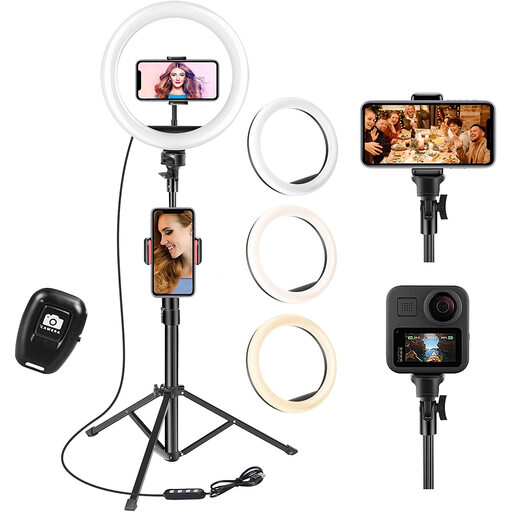 No image available
The product name specifies a 10-inch ring with a tripod; check that the included holder suits your phone and overhead setup.
The product name lists a remote control, three colour modes, ten brightness levels and a 63-inch tripod.
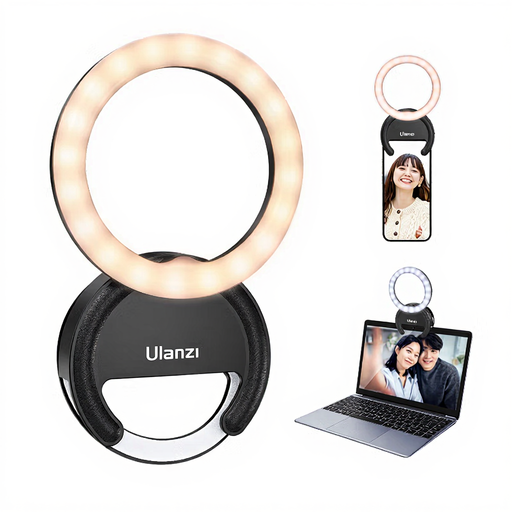 No image available
Its compact size suits phone close-ups; check that the mount is compatible with your device and filming setup.
The product name specifies three colour temperatures from 3000 K–7000 K and five brightness levels.
First, frame the drawing area and check in a test recording where reflections and light fall on the background. Choose a mount that lets you adjust the light angle; the available mounting points vary between lights and holders. This is setup advice, not a guarantee of a particular result.
That depends on the power supply and the exact version. Godox describes the LR150 as using a DC adapter; for a battery-powered light, check the stated run time and compare it with your planned recording time.
For a standard online consumer purchase in the Netherlands, you generally have a legal cooling-off period of up to 14 days after delivery; ACM ConsuWijzer notes that exceptions may apply. If a product, under normal use, doesn’t do what you could reasonably expect, your statutory rights are in addition to any seller’s guarantee.
No. According to the European Commission, where applicable EU rules require it, CE is the manufacturer’s declaration of compliance; there is no central EU body that issues a general CE certificate. CE is therefore not an independent performance test of the light.