
Teacher filming from above
Wants to show their hands, cutting work and the whole work surface. Check the table edge, the arm’s reach and how stable the phone is in the chosen position.


Start by choosing a camera angle and mount that keep your hands and the entire collage area in shot. Then choose a dimmable light that you can test with the workshop lighting and your own paper. A ring light illuminates the area around the camera, while movable side lighting is worth comparing if glare or visible layers matter. Before buying, also check the power supply, what’s included and whether the exact version meets the applicable product requirements.
Wants to show their hands, cutting work and the whole work surface. Check the table edge, the arm’s reach and how stable the phone is in the chosen position.
Compares paper, glue and backgrounds on camera, and wants to adjust the light to suit the lighting already in the room. A test recording with your own materials helps you assess colour and white balance.
Needs a setup that fits the available table and floor space. Remember other people using the space, too: identifiable images of people count as personal data, as the Dutch Data Protection Authority explains.
Suitable if: you want to film a defined work area from above with a phone and your table edge can accommodate a clamp.
Bear in mind: measure the table edge and check that the arm reaches the whole collage area; a holder alone doesn’t guarantee a usable overhead view.
Suitable if: you want to position the light further away from a larger work area and have enough floor space.
Bear in mind: a stand takes up space, and the phone holder needs to allow the camera angle you want.
Suitable if: you want to test whether light from the side reduces glare or makes the layers in your collage materials easier to see.
Bear in mind: you’ll need to adjust the position; compare the same material from the same camera angle using direct and angled lighting.
For a collage class, the main considerations are camera angle, paper colour, visible detail and the space around the table. Adobe explains that white balance affects the colours in an image, while Canon Europe notes that some LED light sources can cause banding when used with an electronic shutter. So test the light with your own camera and materials.
| What to consider | What to look for when buying | Who is this important for? |
|---|---|---|
| Overhead view and stable mounting | Measure the table edge and check the reach, phone holder and stability with your own equipment. | If I want to film my hands and the whole work surface from above, I need to know whether the mount will fit my table. Around 36% of consumers prioritise a stable overhead view. |
| Accurate paper colours | Compare a test clip using your own paper under the existing lighting, and check the colour settings for the exact light. | When I want to show paper colours in class, I need to assess them with my own materials and camera. Around 29% of consumers prioritise colour accuracy. |
| Visible layers and reflections | Film glossy and matte materials using your intended camera settings; compare light from directly in front with light angled in from the side. | If I want to show textures and techniques clearly, I need to check for reflections and any banding in the footage. Around 21% of consumers prioritise visible collage details. |
| Space and power supply | Check the space around the table, the stated power supply and which parts are included with the exact version. | When I use a shared workspace, I need a setup that doesn’t take up unnecessary room for walking or working and is compatible with the available power supply. Around 14% of consumers consider a compact setup with a suitable power supply the most important factor. |
The holder may be included, but the arm might not reach the collage area or hold the phone steadily at the angle you want.
Plan out the filming area in advance and check the mounted position with your own phone and table.
You may need a different mount if the included setup doesn’t reach the work surface.
The colour and visibility of paper and layers are also affected by white balance, light direction and camera settings. Some LED light sources can cause banding in footage with certain camera settings.
Record a test clip with your own materials and check the colours, reflections and any banding before filming a whole class.
Product compliance and whether a mount suits your camera setup are two separate matters. The Netherlands Food and Consumer Product Safety Authority explains when products must carry a CE mark; a general brand or category specification doesn’t, by itself, tell you anything about the exact version.
Check the compliance of the version being offered separately, then test the mount and the resulting image.
The versions reviewed offer different mounting options: the N31 with a table clamp and phone holder, and the RL-18 kit with a floor stand.
According to Rollei, the LUMIS Comfort Bi-Color is designed for a phone setup with a rotating ring, phone holder and stand.
According to Godox, the LR150 Air is a movable ring light with interchangeable battery handles.
One R2B version described combines a ring light with a floor stand and smartphone holder, offering a possible stand-based setup to compare.
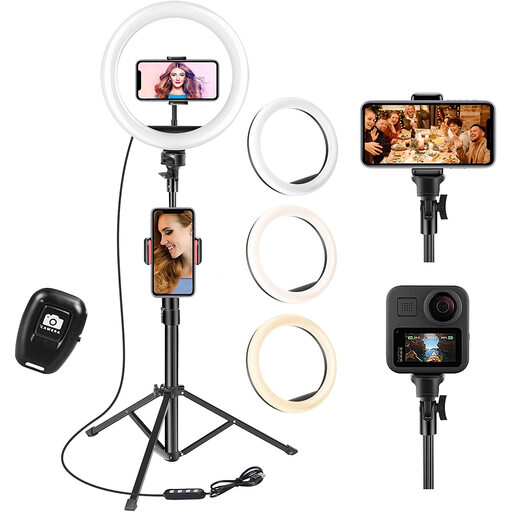
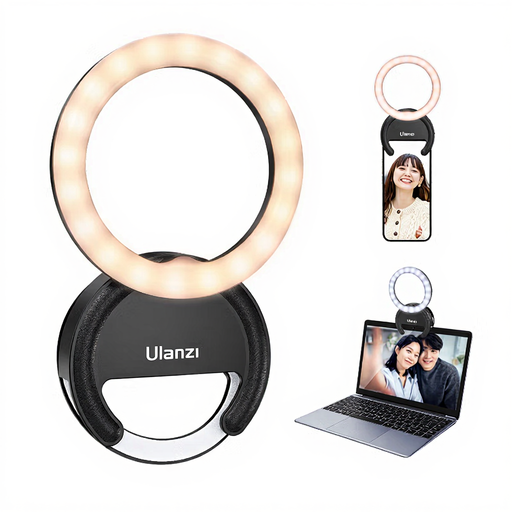
This selection of Joybuy products includes a ring light on a stand and a compact ring light that clips onto a smartphone. For both, check that the entire collage area is visible from your chosen camera angle and that the exact version meets the applicable product requirements.
 No image available
Could suit a phone setup with a floor stand; test whether the stand and holder can reach the whole collage area from above.
The product name lists a 63-inch stand, a remote control, three colour temperatures and ten brightness levels. Check what’s included and whether this exact version complies with the applicable requirements.
 No image available
This compact clip-on ring light is designed for smartphone video; check that the phone position also shows the entire collage area.
The product name lists three colour temperatures from 3000 K–7000 K and five brightness levels. Check whether this exact version complies with the applicable requirements.
Record a short clip using the actual paper, the workshop lighting and your chosen camera angle. Check the white balance, reflections, how clearly your hands appear and whether there’s any banding in the video; light direction and camera settings affect the result.
Check the mount and power supply for the exact kit, set up the stand securely and follow the instructions provided. For the RL-18, for example, NEEWER advises fully extending the tripod legs; this guidance applies to that model.
For a consumer purchase, the seller must offer a solution if the product is faulty; a manufacturer’s warranty is separate from your statutory rights. For online consumer purchases where the rules apply, you’ll generally have a 14-day cooling-off period. The Dutch Government explains these rights; check the terms that apply to your specific purchase.
The Netherlands Food and Consumer Product Safety Authority states that CE marking is mandatory for electrical products where this requirement applies. A list of lighting modes or a brand name doesn’t prove that the specific version on offer demonstrably meets the applicable requirements.
Identifiable images of people count as personal data. If you film and publish for business or organisational purposes, you need a legal basis under the GDPR. The Dutch Data Protection Authority says that consent is often the obvious choice, but it isn’t the only possible legal basis; don’t assume you can film others, and assess the intended use separately.