
Teacher with a permanent filming setup
Wants to keep hands, clay and tools steadily in shot during demonstrations. Camera angle, mounting and the space around the table all matter.


Start by choosing a stable camera angle that keeps your hands, clay and tools fully in shot. Then check whether a ring light will leave enough room to work. An adjustable ring light may suit a compact setup, while a directional light with a softbox gives you more control over the direction of the light when texture matters; this is how SmallRig describes the difference from the manufacturer’s perspective. Test the clay colour under your existing workshop lighting, and allow for the space taken up by the stand.
Wants to keep hands, clay and tools steadily in shot during demonstrations. Camera angle, mounting and the space around the table all matter.
Wants to film pigments and glaze colours accurately, despite the effect of workshop lighting and filming lights. Canon Europe explains that you can adjust your camera’s white balance in challenging lighting conditions.
Needs to set up and pack away between other users, while keeping an eye on tripod legs, cables, glare and people who might come into shot. The Dutch Data Protection Authority considers identifiable images to be personal data.
Start with the camera frame and the space available. Then consider colour settings and the shadows the light creates on the clay.
| What to consider | What should you check? | Who is this important for? |
|---|---|---|
| Complete, stable framing | Use your own phone to test a frame of the entire work surface, and check the position of the holder and how much room your hands have to move. | I want to film the whole process without hands or tools slipping out of shot. Around 31% of consumers put complete, stable framing first. |
| Accurate clay colour | Film with the clay and all the light sources you use during the lesson; adjust the camera’s white balance if needed. | If I want to show pigments or glaze, I need to be able to check the colour under the actual lighting. Around 25% of consumers give colour reproduction top priority. |
| Space around the setup | Measure the space for the tripod and phone holder, and position cables so they won’t trip anyone up. | I want to film without taking up more of other people’s workspace or walkways than necessary. Around 25% of consumers put available workshop space first. |
| Visible texture | Compare a shot with ring light against one with soft, angled light, and look for grooves and raised edges. | When the shape of my piece matters, I want to see whether shadows bring out its texture. Around 19% of consumers put clearly visible clay texture first. |
A phone holder attached to a light doesn’t automatically mean that hands, tools and the whole piece will fit in shot from the angle you want.
First, set the camera height and framing using your own phone. Then compare the mount and stand on the model you’re considering.
You may need a separate phone holder for a stable shot.
Light around the lens can reduce shadows, while light from a chosen direction can use shadows to bring out the shape of the clay. SmallRig describes this difference from the manufacturer’s perspective; the result also depends on your clay and camera angle.
Film the same piece briefly with ring light and with soft light positioned at an angle. Check that grooves and raised edges remain visible.
A directional light or diffuser may be an additional item for your setup.
What’s included varies by model. NEEWER lists a tripod for the RP19H, while the Godox LR150 manual doesn’t list one.
Check the parts list for the exact version you’re planning to buy.
You may still need a suitable stand, adapter or phone holder.
The RP19H is a larger ring light kit for a fixed phone setup.
The LR150 may suit you if you want an adjustable ring light and prefer to choose your own stand.
The LM19 is a compact magnetic phone ring light for close-ups, if the mount is compatible.
The Vibe P30 is a compact ring light for a mobile setup with a compatible 67mm mount.
This selection includes compact phone ring lights and ring lights with tripods for filming a clay modelling lesson.
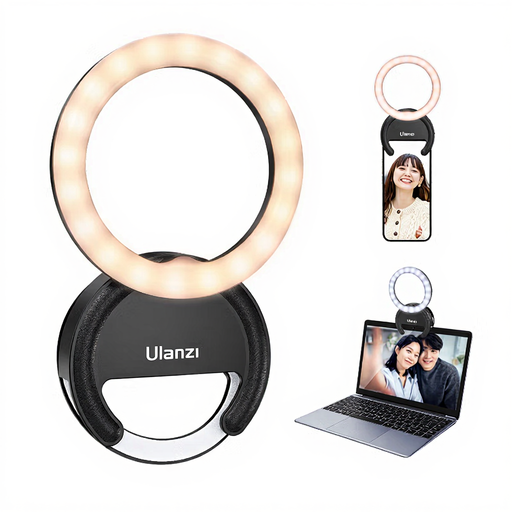 No image available
A compact option for adding light to phone video, as long as the mount fits your smartphone.
The product title lists three colour temperatures within 3000–7000 K and five brightness levels.
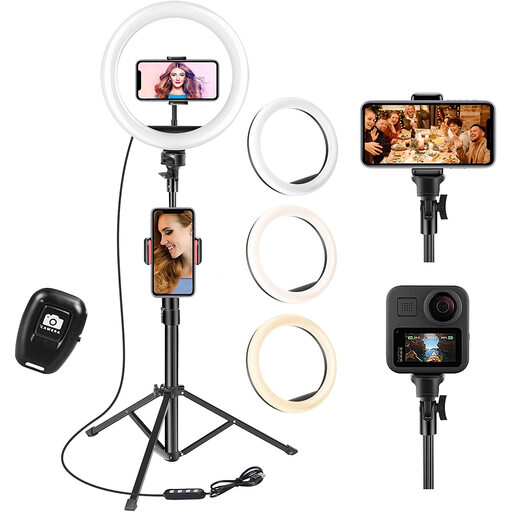 No image available
A kit with a tripod and phone holder for a fixed setup, if there’s enough floor and workspace.
The product information lists a 63-inch tripod, a remote control, three light colours and ten brightness levels.
The ring diameter alone won’t tell you. Check whether the phone holder and stand can hold the camera steadily at the required height and angle, and first test the framing with your hands and tools in shot.
Take a test shot under your actual workshop lighting and adjust the camera’s white balance if needed. Adjustable colour temperature gives you more control, but it won’t automatically correct every light source in the scene.
Check the space around the tripod and cables, and make sure the light doesn’t dazzle other people. If it’s a workplace, the regulation cited by Arboportaal requires lighting not to pose a risk to employees’ health and safety; this doesn’t mean that every hobby workshop is a workplace.
No, this varies by model and version. NEEWER lists a tripod and mains cable among the items included with the RP19H; the Godox LR150 manual lists an adapter and phone holder, but no tripod. Check the parts list for the version you’re planning to buy.
Not without first checking which rules apply to recording and publishing the footage. The Dutch Data Protection Authority explains that identifiable images are personal data. If you’re filming on behalf of an organisation or for professional purposes, you need a lawful basis under the GDPR. Consent is one possible basis, but not the only one. The household exemption may apply to strictly personal use that stays private. Where possible, keep other people out of shot.