
Overhead film-maker
You show what you’re doing on a table and mainly need a stable, clear view of your hands and the clay.


Start by choosing a stable setup that gives you a clear overhead view of your hands and the entire work surface. Then decide whether you need a dimmable ring light to supplement the window light. As window light can change throughout the day, it’s important to test the clay and your camera’s white balance; Adobe explains that white balance affects the colour of the entire image. A ring light won’t automatically remove all hand shadows. Canon describes using fill light on the opposite side to the main light as a way to reduce shadows, but check that the shape of the clay remains visible on camera.
You show what you’re doing on a table and mainly need a stable, clear view of your hands and the clay.
You show different colours or finishes and want to see how window light and artificial light together affect the colours on camera.
You want the lighting to remain usable as the light from the window changes during filming.
First, check that your phone, light and mount work together to give you a clear overhead view. Then consider the colour of the light, shadows and power supply for the length of your lesson.
| What to consider | What should you check? | Most relevant to |
|---|---|---|
| Clear overhead view | Check that the mount suits your table and that the phone gives you a clear view of your hands and the work surface. | When I film what I’m doing with the clay, I want the camera to be secure and not obscure my hands. Around 31% of consumers put a stable overhead view first. |
| Colour in mixed light | Check whether the light is dimmable and has an adjustable colour temperature; test the white balance with the clay in shot. | When I demonstrate colours or finishes, I want to see how the clay looks in a mix of window light and lamp light. Around 25% of consumers give true-to-life colours top priority. |
| Shape and hand shadows | Record a test while moving your hands and, if needed, try a different angle or a little fill light. | When I explain small details of a shape, I want the clay to remain visible without hand shadows obscuring what I’m doing. Around 25% of consumers prioritise being able to see shape and shadow. |
| Light throughout the lesson | Check the power supply and review a test recording that lasts about as long as you expect to film. | For a longer lesson, I want the light to remain usable as the window light changes. Around 19% of consumers give consistent lighting top priority. |
A product description won’t show you how moving hands and three-dimensional clay will look in your own setup.
Film a short demonstration and compare the lighting angles and dimmer settings before recording the whole lesson.
The camera position also depends on the table, the phone and how the holder or arm can be positioned.
Check the entire mounting setup and try it out with your phone.
Depending on your table setup, you may need a suitable arm, clamp or other mount; check this in advance.
Window light can change, and white balance affects the colour of the entire image.
Test the colours with the clay in shot and compare a fixed-colour light with an adjustable model if you want to combine lamp light with window light.
The RH8B is a compact desk ring light to consider if you want to position the light and phone around a small work surface.
The LR150 is a larger ring light that lets you adjust brightness and colour temperature to complement window light.
The Aura D35450 is an option with a floor stand and a fixed colour temperature.
The U200 is a portable ring-shaped video rig for anyone who also films away from a fixed table setup.
This selection is suited to filming with a phone and offers adjustable light colour and brightness. Check that the mount in your setup allows you to achieve the camera angle you want.
 No image available
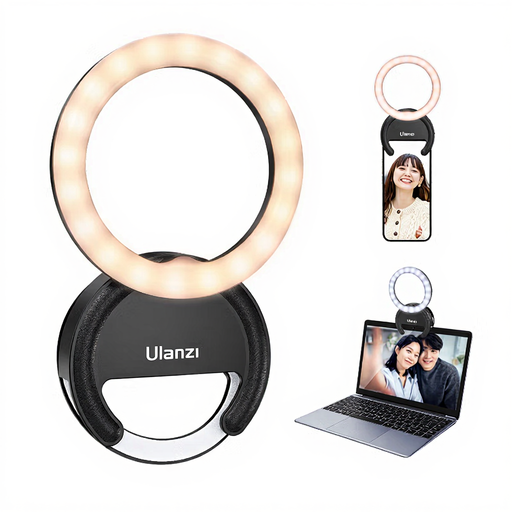
A ring light for your phone, suitable for recording a lesson where you want to position the phone and work surface together.
The product title lists three colour temperatures from 3000K–7000K and five brightness levels.
No, the phone doesn’t necessarily have to sit in the middle of the ring. Choose a camera position that shows the whole activity; you can also position the camera and light separately.
First, make a test recording with the clay in shot and use the window as your main light if it illuminates the work surface well enough. Dim the extra light until the shadows are manageable, then check the white balance. The right setting depends on the light sources, not just the Kelvin value on the lamp.
Check that the holder and stand are stable, and keep the light dry as instructed in the Godox manual. Use the specified power supply and consult the manual for your chosen model for cleaning or repairs.
No. The Dutch government states that there is no fixed statutory guarantee period in the Netherlands: you’re entitled to a product that meets what you can reasonably expect. If a product is faulty, contact the seller; a manufacturer’s guarantee is separate from this.
For distance purchases from a business, the Dutch government says that in many cases you have a 14-day cooling-off period. Check the applicable terms and exceptions; this cooling-off period is separate from your statutory rights if a product is faulty.