
Bookbinder filming from above
If you want to show folding, sewing or gluing, you’ll need a set-up that keeps the book, your hands and the camera in the right positions. A phone holder alone doesn’t guarantee an unobstructed top-down view.


If you’re filming a bookbinding lesson from above, start with a stable camera set-up that keeps the open book and your hands clearly in shot. Then make a test recording to check that the work surface is lit well, without distracting shadows or reflections. A compact light may work well for close-ups, but it won’t necessarily illuminate an entire book. Also check what’s included and the relevant safety marking for the exact model.
If you want to show folding, sewing or gluing, you’ll need a set-up that keeps the book, your hands and the camera in the right positions. A phone holder alone doesn’t guarantee an unobstructed top-down view.
If you also want to light the edges of an open book, consider how much room you’ll need for the light, the stand and your tools. NEEWER and Falcon Eyes offer examples of larger set-ups, but you’ll need to test how the light falls on your table.
If you want to film paper, thread and cover materials clearly, check the colour rendering and reflections in a test recording. Canon Netherlands points out that ambient light can affect your camera’s white balance.
Start with the camera and the space you have to work in. Then assess the lighting, material colours and portability using your recordings.
Suitable if: you want to film the open book and both working hands together from above, and have room for a stable support.
Bear in mind: a larger ring and stand take up space, and frontal lighting won’t prevent reflections on shiny materials.
Suitable if: you mainly shoot short close-ups, such as a stitch or book spine, and want a portable set-up.
Bear in mind: SmallRig says its compact Vibe P30 5203 is designed for macro and tabletop shots, among other uses. That doesn’t mean it will light an entire open book evenly.
Suitable if: a test recording shows shadows from your hand, reflections or details that are hard to see.
Bear in mind: an extra or repositionable light source needs space and adjustment. First, check how changing the light’s position affects the picture.
| What to consider | What to look for | Who it matters most to |
|---|---|---|
| Clear top-down view and stable mounting | Check that the mount supports your device and the camera angle you want, while leaving room for your hands. | When folding or sewing, I want to position the book, my hands and the camera freely; around 36% of consumers prioritise stable mounting and a clear top-down view. |
| Lighting across the work surface | Record a test action across the full width of the open book, then check the corners, shadows and small details. | When my hands are moving, I want to keep the bookbinding work in view; around 29% of consumers give lighting across the work surface top priority. |
| Colour and reflections | Record the same paper and cover material using your intended light setting, then check the colour, white balance and reflections. | For a portfolio, I want to capture the paper and cover clearly; around 21% of consumers prioritise material colour over the other needs listed. |
| Compact set-up for close-ups | Check that the light fits your phone or camera set-up, how it’s powered and whether you also need wide shots. | When I mainly shoot short close-ups, portability matters more; around 14% of consumers prioritise a compact set-up for close-ups. |
A holder for filming from the front won’t automatically give you a clear view of the book, your hands and your tools.
Before choosing, work out where to place the camera, light, book and your hands, and check the mount supplied with the exact model.
You may need a suitable camera support in addition to the set.
A specification doesn’t tell you how the light will fall on your workbench, whether materials will reflect light or how the camera will render colours.
Make a short recording of paper, cover material and your moving hands, then check the picture before filming the whole lesson.
What’s included varies by model and version; a stand or holder you need may not be supplied.
Check which mount, stand and power supply are included with the exact model, and what else your set-up needs.
The product ranges mentioned offer different starting points for your set-up. Check the exact model and how the light falls on your own workbench.
The LR150 is a larger, adjustable ring worth considering if you’re putting together a suitable set-up above your workbench.
The RL-18 18 Inch LED Ring Light Kit is a larger set that comes with a tripod and phone holder.
According to distributor Benel Europe, the DVR-300DVC is a tiltable, dimmable ring with a camera bracket and diffuser.
The Vibe P30 67mm set 5203 is designed for compact phone set-ups and uses such as macro and tabletop shots.
The Joybuy options below are phone ring lights with a tripod or compact phone lights. Check whether they suit your top-down shots or close-ups.
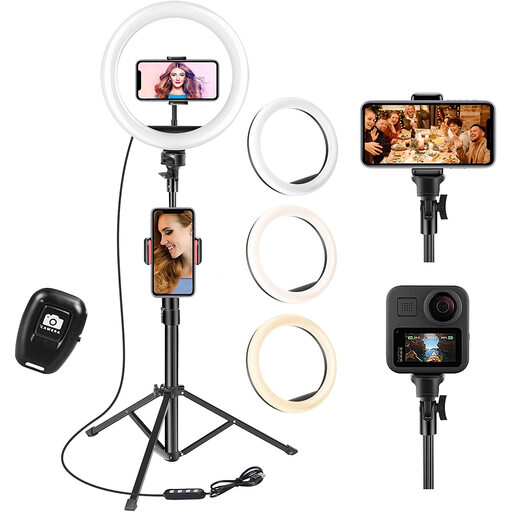 No image available
Worth considering if you’re looking for a phone holder and tripod for your set-up. Check whether they provide the top-down angle you want while leaving enough room for your hands.
According to the product title, this ring light has three colour settings and ten brightness levels.
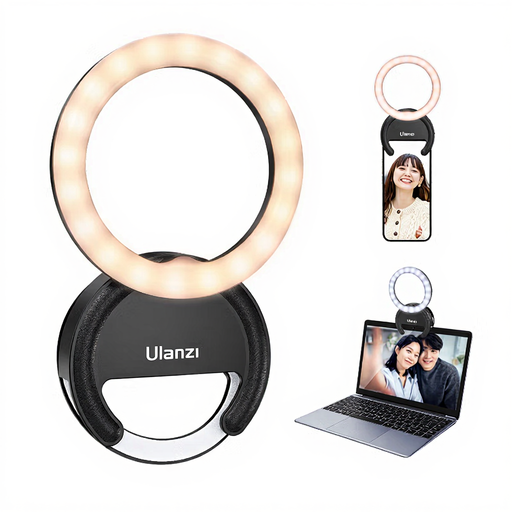 No image available
A compact option to consider for short close-ups taken close to your phone. Don’t assume it will light an entire open book without testing it first.
The product title lists three colour temperatures from 3000–7000 K and five brightness levels.
No, it doesn’t. First, check that the phone holder or camera bracket allows the top-down view you want without getting in the way of your work. It may be more practical to position the camera separately.
Record a short folding or sewing action with the open book in shot. Check the corners, shadows from your hands and any reflections. Adjust the light’s position and brightness if needed, and check the white balance again if the lighting changes.
No, it depends on the model and set. NEEWER lists a tripod with the RL-18 kit; according to distributor Benel Europe, the tripod for the Falcon Eyes DVR-300DVC is sold separately. Check what’s included with the exact model.
According to the Dutch government, there is no fixed statutory warranty period in the Netherlands; the seller remains your point of contact if a product is faulty. For applicable online consumer purchases, you generally have 14 days to change your mind, but these rules don’t apply to every transaction, such as a purchase from a private seller.
An electrical ring light placed on the market in the Netherlands must carry the applicable CE marking, as explained by the NVWA and Ondernemersplein. Check the marking and documentation for the exact model; a declaration for another model doesn’t demonstrate that your light complies.