
Overhead filming
You want to keep the book, tools and moving hands in shot. So first work out where the light, tripod and camera can go without getting in the way of your workspace.


If you’re mainly filming the work surface, start by choosing a light and mounting arrangement that keeps the book and your moving hands fully in shot. A phone holder alone won’t guarantee a stable setup above the table. Adjustable white light can help you match the lamp to other artificial lighting, but make a test recording and check colours, glare, shadows and any flickering before deciding whether a ring light suits your workspace.
You want to keep the book, tools and moving hands in shot. So first work out where the light, tripod and camera can go without getting in the way of your workspace.
You’re filming paper, covers or yarn and want to avoid the ring light and other artificial lighting making colours look different on camera. Remember to consider your camera’s white balance too.
You want to start filming quickly, so check that the phone holder, tripod and power supply are suitable for your workspace and the camera angle you want.
Start by considering the space needed for the book, your hands, camera and tripod. Then choose the light controls and kit contents that suit your recording. A test recording with your own materials will show you whether the setup works.
| What to consider | What to look for when buying | Best suited to |
|---|---|---|
| Work surface and camera angle | Measure the ring, tripod base and clear space around the book and your hands. Check that the mount allows the angle you want. | I want to keep the book, my hands and tools in shot at the same time without the light getting in the way of my workspace. That’s why around 33% of consumers give work surface and camera angle top priority. |
| Colour of materials | Check the colour temperature range in kelvin and set the white balance to suit the actual scene. NEEWER lists adjustable light from 2900–7000 K and CRI 97+ for the RH12B. These are the manufacturer’s specifications, not a guarantee of how your recording will look. | When I film paper, covers and yarn, I want the colours to remain recognisable under the lighting in the room. For around 27% of consumers, the colour of the materials comes first. |
| Flickering in video | Make a short test recording with the lights you’ll use during the class. For areas with a mains frequency of 50 Hz, Sony lists shutter speeds of 1/50 or 1/100 of a second as possible settings; test what works with your camera and lighting. | When filming under artificial light, I want to check in advance for any stripes or changes in brightness. That’s why around 20% of consumers prioritise flicker-free video. |
| Setup, mounting and power | Check the exact kit contents, phone mount, space needed for the tripod base and required power connection. Godox lists an adapter and phone holder for the LR150; the support you need must be compatible with the version you choose. | I want to be able to get started with parts that fit my table and phone, without finding I’m missing something during setup. Around 20% of consumers give setup, mounting and power top priority. |
A holder keeps your phone in place, but that alone won’t tell you whether the light and tripod can stand securely above your work table.
Measure the available space and test your preferred angle with the book, camera and light in their intended positions.
You may need a separate light stand for the Godox LR150. Check whether the support is included with the version you choose.
Specifications and kit contents can vary between versions. The model name alone doesn’t guarantee that the colour controls and included accessories are right for your needs.
Check the full model version, light settings and kit contents on the product page for the exact listing.
A stated CRI value alone doesn’t tell you how paper will look alongside the other lights in the room and with your chosen camera white balance.
Make a test recording with the actual paper and set the white balance for the lighting you’ll use during the class.
The RH12B is a smaller, tiltable ring light setup; according to the manufacturer, the RL-18 has a ring diameter of 45 cm.
The LR150 is a larger ring light with adjustable colour temperature; check separately which mount is offered with the version you choose.
The LUMIS Comfort Bi-Color is designed for a compact smartphone setup with a ring light, holder and tripod.
These ring lights may suit smartphone recordings of a bookbinding class; check that the light controls, holder and tripod for each version work with your workspace.
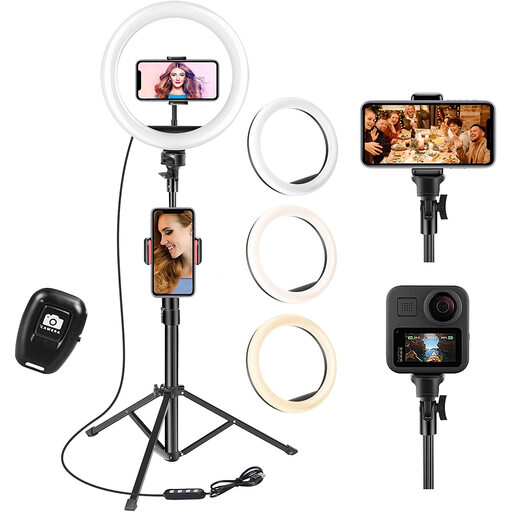 No image available
Could suit a smartphone setup; check that the holder and tripod position allow the overhead shot you want.
The product title lists three colours and ten brightness levels.
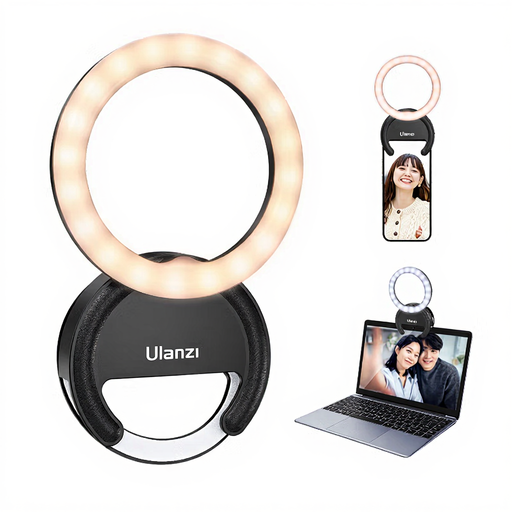 No image available
This compact phone ring light could suit direct smartphone filming; check that its position works with the book and your camera angle.
The product title lists three colour temperatures from 3000K–7000K and five brightness levels.
First measure the book, the available workspace and the space for the tripod. Then set up the light and camera to test the arrangement. A tiltable ring or tall tripod gives you options, but doesn’t guarantee that the setup will fit securely above your table.
Make a test recording with the lights you’ll be using switched on. For areas with a mains frequency of 50 Hz, Sony lists a shutter speed of 1/50 or 1/100 of a second as a possible setting to reduce flicker. Check your camera settings and test again.
Where possible, match the ring light’s colour temperature to the other lights and set the camera’s white balance for the actual scene. Canon explains that different light sources can make colours look different; a CRI rating doesn’t replace this check.
As well as checking the holder, make sure the tripod base fits without getting in the way of your workspace, the light can reach the angle you want, and the exact version includes the parts and power supply you need. A phone holder alone doesn’t make the setup suitable for overhead filming.
No. A CRI rating alone doesn’t guarantee that paper will look a particular colour in your video. Other light sources and your camera’s white balance also play a part, so make a test recording with the materials you’ll use during the class.