
Filming from above
You want to keep the board, game pieces and your hands in shot at the same time. Pay attention to the arm’s position and load capacity, as well as where the phone holder sits.


First decide whether the camera needs to film the whole board from above, or whether you want to position the light separately from the camera. A ring light with an overhead arm can work well for a steady top-down view, while movable light beside the camera is worth trying with glossy cards. Test for reflections, check the mounting and make sure the power supply works in the space where you plan to film.
You want to keep the board, game pieces and your hands in shot at the same time. Pay attention to the arm’s position and load capacity, as well as where the phone holder sits.
You want text and illustrations to be easy to read without distracting reflections. A light source you can move makes it easier to try different angles. Nikon USA notes that reflections on glossy surfaces are a consideration in photography.
You want to be able to put your equipment away after use. Before choosing a light, consider the space available around the table, how it attaches and how it is powered.
A good fit if: you want to film the board and the action from above with a compatible phone.
Keep in mind: the arm needs space to attach. Check that the whole board fits in shot and that the set-up is stable.
A good fit if: you want to position the light and camera separately, for example if the person explaining the game will also be on camera.
Keep in mind: a light stand is not automatically a horizontal camera mount for filming from above the board.
A good fit if: you want to move the light around often or avoid relying on a mains socket.
Keep in mind: you will still need a suitable camera mount for an overhead view. Battery life also depends on the settings you use.
A good fit if: a test recording shows distracting reflections on glossy cards or tokens.
Keep in mind: changing the light’s position may take up extra space. Check the result from your chosen camera angle.
| What to consider | What should you check? | Who should pay particular attention? |
|---|---|---|
| Filming the board and hands from above | Check the arm’s reach, the phone holder and whether the whole board fits in shot. | If you want to show the board and the action at the same time, a suitable, stable camera mount is important. Around 33% of consumers say an overhead view is their main reason for buying. |
| Reducing reflections | Record a test clip with your glossiest cards and try changing the angle of the light. | If you want card text to remain readable, you need to be able to move the light when it reflects off the surface. Around 27% of consumers put reflection control first. |
| Colour and small text | Watch a test clip under the workspace lighting you will actually be using. | If you want game colours and small text to remain clear in your existing lighting, compare the footage in those conditions. Around 20% of consumers give this the highest priority. |
| Putting equipment away and power | Check what mount is included, where cables can go and whether the run time suits your recording. | In a shared space, you will want to clear the table after filming and know how the light is powered. Around 20% of consumers choose storage and power as their main consideration. |
What’s included varies by model: a light stand does not necessarily hold your phone above the playing surface.
For the version you are considering, check the arm, camera mount and included accessories separately.
You may need a separate, suitable camera mount.
Glossy cards or game pieces can reflect the light source, making details harder to read.
Test your glossiest card from the filming angle and leave room to move the light to one side.
Run time can depend on the setting you choose.
Compare the specifications for the exact version you are considering with your recording time, and charge the light beforehand.
You may need a different power solution or recording schedule.
Worth considering for an overhead ring light with a phone holder or a ring light you can move around.
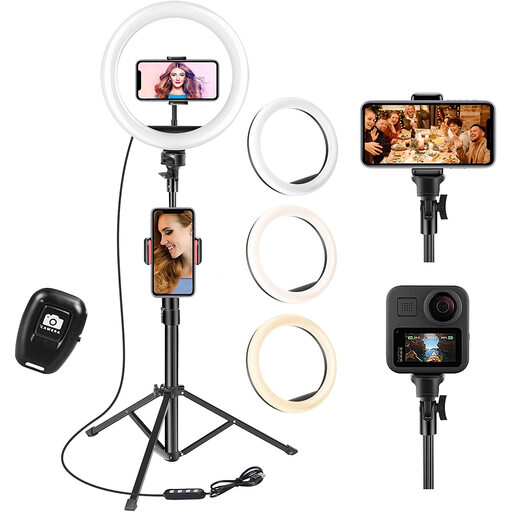
The RH10B is an adjustable ring light with a tripod, for those who want to position the light and camera separately.
The LR150 is a ring light with an adapter, phone holder and adjustable colour temperature, powered by mains electricity.
These Joybuy product picks are ring lights for smartphone videos. Check separately whether the mount is suitable for the camera angle you need to film the board.
 No image available
A phone holder and remote control are listed for smartphone video recording.
The product name lists a 63-inch tripod, 3 light colours and 10 brightness levels.
 No image available
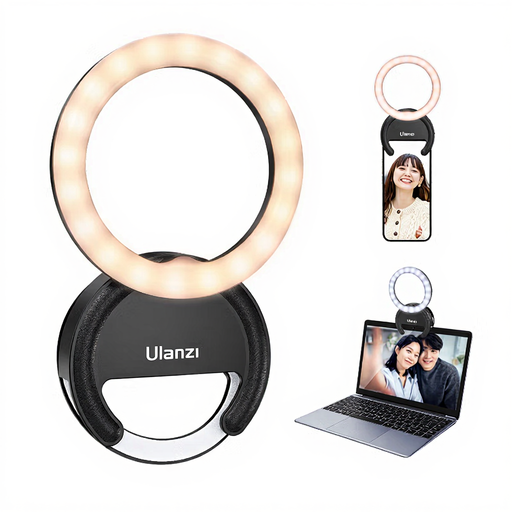
The product description says the light clips onto a smartphone, making it a compact option for filming on your phone.
The product name lists 3 colour temperatures from 3000 K–7000 K and 5 brightness levels.
No. Check that the phone holder fits your phone and that the camera can be positioned above the playing surface. Record a test clip to see whether the whole board stays in shot; a light stand or tripod thread alone does not guarantee this.
First, change the angle between the light, card and camera, then assess the same card in a test clip. If the reflection is still distracting, try positioning the light beside the camera; the result will depend on the card’s surface.
When buying from a business at a distance, you are generally entitled to a statutory 14-day cooling-off period, although exceptions apply. The Dutch Government advises checking the terms that apply to your purchase. Check who the seller is and what is included with the version you choose.
Check which European product rules apply to the exact version you are considering. If the product falls within a category that requires CE marking, the relevant CE mark must be displayed. Business.gov.nl explains that this depends on the product rules that apply.
If you film identifiable people on behalf of a business or organisation and use the footage professionally or commercially, the Dutch Data Protection Authority says you need a lawful basis under the GDPR. Keep others out of shot if you have not agreed their involvement and the intended use of the footage. Different rules apply to purely personal use.