
Creator without a permanent filming space
You film in a shared bedroom and want to put the light and holder away when you’re finished. Benel Europe and Hama describe products for use in small spaces, including a foldable ring light.


Choose a foldable tabletop setup or a suitable desk clamp if you want to keep the floor clear. A floor stand is an option if you need more height and have room to spread out its legs. Then check that the light controls, holder and power supply are compatible with your camera or phone. A ring light won’t automatically give you the depth of shadow you want or prevent reflections in your glasses.
You film in a shared bedroom and want to put the light and holder away when you’re finished. Benel Europe and Hama describe products for use in small spaces, including a foldable ring light.
You film while seated and want to light your face without having tripod legs on the floor. A tabletop tripod or a suitable desk clamp could work for this setup; check the dimensions and mounting method for the model you choose.
You sometimes film sitting down and sometimes standing up, so you need adjustable height. NEEWER recommends spreading the RL-18’s legs as far as possible for stability, which requires floor space.
Choose this if: you film at a desk and want to put the setup away afterwards.
Bear in mind: the available working height and the space needed for your phone or camera. Hama lists a tripod range of 52 to 138 cm for one model; this range won’t necessarily apply to other kits.
Choose this if: you have a suitable, dedicated spot at your desk and don’t want tripod legs on the floor.
Bear in mind: the desk thickness and the position of your camera and cable. Elgato lists a clamp for surfaces up to 6 cm thick for its Ring Light, but marks the model as Legacy (EOL).
Choose this if: you want to position the light higher or don’t always film at the same desk.
Bear in mind: the space needed when the legs are spread out. For the NEEWER RL-18, the manufacturer lists a 45 cm ring and a stand height of 48–155 cm; the legs need to be spread as far as possible for stability.
Consider this if: reflections from a ring light in your glasses or a lack of shadow depth bother you, or you film with several people.
Bear in mind: you may need to position the light source differently and make a test recording to see what works in your room.
| What to consider | What should you check? | Who is this important for? |
|---|---|---|
| Storage and sharing the space | Check the folded dimensions, the legs, the minimum height and whether the setup can be used as a tabletop tripod. | If I want to clear the bedroom again after filming, compact storage is my main concern. Around 27% of consumers say storage is their top priority. |
| Stable positioning and height | Measure the height you need and, if you’re using a clamp, the desk thickness. Check that there’s room for the tripod legs and that the holder suits your recording device. | If I want to position the light and camera at a specific spot or height, the mounting method needs to suit my room and desk. Around 27% of consumers give mounting and height top priority. |
| Adjustable light on your face | Check that both the brightness and colour temperature can be adjusted, and make a test recording with your own camera and glasses, if you wear them. | If I want to light my face when the ambient light changes, I focus mainly on the light controls and how I look on camera. Around 26% of consumers put adjustable face lighting first. |
| Connections, power and accessories | Check the power requirements, cable length, phone width or camera connection, and what’s included in the exact package. | If I want to know whether my device can be mounted and the power supply will reach my filming spot, I check the connections in advance. Around 20% of consumers say device and power connections are their main concern. |
A tripod can get in the way in a shared bedroom. For the NEEWER RL-18, the manufacturer recommends spreading the legs as far as possible for stability.
Measure the clear floor space around your filming spot and check how the legs sit when the light is in use.
If the setup doesn’t fit, you may need to find another spot or use a tabletop or clamp setup.
Mounts vary by model; a phone holder won’t necessarily suit your camera or phone.
Compare the holder with your device’s dimensions or connection, and check what’s included in the exact version.
If the holder doesn’t fit, you may need a separate mount.
Frontal ring lighting can create little depth of shadow and make reflections in glasses more noticeable.
If possible, make a test recording. If reflections or a flat-looking image bother you, try diffused light positioned elsewhere.
The SpotLight FoldUp 102 II is an example of a foldable smartphone ring light.
The RL-18 is an example of a larger ring light with a floor stand for filming at different heights.
The LR150 is an example to consider if you want stepless adjustment and a separate choice of mounting position.
The Ring Light is an example of a setup with a desk clamp and camera mount.
This selection includes ring lights for phone videos and compact LED video lights. Check that each model’s design and mounting method suit your talking-head setup.
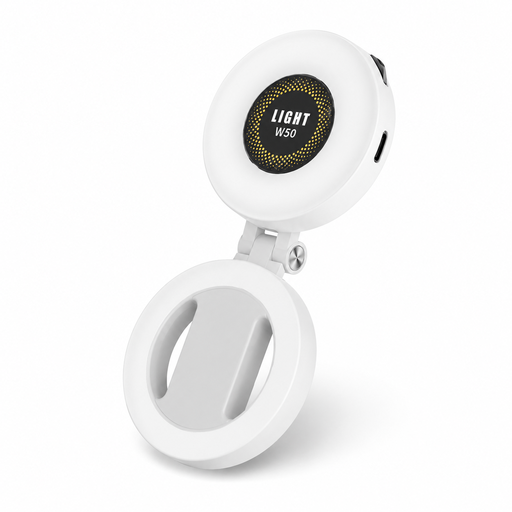 Image unavailable
A portable fill light for video or Zoom recordings with a phone.
The product name specifies 360° LED lighting and CRI95+.
The product name states that the model is compatible with iPhone and Android devices; check that the magnetic mount suits your device.
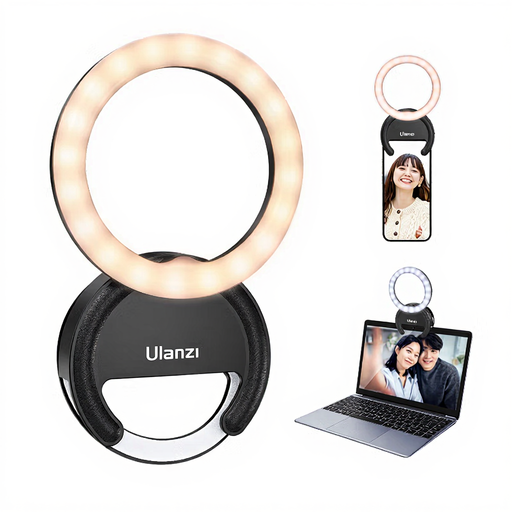 Image unavailable
A phone ring light for video recording, video calls and streaming.
The product name specifies three colour temperatures from 3000K–7000K and five brightness settings.
Check that the phone holder fits your device.
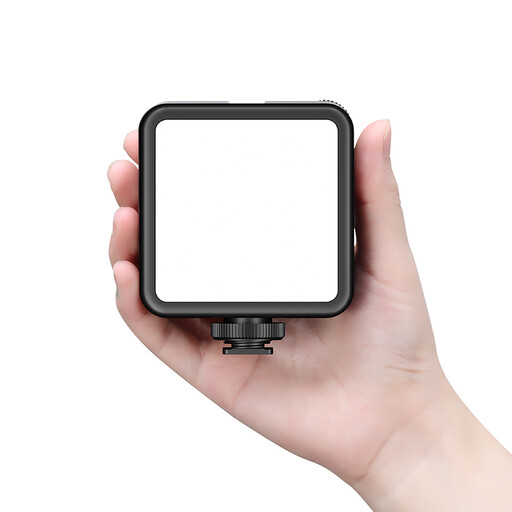 Image unavailable
A rechargeable LED video light for recording; this model isn’t a ring light.
Before buying, check how the light attaches to your camera setup.
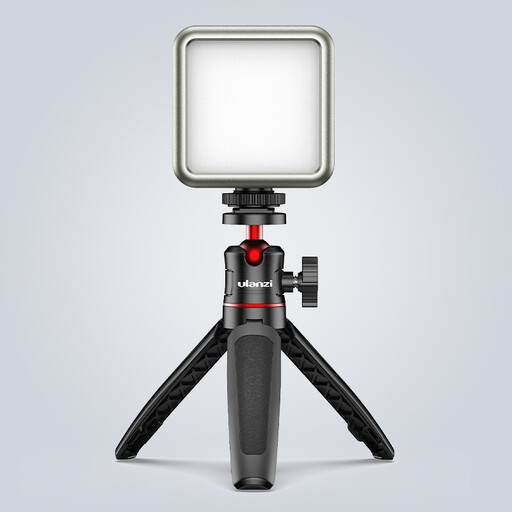 Image unavailable
A dimmable camera video light for uses such as YouTube vlogs; this model isn’t a ring light.
The product name specifies a colour temperature range of 2500K–9500K, a 2000 mAh battery and a magnet on the back.
Check that the mount and positioning suit your camera setup.
Start by placing the light near the camera’s direction, then check a test recording for shadows and reflections. Move or turn the light if your glasses show a noticeable reflection; the best position depends on your room and recording setup.
Compare the desk thickness with the clamp’s range and make sure the desk is stable. Also check that the light, camera and cable can be positioned where and at the height you want; the stated clamp range applies only to that particular model.
You can if there’s enough light where you’re filming. Daylight can change with the weather and time of day, so if you film regularly, make a test recording at the time you plan to record.
A CE mark is required when specific applicable EU rules require it for the product. The European Commission explains that CE marking applies only to products covered by rules that require the mark; the logo alone doesn’t prove that a model on sale meets all applicable requirements. Check the product information for the exact version.
When you buy from a business at a distance, you’ll often have a 14-day cooling-off period, according to the Dutch government. Check the terms for your purchase; a purchase from a private seller isn’t covered by the same distance-selling rules.