
Cooking for a full neighbourhood table
You want to know how much rice porridge—not just how much ordinary rice—will fit in one permitted batch.


Start by working out how much rice porridge you need to make in each batch: the stated capacity in cups of uncooked rice doesn’t tell you how much porridge the cooker can hold. A model with a porridge or congee setting makes its suitability for cooking porridge clearer, but the recipe and fill instructions still determine the batch size. Plan how you’ll serve it too. For professional hot holding of unpackaged perishable food, the NVWA advises checking the temperature with a digital probe thermometer and keeping it at a minimum of 60 °C.
You want to know how much rice porridge—not just how much ordinary rice—will fit in one permitted batch.
You’re looking for a dedicated porridge or congee setting and want to match the maximum fill level to your recipe.
You’re preparing the porridge in advance and need to plan how to keep it warm while serving or cool leftovers quickly.
| What to consider | What should you check? | Who should pay particular attention? |
|---|---|---|
| Batch size | Check the maximum fill level for porridge and the recipe instructions; don’t base your decision on cups of ordinary rice. | If I’m cooking for a full neighbourhood table, I want to know how much porridge fits in each permitted batch. Around 29% of consumers put batch size at the top of their list of buying concerns. |
| Porridge setting | Check whether the programme is suitable for your type of porridge and which ingredients and quantities are permitted. | If rice porridge is my main dish, I want a setting that suits my recipe. Around 24% of consumers are primarily looking for a suitable porridge setting. |
| Serving and keeping warm | Check the food’s temperature; an automatic keep-warm setting won’t measure it for you. | If I’m cooking in advance and serving later, I want to know how to serve the porridge safely and cool leftovers quickly. Around 29% of consumers prioritise their serving schedule. |
| Cleaning and reuse | Check the cleaning instructions for each part and find out how to care for the inner pot. | If I want to use the cooker again after a group meal, I want to know how much cleaning the parts will need. Around 18% of consumers prioritise maintenance and reuse. |
HENDI states that the Profi Line 240403 makes 45–60 portions of cooked rice. That figure isn’t a stated yield for rice porridge.
First work out how much porridge your recipe requires, then check the porridge instructions and maximum fill level for the appliance you’ve chosen.
If the permitted fill level for porridge is too low, you may need to plan for extra batches.
A large capacity and a suitable cooking setting are two different things. HENDI lists cooking and keep-warm settings for model 240403, while Tefal explicitly lists a porridge programme for the Pop RK5352E0.
Check both features separately and follow the manual before planning how much to make for your group.
A keep-warm function doesn’t confirm the temperature of the porridge while you’re serving it. The Netherlands Nutrition Centre warns that rice dishes kept for too long, or not kept cold enough, can pose a risk of Bacillus cereus.
Check the food’s temperature and plan how to cool leftovers quickly. For professional hot holding of unpackaged perishable food, the NVWA advises a minimum of 60 °C and checks with a digital probe thermometer.
You may need a digital probe thermometer to check the temperature.
Tefal presents the Pop RK5352E0 as a compact rice cooker with a dedicated porridge programme.
HENDI positions the Profi Line 240403 as a larger rice cooker and food warmer for professional kitchens.
According to the manufacturer, Reishunger’s digital rice cooker has a congee mode.
Russell Hobbs presents the MaxiCook 23570-56 as a rice cooker for larger quantities.
For the Sakura, Yum Asia lists a rice capacity and a separate category for multi-cooking.
This selection includes household rice cookers, including models whose product information explicitly mentions a porridge function. For each model, check that the permitted fill level for porridge suits your recipe and the quantity you want to make.
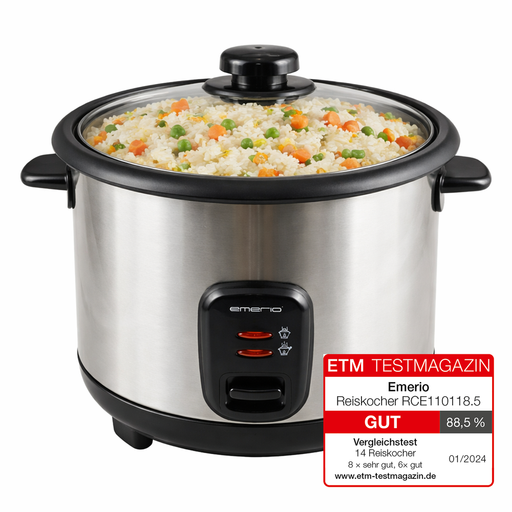 No image available
The keep-warm function is useful when serving food after cooking. The product description specifies that the cooker is for indoor household use only.
Capacity: 1.5 litres. The description mentions automatic switching to keep-warm mode and excludes commercial use.
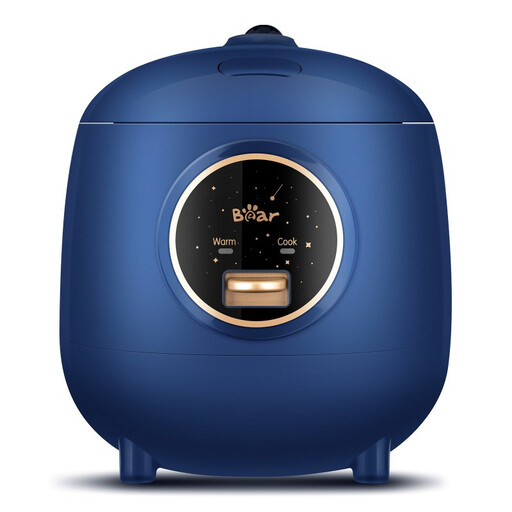 No image available
The product title describes this model as suitable for 1–2 people; compare that with the quantity you need for your neighbourhood meal.
The description lists a maximum of 2 measuring cups of uncooked rice and a removable inner pot. According to the product instructions, wait at least 15 minutes before starting another cooking cycle.
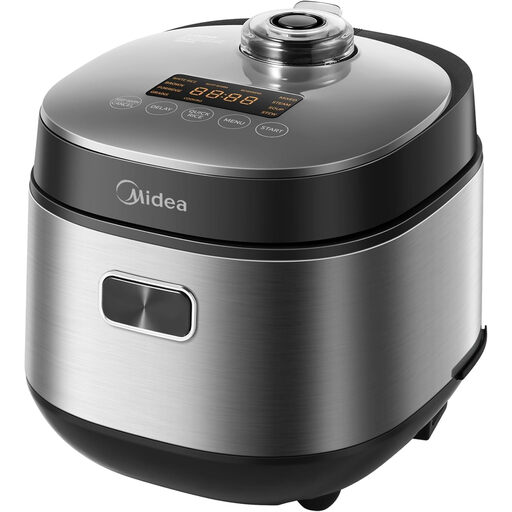 No image available
The product description lists porridge as a cooking function and positions the model for 1–3 people.
Capacity: 2 litres. The description mentions a keep-warm function and timer; check the model instructions for the permitted quantity of porridge.
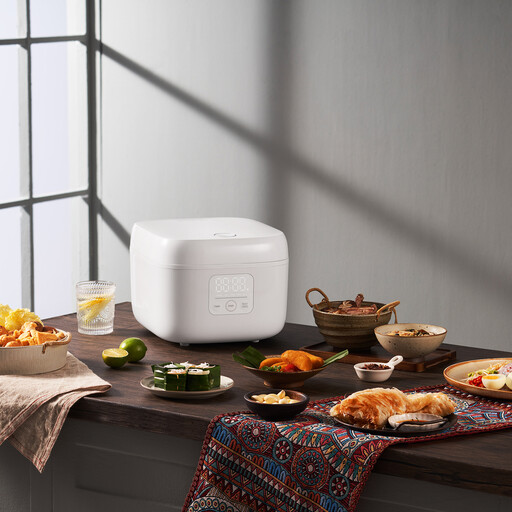 No image available
The product description positions this model as suitable for families and entertaining guests.
The product title lists a capacity of 1.6 L for rice and 4 L for water. Don’t compare these figures directly with the permitted quantity of porridge for your recipe.
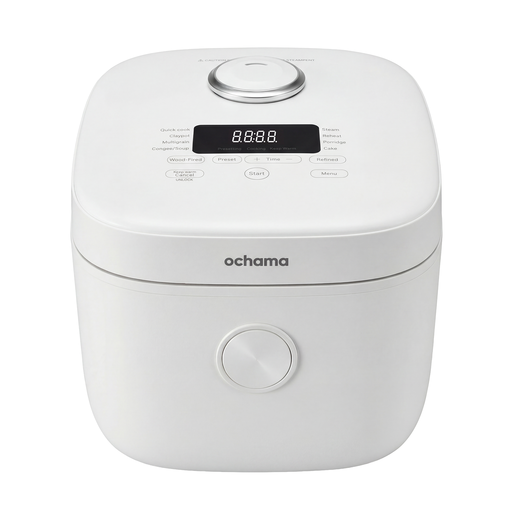 No image available
The product title mentions porridge cooking and positions the model for a household of 3–4 people.
Capacity: 4 litres; power: 860 W. The title lists a timer, keep-warm function, 1.7 mm inner pot, steaming basket and rice paddle. Check the fill level for porridge against your recipe.
No. Manufacturers give these figures for rice. For example, the manual for Reishunger’s digital rice cooker lists different maximum quantities for white and wholegrain rice. For porridge, follow the recipe and fill instructions for the exact appliance.
Don’t use the keep-warm button as a way to measure the temperature. For professional hot holding of unpackaged perishable food, the NVWA specifies a minimum of 60 °C and checks with a digital probe thermometer. Check the food’s temperature and don’t leave porridge or leftovers lukewarm for too long.
Follow the manual for the exact model. Reishunger’s instructions for its digital rice cooker say to unplug the appliance, let it cool and clean the inner pot, inner lid and condensation collector, among other parts, with warm soapy water and a soft cloth or sponge after use. These instructions don’t automatically apply to other models.
In addition to any manufacturer’s warranty, you have a legal guarantee. If a product breaks sooner than you could reasonably expect under normal use, the seller is responsible for providing an appropriate solution free of charge. ACM ConsuWijzer explains that there is no fixed statutory two-year period.
The NVWA requires a HACCP plan for anyone who prepares and sells food at markets and events several times a year. This specific requirement therefore depends on both selling food and repeatedly preparing and selling it.