
Vandaag of morgen in huis

Kwaliteit gegarandeerd

Welkomstaanbiedingen ontgrendelen: GRATIS bezorging | Tot 80% korting | Gratis 30 dagen JoyPlus-proefperiode
Download de app
Rice noodles are ideal for quick Asian meals, but the packaging does not always make it immediately clear which type you need. Fine vermicelli behaves differently from wide rice sticks. Choose the wrong thickness or preparation method and you could end up with limp noodles, a clumpy salad or rice noodles that fall apart in the wok.
As a Joybuy Product Recommendation Officer, I therefore focus mainly on verifiable information: thickness, ingredients, weight, preparation method and allergen information. Marketing terms such as “authentic”, “premium” or “healthy” say little on their own about whether a product is suitable for your dish.
“Rice vermicelli”, “rice sticks” and “Vietnamese rice noodles” are not always used consistently. Vermicelli usually refers to thin strands, while rice sticks are often wider and flatter. Always check the stated measurements in millimetres or look at the photo of the noodles on the packaging.
Some rice noodles need to be soaked, while others need to be boiled briefly. A product suitable for a salad may become too soft in a hot wok if you prepare it for too long beforehand. Always follow the instructions on the packaging. Product information on a webshop may differ from the actual label.
Rice is naturally gluten-free, but a product may also contain wheat, soya sauce or other ingredients. Some product descriptions also include conflicting allergen information. If you need to avoid gluten, it is wise to check the ingredients list and allergen statement on the packaging. Also look for possible cross-contamination if this is relevant to you.
The thickness determines how the noodle feels and how much sauce or stock it absorbs.
A 400 g pack is practical for regular home cooking. For a large household or meal prep, 908 g may be more suitable. Do check the best-before date and seal the packaging securely after opening.
Many rice noodles are made from rice and water, sometimes with added tapioca or starch. Tapioca can make the texture more elastic, but it does not guarantee a particular cooking quality. Also check whether the product is labelled as free from the 14 major EU allergens.
Instant noodles are different. The noodle itself may be made from rice, while the seasoning sachet may contain wheat, soya, fish or shellfish, for example. This is something to bear in mind with products such as instant rice vermicelli with beef flavour.
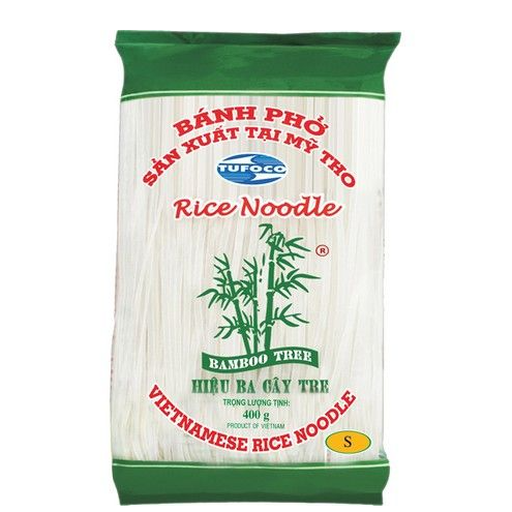
Why it suits this profile: The fine thickness is easy to work with if you are using Vietnamese rice noodles in salads, soups or spring rolls for the first time. The pack contains 400 g.
The stated thickness of 1 mm makes it clear that this is not a wide noodle for stir-fries. The ingredients list rice, tapioca and water; check the current label for allergen information.
1 mm thickness, 400 g pack and a short ingredients list.
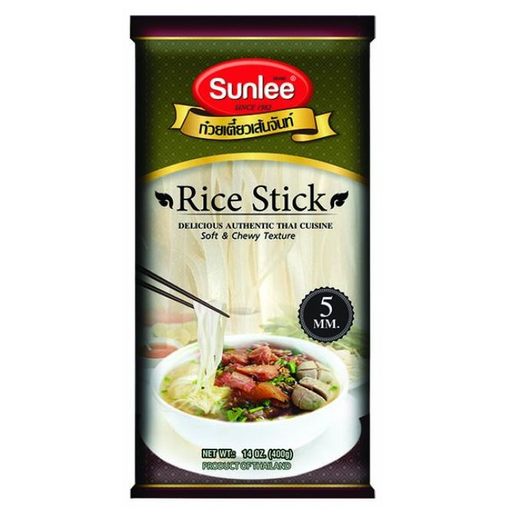
Why it suits this profile: The 5 mm-wide rice stick is designed for dishes where the noodle remains substantial, such as pad Thai and stir-fries.
The size is clearly stated, so you will not mistake fine vermicelli for rice noodles intended for pad Thai. Prepare according to the instructions on the packaging.
5 mm wide, 400 g contents and, according to the product description, made from 90% rice flour and 10% water.
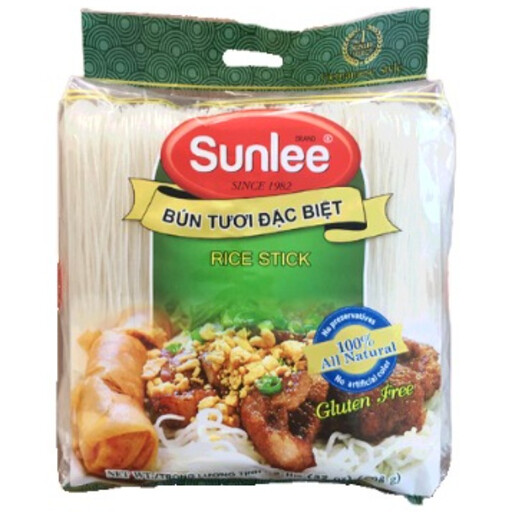
Why it suits this profile: The large pack is useful if you regularly make bun dishes, Vietnamese salads or meals for several people.
The product information clearly states a size of 1.2 mm and a net weight of 908 g. This helps you assess the quantity and intended use in advance.
1.2 mm thickness, 908 g contents and, according to the listed ingredients, 100% rice.
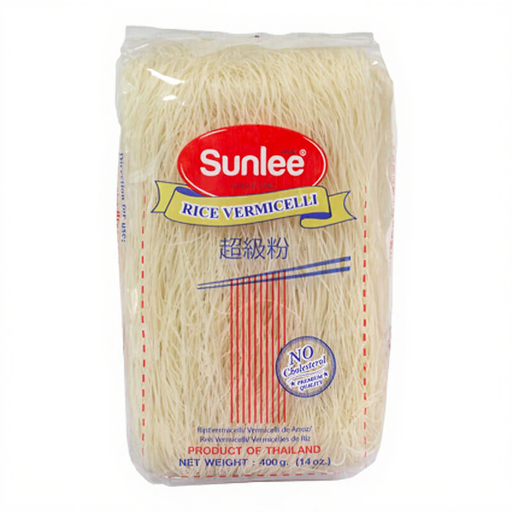
Why it suits this profile: This fine rice vermicelli is intended for stir-fries, soups, salads and spring rolls. Its simple preparation makes it a flexible cupboard staple.
The product description states 88% rice and gives soaking or brief boiling as preparation options. Check the current packaging if gluten must be avoided completely.
400 g pack, 88% rice and suitable for several preparation methods.
We have put together a complete, up-to-date list of products that fully meet these strict selection criteria and the applicable European safety regulations.
When using dried noodles, use plenty of water and gently loosen them as they cook. Rinse them after boiling or soaking if the packaging advises this. For stir-fries, they can usually remain slightly firmer, as they will continue cooking in the pan. Add them to the sauce only towards the end and cook over a medium heat. For pho or other soups, you can prepare the noodles separately and then add them to the stock. This keeps the stock clearer and prevents the noodles from becoming too soft.
No. Many products contain only rice and water, but some include wheat, soya or seasoning mixes containing gluten. Always read the current label, paying particular attention to instant varieties and prepared sauces.
Medium-width rice sticks are usually used for pad Thai, for example around 5 mm. The final choice depends on the bite you want and the preparation instructions. Rice vermicelli that is too thin can become soft more quickly in the wok.
Dried rice noodles will generally keep well until the date on the packaging if stored in a cool, dry and dark place. Seal an opened pack airtight and do not use the product if the packaging is damaged or the noodles have become damp.
