
Vandaag of morgen in huis

Kwaliteit gegarandeerd

Welkomstaanbiedingen ontgrendelen: GRATIS bezorging | Tot 80% korting | Gratis 30 dagen JoyPlus-proefperiode
Download de app
Rice noodles are ideal for quick Asian meals, but the name alone does not always tell you enough. Thin rice vermicelli behaves differently from wide rice sticks. Nor are all rice-based products automatically gluten-free. If you focus only on the packaging or an appealing pack size, you may end up with noodles that fall apart, become too soft or are not suited to the dish you have in mind.
As a Joybuy Product Recommendation Officer, I assess product information based on verifiable details: ingredients, thickness, weight, allergens and stated uses. This makes it easier to choose between Vietnamese rice noodles, Thai rice noodles, rice vermicelli and instant rice noodles.
Rice vermicelli is usually thin and well suited to salads, spring rolls and light soups. Rice sticks measuring 3 mm are sturdier and work better in stir-fries. Extra-wide rice noodles, such as 10 mm varieties, generally hold more sauce and offer a firmer bite.
A package labelled simply “rice noodles” therefore does not always provide enough information. Check the thickness in millimetres when you are looking for rice noodles for pad thai, pho or a stir-fry.
Rice-based products often contain no wheat, but the complete recipe and the possibility of cross-contamination are decisive. Always check the current packaging. For example, the range information for Bamboo Tree Rice Vermicelli Bun Toui states that the product is gluten-free and contains none of the 14 major EU allergens. However, the product information for 454 g Sunlee Vietnamese Rice Noodles states that wheat and soy may be present as allergens, despite listing rice and water among the ingredients.
If you have an allergy or follow a strictly gluten-free diet, do not rely solely on the product title. Read the ingredients list, allergen information and warnings on the packaging.
A 400 g bag of rice noodles is practical for families or meal prep, but a large pack is less convenient if you only cook Asian food occasionally. Fresh bun tuoi may also have a shorter shelf life. For example, the 908 g Sunlee Vietnamese Rice Stick Noodles Bun Tuoi is supplied with a stated shelf life of 21 days; check the date and storage instructions on arrival.
With instant rice noodles, you are also paying for seasoning sachets and packaging. They are quick to prepare, but the label may indicate a high salt content. MAMA Oriental Style Instant Rice Vermicelli, for example, lists 7 g of salt per 100 g. Compare not only the price per pack, but also the price per serving and the overall ingredients.
Use this practical classification as a starting point:
Look at the first ingredients listed on the label. According to the product information, Bamboo Tree Rice Vermicelli Bun Toui consists of rice, tapioca, water and salt. Sunlee Rice Vermicelli Thai Style 400 g lists rice and water, with 88% rice. Yong Hao Rice Vermicelli 400 g is described as being made with 100% rice noodles, with rice flour and starch included in the ingredients list.
A product containing additional ingredients is not automatically unsuitable, but its texture and preparation may differ. With instant varieties, you should also check the seasonings, oil and allergens. According to the label, VIFON Instant Rice Vermicelli Beef Hue Style contains, among other ingredients, wheat, fish and prawns.
Rice noodles can be soaked, boiled or prepared with boiling water. Always follow the instructions on the packaging, as the time and temperature vary according to thickness. Thin noodles soften more quickly, while wider rice sticks generally require more time.
If you plan to stir-fry soaked or boiled noodles later, briefly rinse them with cold water. This helps prevent them from continuing to cook. Instant rice noodles are even simpler to prepare: MAMA, for example, recommends approximately 350 ml of boiling water and three minutes of standing time per 55 g serving.
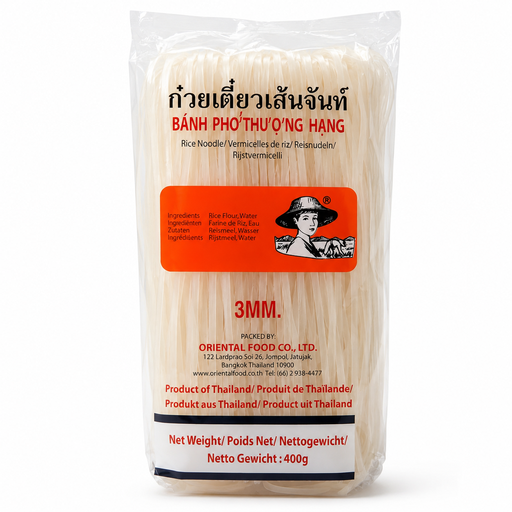
Why it’s a good fit: A manageable pack for anyone who wants to try a range of Asian dishes without committing to a bulk pack.
The thickness is clearly stated: 3 mm. This makes your choice less dependent on vague marketing terminology.
400 g per pack; the product information lists rice flour as an ingredient and none of the 14 major EU allergens.
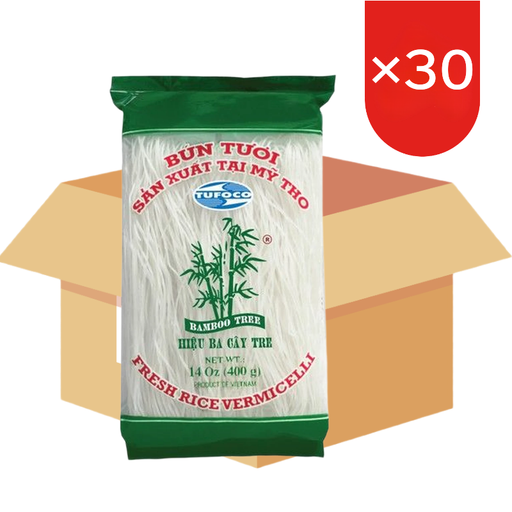
Why it’s a good fit: The thin Vietnamese rice vermicelli is ideal for bun bowls, light soups and fresh rolls.
The product information describes it as gluten-free and free from the 14 major EU allergens. Nevertheless, check the current label.
The 400 g pack is suitable for several meals; the ingredients are rice, tapioca, water and salt.
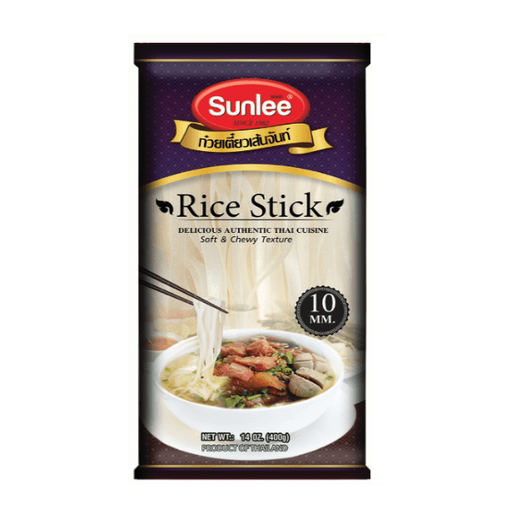
Why it’s a good fit: The wide 10 mm format is designed for generous portions, saucy stir-fries and meals served to several people.
You choose based on a specific measurement rather than the vague description “extra firm”.
The pack contains 400 g; the product description lists rice as the base and recommends it for pad thai, soups, salads and stir-fries.
Browse the current range of dry Asian rice noodles and compare thickness, weight, ingredients and recommended uses for each product.
For pho, thin Vietnamese rice noodles are usually the practical choice. Medium-thick rice sticks, such as 3 mm varieties, are commonly used for pad thai. Bun tuoi is well suited to Vietnamese noodle bowls with herbs, vegetables and dressing. If speed is your priority, instant rice noodles are a convenient option, but pay extra attention to serving size, salt content and allergens.
No. Many dry rice noodles list rice, tapioca and water among their ingredients and state that they contain none of the major EU allergens. Other products may carry warnings or contain seasoning blends made with wheat. Always check the current packaging.
Rice sticks measuring approximately 3 mm are a practical choice for pad thai. They are generally wide enough to hold sauce without being so thick that they cook slowly. The correct soaking or cooking time is stated on the packaging.
Unopened dry rice noodles can generally be stored until the date shown on the packaging when kept in a cool, dry place away from direct sunlight. Seal an opened bag securely. Fresh bun tuoi often has a shorter shelf life, so always check the stated date and storage instructions.
