
Vandaag of morgen in huis

Kwaliteit gegarandeerd

Welkomstaanbiedingen ontgrendelen: GRATIS bezorging | Tot 80% korting | Gratis 30 dagen JoyPlus-proefperiode
Download de app
Rice noodles are ideal for quick Asian dishes, but the range varies considerably. Fine rice vermicelli behaves differently from wide rice sticks. The preparation method, ingredient list and allergen information also determine whether a product is suitable for your recipe.
If you rely solely on a photo or words such as “authentic” and “premium”, it is easy to order the wrong noodles. With these practical checks, you can compare Asian rice noodles using verifiable product information.
Not every rice noodle is suitable for every dish. Fine rice vermicelli is light and delicate, making it ideal for bun salads, soups and spring rolls. Wide rice sticks stay firmer in stir-fries such as pad thai. Medium-width, flat noodles are often used for pho.
So, packaging that simply says “rice noodles” does not tell you enough. Check the stated width, for example 1 mm, 4 mm, 5 mm or 10 mm.
Rice flour is naturally gluten-free, but added ingredients, flavourings or varieties containing wheat flour may contain gluten. This is particularly relevant for instant products and some types of rice paper for spring rolls.
Always check the current packaging. Product information can change, and the packaging may contain more information than an online product page. If you have an allergy or coeliac disease, the ingredient list and allergen declaration should be your main reference.
Dried noodles usually need to be soaked or briefly boiled. Fresh Vietnamese rice noodles have a different texture and are often placed in hot water for a short time. Instant rice noodles also usually come with a seasoning or soup sachet. This may contain extra salt, soya, wheat, fish, shellfish or other allergens.
So do not compare weight alone. Also look at preparation time, serving size, ingredients and storage advice.
Rice vermicelli consists of fine, round noodles. According to the product information, the Sunlee Rice Vermicelli Noodles 400g is made from rice flour and water and is approximately 1 mm thick. The stated preparation method is to soak for 3 to 5 minutes in hot water or boil for 2 to 3 minutes, followed by rinsing with cold water.
The Bamboo Tree Rice Noodles 1mm (S) - 400 g is another fine option. This product lists 72% rice and also contains tapioca and water. According to the available product information, it contains none of the 14 major EU allergens. Check this again on the label when the product is delivered.
Rice sticks measuring 5 mm offer more bite than fine vermicelli. They work well in stir-fries, noodle soups and some pad thai recipes. Based on its stated thickness, the Bamboo Tree Rice Noodles 5 mm (L) 400g is a practical choice.
The Sunlee Premium Rice Stick 5mm 400g lists a composition of 90% rice flour and 10% water. According to the product description, these noodles are pre-cooked during production and should be boiled for 6 to 8 minutes. Use the packaging as the definitive source for preparation instructions.
Wide rice sticks absorb sauce well and provide a firmer mouthfeel. With a width of 10 mm, the Erawan RICE STICK 10 MM. 375 g is intended for pad thai, stir-fries, soups and salads. The ingredient list states rice flour and water.
Bear in mind that “wide” does not automatically mean “quick to prepare”. Some noodles need to be soaked, while others need to be briefly boiled. Heating them for too long can make the texture soft and sticky.
For Vietnamese dishes such as bun cha and bun bo hue, you can choose fresh rice vermicelli. According to the product information, the Bamboo Tree Fresh Rice Vermicelli Bun Tuoi 400g(Thick)should be soaked in boiling water for 3 to 5 minutes and then rinsed with cold water.
For soups, the Gia Bao rice noodle 4mm 500g (phở tươi) is a medium-width option. The product information lists rice flour, tapioca flour, water, salt and various thickeners. The amount of salt varies from product to product, so check the nutrition table if this is important to you.
Before ordering, pay attention to these three points:
For a gluten-free option, products containing only rice flour and water are easier to assess, but always check the current allergen information and any risk of cross-contamination. A brand’s product claim is not a substitute for the label.
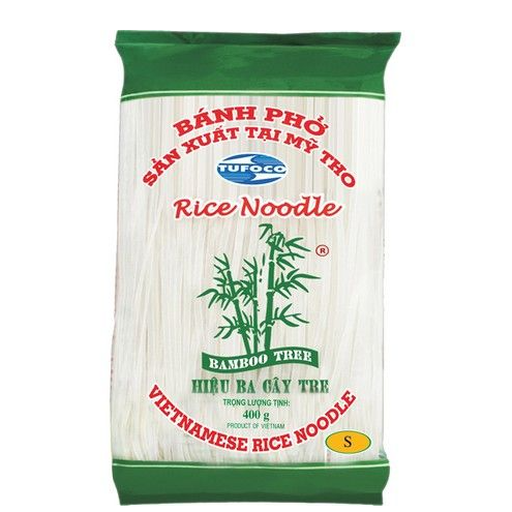
Why This Fits Their Persona: A fine noodle base for anyone making Vietnamese or Thai dishes for the first time.
The 1 mm thickness is clearly stated, so you will not accidentally buy wide noodles for a light salad or soup.
400 g pack; the ingredient list includes rice, tapioca and water.
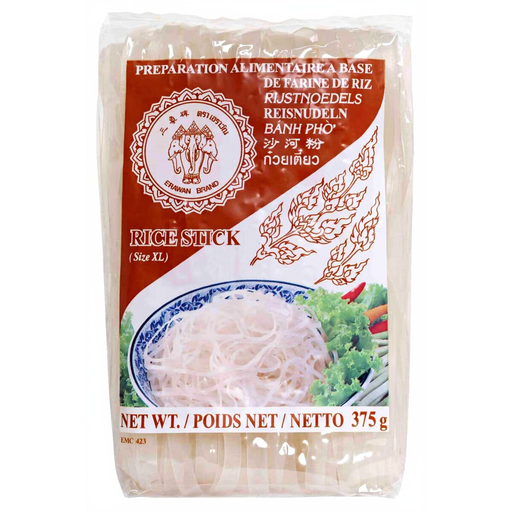
Why This Fits Their Persona: Suitable for home cooks looking for wide Thai rice noodles for pad thai and stir-fries.
The 10 mm product size prevents confusion with fine rice vermicelli.
375 g pack; the ingredient list states rice flour and water.
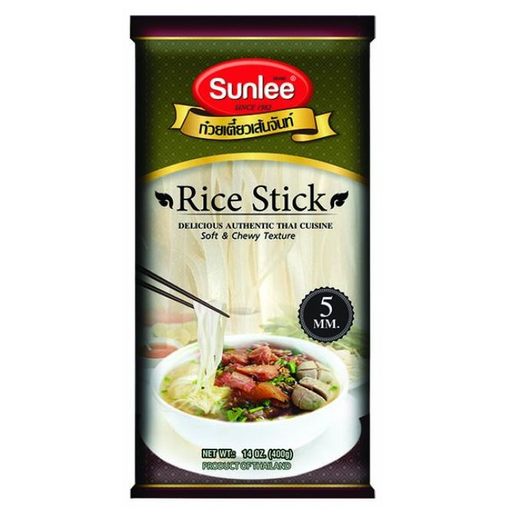
Why This Fits Their Persona: A versatile cupboard staple for several stir-fries, soups and meals.
The product information states both the thickness and a specific cooking time of 6 to 8 minutes.
400 g pack; the product description lists rice flour and water.
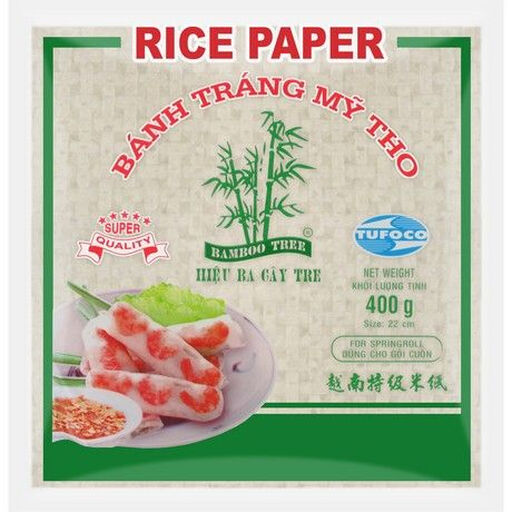
Why This Fits Their Persona: Ideal for combining rice noodles with fresh vegetables, herbs and fillings in summer rolls.
This variety is intended for summer rolls; however, check the current label before using the product.
22 cm square sheets; 400 g pack for multiple preparations.
We have put together a current selection of products that meet these practical selection criteria for rice noodle rolls and Asian dishes.
Rice noodles made from rice flour and water may be gluten-free. This is not automatically the case for every product. Instant rice noodles, seasoning sachets and some rice paper products may contain wheat, soya or other allergens. Always read the current packaging.
Flat, medium-width to wide rice sticks are usually used for pad thai, often around 5 to 10 mm. A product such as Erawan 10 mm provides a broader bite, while a 5 mm variety is more versatile for different stir-fries. The right choice depends on the texture and preparation method you want.
Unopened dried rice noodles generally remain suitable for use until the date on the packaging, provided they are stored somewhere dry and out of direct sunlight. Once opened, it is important to keep the packaging well sealed. Check the product for damage, moisture or an unusual smell before using it.
