
Vandaag of morgen in huis

Kwaliteit gegarandeerd

Welkomstaanbiedingen ontgrendelen: GRATIS bezorging | Tot 80% korting | Gratis 30 dagen JoyPlus-proefperiode
Download de app
Rice noodles are versatile, but not every packet suits every dish. A thin rice vermicelli behaves very differently from wide rice sticks. The preparation method, ingredients list and shelf life can also vary from product to product. If you only go by the name or an eye-catching packet, you could end up with noodles that fall apart, turn too soft or simply don't work with the recipe you had in mind.
This buying guide helps you compare rice noodles based on verifiable specifications. That way, you can make a more informed choice when buying Vietnamese rice noodles, Thai rice noodles, rice noodles for Pad Thai or a variety for Pho and Bun Bo Hue.
A rice noodle that's 1 mm thick is intended for a different preparation than a rice stick that's 5 mm or 10 mm. Thin rice vermicelli works well in salads, spring rolls and light soups. Thicker noodles hold their bite better and are more suited to stir-fries or hearty broths.
So don't just look for words like "premium" or "authentic" – pay attention to the stated size instead. Products marked as 3 mm, 5 mm, 10 mm or 1.2 mm give you a much more practical indication of the texture.
Some varieties need to be soaked in boiling water for a few minutes. Others need to be boiled for longer. A product called Bun Tuoi may also require a different preparation to dry rice sticks for Pad Thai.
Always follow the instructions on the packet. For example, the Bamboo Tree Fresh Rice Vermicelli Bun Tuoi 400g states: soak in boiling water for 3 to 5 minutes, then drain and rinse with cold water. Sunlee Rice Stick 5mm recommends a cooking time of around 6 to 8 minutes. That difference affects your planning and the final texture.
Many rice noodles are made from rice, tapioca and water, and according to the product information they contain none of the 14 main EU allergens. However, you should always check the current packaging. Recipes, sauces and side products can contain gluten.
Also pay attention to rice paper. Some varieties are suitable for fresh spring rolls and, according to the product information, contain no gluten, whereas fried rice paper in certain varieties may contain wheat flour. If you have allergies or coeliac disease, the label is what matters most.
A short ingredients list makes it easier to assess what you're buying. Examples from the range include:
If a product is labelled "gluten-free", you should always cross-check this against the ingredients and allergen information on the packet. Also check for warnings about a production site where sesame, soya, peanuts or wheat are handled.
Use this rule of thumb as a starting point:
A packet of 340 to 400 g is practical for regular home cooking. A 908 g bag is better suited to families, meal prep or larger gatherings. After opening, check the storage instructions and keep dry rice noodles in a cool, dry place away from direct sunlight. Seal the packet tightly to keep out moisture and contaminants.
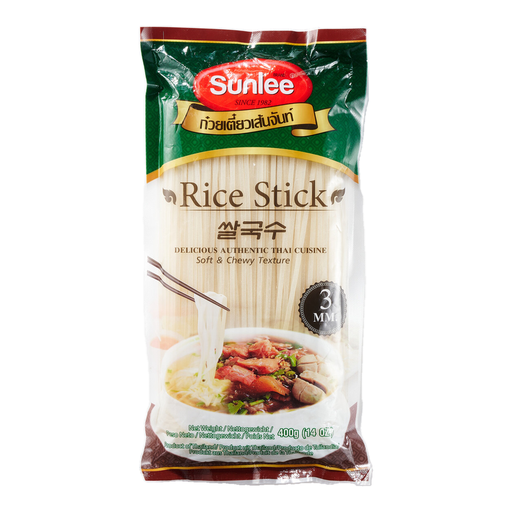
Why this fits the profile: The 3 mm width is flexible enough for Pad Thai, stir-fries, soup and salads. According to the product description, these noodles are made from 90% rice and 10% water, and you prepare them in around 3 to 4 minutes.
The clear size and preparation time make it easier to avoid choosing a variety that's too thin or too thick.
400 g packet, 3 mm width and, according to the product information, gluten-free.
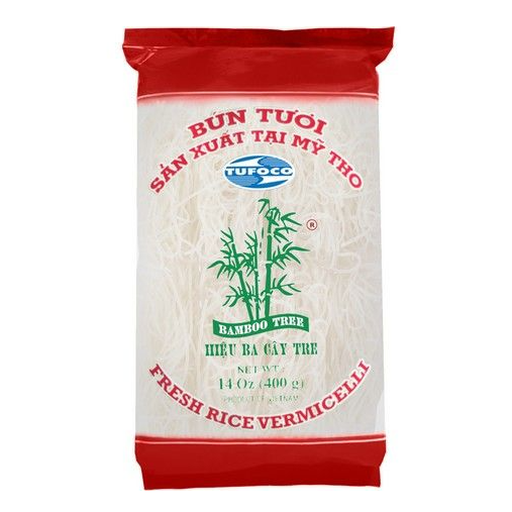
Why this fits the profile: This thicker Bun Tuoi variety is ideal for Vietnamese dishes such as Bún bò Huế and Bún chả. The product information lists rice, tapioca and water as the ingredients.
The "Thick" label makes the texture much clearer than a general name like rice vermicelli on its own.
400 g packet, suitable for Vietnamese noodle dishes and preparation instructions of 3 to 5 minutes soaking.
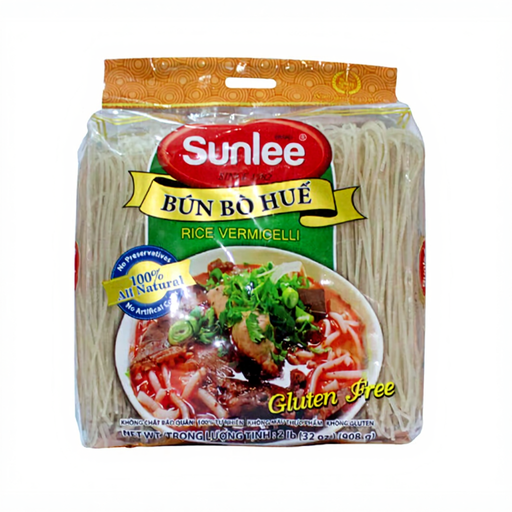
Why this fits the profile: The large packet is practical for frequent cooking, families and stocking up. According to the product description, this noodle is made from 100% rice and is intended for Bun Bo Hue.
The specific Bun Bo Hue label helps prevent you from choosing a thin vermicelli for a dish with a hearty broth.
908 g content, 100% rice according to the product description and a clear application for Bun Bo Hue.
We've put together a full, up-to-date list of products that fully meet these strict selection criteria and comply with current European safety regulations.
For fresh spring rolls, you'll often need rice paper for spring rolls alongside thin rice vermicelli. Round or square sheets of around 22 cm should be soaked briefly in lukewarm water. Fill them with rice noodles, herbs, cucumber and a source of protein, for example.
Be aware of the difference between fresh and fried applications. Some rice paper products state that damp sheets can splatter in hot oil. So follow the preparation instructions on the label and check whether wheat flour or other allergens are present.
No, not automatically. Many products contain only rice, tapioca, water and salt according to their ingredients list and are labelled as gluten-free. However, you should always check the current packaging and information about possible cross-contamination. Sauces and seasonings can also contain gluten.
For Pad Thai, rice sticks of around 3 to 5 mm are a practical choice. The exact cooking or soaking time varies by brand. Rinse the noodles if instructed and add them to the wok at the right moment so they don't turn too soft.
Pho often uses thin rice noodles, whereas Bun Bo Hue typically calls for a thicker Vietnamese rice vermicelli. So look at the diameter and the specific dish mentioned. If in doubt, the instructions and product name on the packet are more reliable than general terms like "Asian noodles".
