
Workshop host cooking one large batch
Wants to cook enough dry rice in one go and compares the stated batch capacity with the available space and power supply at the venue.


Choose a rice cooker based on how much uncooked rice you need per batch, and compare that with the stated measuring-cup capacity—not just the number of litres or servings. A compact model may suit small practice groups, while a larger capacity could be more practical for cooking one batch for everyone. Plan seasoning and safe handling separately: a keep-warm function doesn’t tell you how long seasoned sushi rice can be kept safely.
Wants to cook enough dry rice in one go and compares the stated batch capacity with the available space and power supply at the venue.
Has participants cook in small groups or in successive batches, and would benefit more from a suitable fill quantity than from the largest pan.
Wants to demonstrate how to cook short-grain rice, while also planning how to season and safely handle the rice during the workshop.
Start with your recipe and the amount of dry rice per batch. Then compare the model’s capacity, controls and practical requirements.
| What to consider | What should you check? | Who is this important for? |
|---|---|---|
| Batch size | Work out how much dry rice your recipe needs per batch and compare it with the capacity in measuring cups for the exact model. Check the minimum fill quantity too. | If I want to cater for a whole group with one batch, I look at how much dry rice will actually fit in the pan. Around 33% of consumers prioritise a suitable batch capacity. |
| Rice settings | Check whether the model has a setting for short-grain rice, and follow the instructions for rice and water. | If I want to demonstrate how to cook short-grain rice, I want to know which settings the appliance offers. Around 27% of consumers prioritise rice settings. |
| Handling the rice after cooking | Plan when you’ll use the rice and how you’ll cool any leftovers quickly; don’t treat the keep-warm setting as a storage period for seasoned sushi rice. | When the workshop schedule determines how quickly the rice is handled, I want to have a suitable plan for leftovers in place beforehand. Around 20% of consumers prioritise this. |
| Ease of use and cleaning | Check the cleaning instructions, which parts can be removed, and whether suitable replacement parts are available. | If I’m running several sessions back to back, I want to be able to clean the pan quickly and use it again. Around 20% of consumers prioritise ease of repeated use. |
Manufacturers state capacity in different ways. A number of servings isn’t automatically comparable with measuring cups of dry rice.
Work out how much dry rice your workshop recipe needs per batch and compare it with the stated capacity and measuring cup for the exact model.
A pan that’s too small could mean having to schedule an extra cooking session during the workshop.
A stated keep-warm time or pan temperature doesn’t tell you how long seasoned sushi rice can be kept safely. The Voedingscentrum warns about Bacillus cereus in rice dishes that are stored for too long or not kept cold enough.
Plan separately how you’ll handle the rice and cool leftovers quickly. If your workshop is subject to hospitality or catering regulations, follow the relevant food safety guidance.
According to the manufacturer, the HENDI 240441 requires 1550 W and measures 420 × 380 × 240 mm.
Check the available worktop space and power supply, especially if other appliances will be in use during the workshop.
The manufacturer lists different capacities for the Panda Mini and Sakura, for smaller and larger cooking sessions respectively.
According to HENDI, model 240441 is designed for larger batches, with a stated capacity of 4,2 litres or 23 measuring cups of dry rice.
According to Tristar, the RK-6126 is a 1-litre rice cooker suitable for up to 5 servings.
According to Reishunger, the Digital Rice Cooker has a capacity of 1,5 litres and several rice settings.
According to Tefal, the RK7051 is a 1,8-litre rice and multi-cooker with a capacity of 10 cups of rice.
This selection includes rice cookers for smaller sessions and larger batches at a cooking workshop.
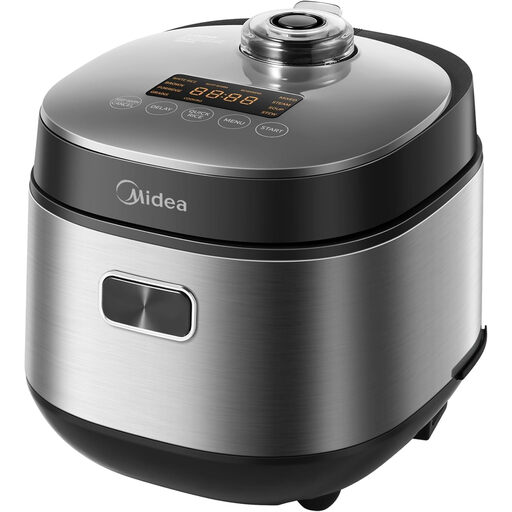 No image available
The stated capacity gives you a starting point for planning smaller cooking sessions; compare it with your own recipe.
2 l; 4 cups; stated as suitable for 1–3 people; 9 functions; timer and keep-warm function.
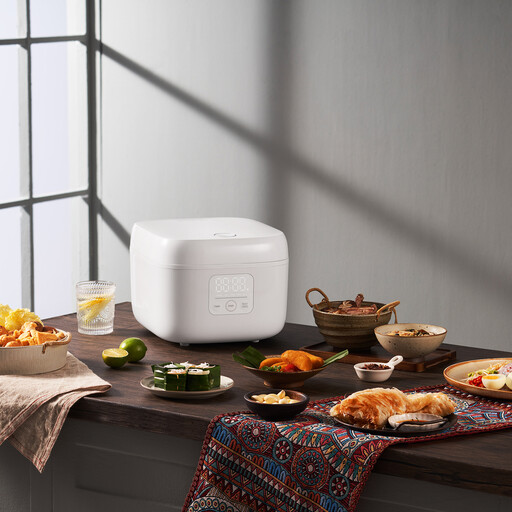 No image available
The stated rice capacity can help you plan a batch; check that it suits the amount required by your recipe.
Rice capacity: 1,6 l; water capacity: 4 l; 220 V.
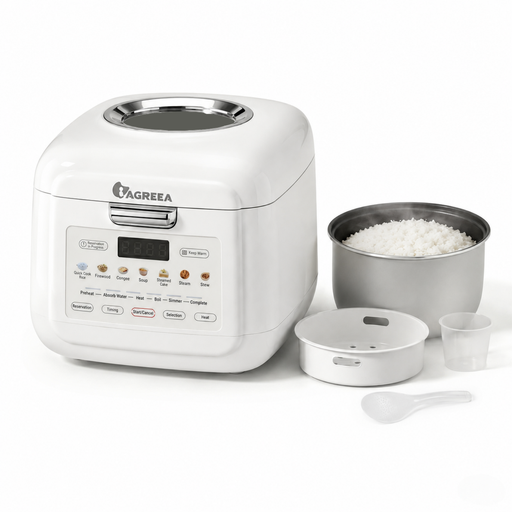 No image available
The stated capacity is a useful starting point for smaller cooking sessions; match the quantity to your recipe.
2 l; up to 3 cups of uncooked rice; viewing window; one-button operation; timer.
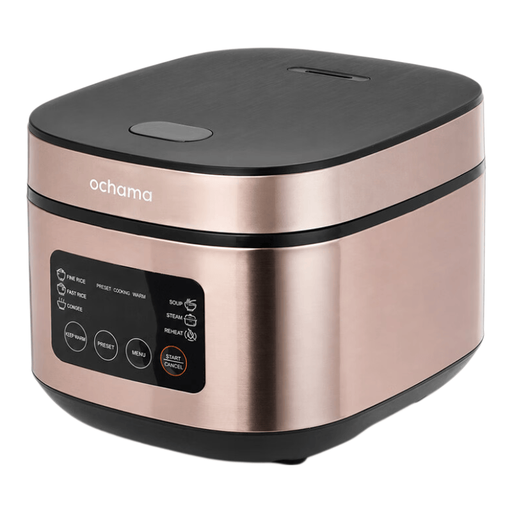 No image available
The stated capacity may suit a larger batch for the whole group; check how much dry rice your recipe calls for.
4 l; 930 W; six cooking functions; timer; steam basket and rice spoon included.
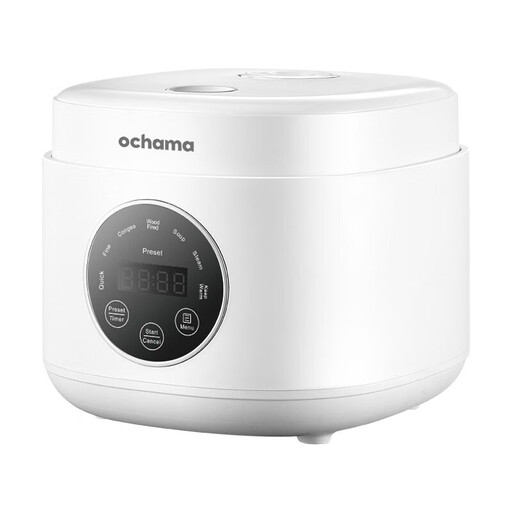 No image available
The stated capacity can be a useful starting point for smaller sessions; compare it with the amount of dry rice needed per workshop batch.
2 l; 500 W; suitable for 2–3 people; seven cooking functions; timer and keep-warm function; steam basket and rice spoon included.
Not necessarily: a stated keep-warm time or pan temperature doesn’t confirm the temperature of the rice during your workshop. The Voedingscentrum advises cooling leftover cooked rice quickly and not leaving it out of the fridge for more than 2 hours. If the workshop is subject to hospitality or catering regulations, follow the relevant food safety guidance; the NVWA refers to temperature checks when keeping food warm and cooling it down.
Cool leftover cooked rice quickly, store it in a sealed container in the fridge and follow the Voedingscentrum’s storage advice of 2 days. For freshly made sushi with raw fish, the Voedingscentrum recommends a shorter period: 1 day in the fridge. It’s best not to eat sushi that has been left out of the fridge for more than 2 hours.
Follow the instructions for the exact model and let hot parts cool down safely first. According to Tristar, the Tristar RK-6126 has a removable inner pan; a specific replacement inner pan is available for the 1,5-litre Reishunger Digital Rice Cooker. Before buying, check which parts of your version can be removed or replaced.
According to the Dutch government, you’re entitled to a product that works properly; there is no fixed statutory guarantee period in the Netherlands. If there’s a fault, contact the seller, not the manufacturer. A manufacturer’s guarantee is in addition to your statutory rights.
For electrical kitchen appliances, Business.gov.nl outlines European safety requirements, CE marking and an EU declaration of conformity as obligations for the responsible economic operators. If the workshop falls under hospitality or catering, the NVWA requires you to follow a food safety plan or the relevant hygiene code. Whether this applies to a particular workshop depends on how it is organised; a private workshop isn’t automatically classed as hospitality.