What should you look for when buying?
First compare the portions you usually make and where you’ll store the appliance. Then look at the cooking settings and the parts you’ll need to clean after use.
| What to consider |
What should you check? |
Who is this important for? |
| Cooking sushi rice |
Check whether the specific version has a short-grain rice setting. Follow the instructions for rice and water, and add seasonings after cooking. |
If I make sushi rice often, I want a suitable cooking setting, but I’ll treat washing and seasoning as separate steps. For around 33% of consumers, cooking sushi rice is their top buying priority. |
| Storage and size |
Compare the external dimensions with the cupboard or worktop space available, and check how much uncooked rice the appliance can hold. |
If I need to put the rice cooker away after use, both its casing and portion size matter. For around 27% of consumers, having suitable storage space is a top priority. |
| Cleaning after use |
Check whether the inner pan and lid are removable, and follow the care instructions for the specific coating. |
If several housemates use the appliance, I want to know which parts can be removed for cleaning. For around 20% of consumers, cleaning is their top buying priority. |
| Portions for housemates |
Compare the stated capacity with both your usual meal and your largest one. Also consider how you’ll cool and store leftovers promptly. |
If we eat together in varying numbers, I want enough capacity without choosing an appliance that’s larger than necessary. For around 20% of consumers, serving size for shared meals matters most. |
Rice cookers at Joybuy
These Joybuy models range from rice cookers for small portions to appliances for larger shared meals. Before buying, check the electrical safety information and markings for the exact version; voltage or plug type alone is not enough.
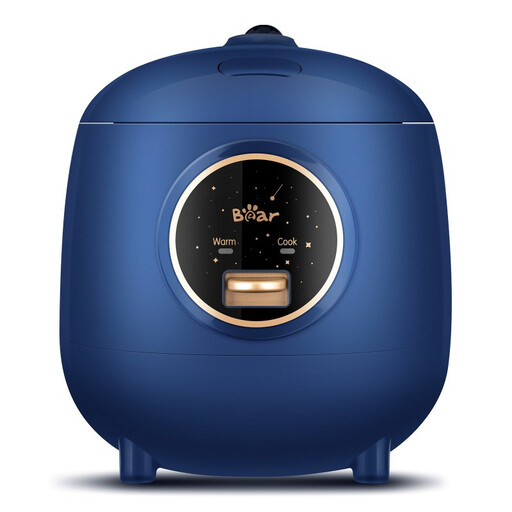 Image unavailable
Bear DFB-B12W1 rice cooker, 1.2 L
The stated capacity of up to 2 cups of uncooked rice makes it suitable for small portions.
One-button operation and automatic keep-warm function. The inner pan and lid are removable; clean the non-stick pan with a soft sponge. Follow the instructions and let the appliance cool for at least 15 minutes before cooking again.
View at Joybuy
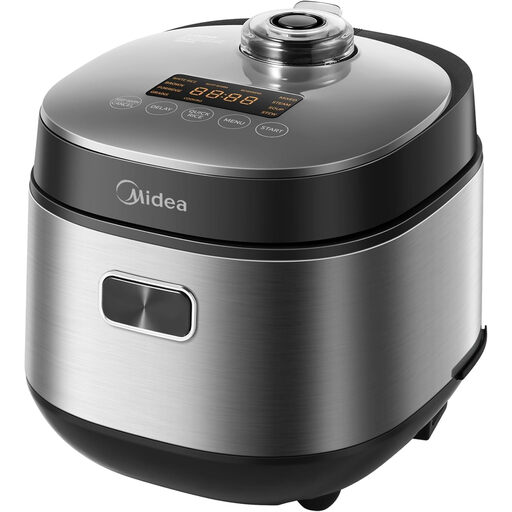 Image unavailable
Midea rice cooker, 2 L, 4 cups
The stated capacity of 4 cups and suitability for 1–3 people make it worth considering for small meals.
The product information lists nine functions, a timer, six temperature settings and a removable non-stick pan.
View at Joybuy
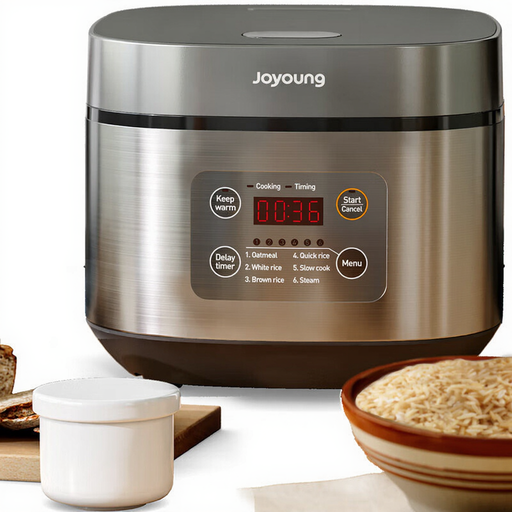 Image unavailable
Joyoung rice cooker, 4 L, 860 W
The stated 4-litre capacity is designed for family meals and larger shared cooking sessions.
The title mentions a smart timer and LED indicator. The product information lists settings for rice, porridge and soup.
View at Joybuy
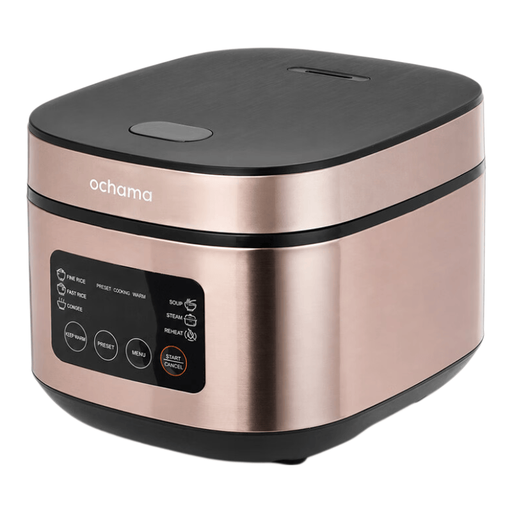 Image unavailable
ochama rice cooker, 4 L, 930 W, 6 functions
The stated 4-litre capacity is designed for family meals and may be more than you need for small sushi meals.
The product information lists a ceramic-coated inner pan, LED display, rice paddle and steaming basket.
View at Joybuy
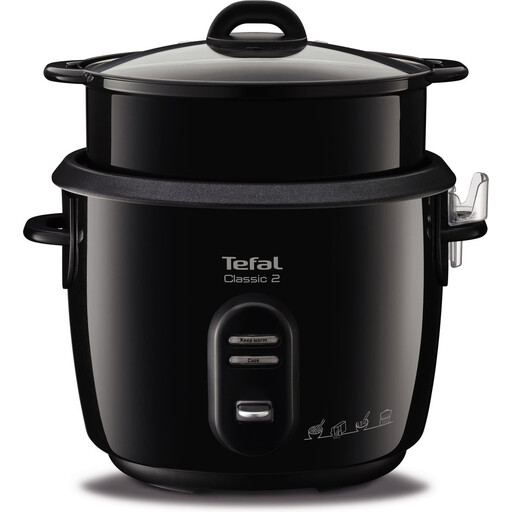 Image unavailable
Tefal Classic RK1038 rice cooker, 1.8 l, 10 cups
The 1.8 l capacity, or up to 10 cups, is designed for larger quantities than small sushi meals.
The product information lists a removable non-stick pan, automatic keep-warm function and steaming basket. The stated dimensions are 31,50 × 31,50 × 23 cm.
View at Joybuy
Frequently asked questions
Does a rice cooker season sushi rice too?
No. A cooking setting prepares the rice, but it doesn’t replace seasoning. Kikkoman Netherlands mixes the seasonings into the cooked rice while it is still warm. Also follow your rice cooker’s instructions for rice and water.
How should I store leftover rice in a shared kitchen?
Cool cooked rice quickly, store it in a sealed container in the fridge and don’t leave it out for more than two hours. The Netherlands Nutrition Centre recommends keeping chilled rice for no more than two days. A keep-warm function is not a substitute for this storage advice.
What electrical information should I check when buying in the Netherlands?
Check the safety information and markings for the exact version. Electrical equipment covered by the Low Voltage Directive must meet the applicable electrical safety requirements and carry the CE marking. The Netherlands Food and Consumer Product Safety Authority explains that the directive applies to alternating current from 50 to 1,000 V. A 220–240 V rating or a compatible plug alone does not prove that a specific unit meets all the requirements.
What can I do if my rice cooker is faulty after purchase?
Contact the seller: according to the Dutch government, they must offer a solution if a product does not meet the expectations you’re entitled to have. In the Netherlands, the statutory guarantee period is not fixed at two years; what you can reasonably expect depends, among other things, on the product and the information you received when buying it.


