
Making sushi for one or two
You mainly want to know whether your smallest portion of uncooked rice is within the appliance’s operating range. Pan capacity and the amount of rice it can cook are two different things.


If you’re making a small portion of sushi rice, check the minimum amount of uncooked rice the exact model can cook. The pan’s capacity won’t tell you this. A sushi or short-grain rice programme can be useful if you make sushi rice often, while a simple cooker may be all you need if you measure the rice and water yourself. Also check the instructions and electrical specifications for the version you’re considering.
You mainly want to know whether your smallest portion of uncooked rice is within the appliance’s operating range. Pan capacity and the amount of rice it can cook are two different things.
You’re looking for a sushi or short-grain rice setting, and want to measure the rice and water according to the instructions for your chosen model.
You want an appliance that’s compact and easy to use, and are weighing up whether extra rice programmes are worth the additional features and space for the way you cook.
A good fit if: you make sushi rice often and want a setting for sushi or short-grain rice.
The trade-off: a programme won’t measure or wash the rice for you, or replace the need to follow the model-specific instructions.
A good fit if: limited space and ease of use matter more to you than having a dedicated sushi setting.
The trade-off: the manufacturer lists no pre-programmed cooking programmes for the Tristar RK-6117, so you’ll need to adjust the cooking yourself.
A good fit if: a small footprint and straightforward controls are your priorities.
The trade-off: a small capacity doesn’t prove that your smallest portion is within the supported cooking range.
| What to consider | What should you look for? | Who is this important to? |
|---|---|---|
| Small cooking quantity | Check the manual for the exact model for both the minimum and maximum quantity of uncooked rice. Don’t compare litres directly with portions of cooked rice. | If I’m making a small portion, I want to know whether that specific quantity is covered by the instructions. Around 40% of consumers prioritise the smallest suitable cooking quantity. |
| Sushi rice setting | Check whether the exact model has a setting for sushi or short-grain rice, and follow the instructions for washing, quantities and water. | If I cook sushi rice regularly, I want to be able to select the setting designed for it easily. Around 30% of consumers give a suitable rice setting top priority. |
| Features and use | Compare the programmes with what you actually cook and use; an extra feature alone doesn’t guarantee better results. | If I only use the cooker occasionally, I want to weigh up its features against my budget. Around 20% of consumers prioritise the purchase cost for occasional use. |
| Controls and storage | Compare the external dimensions, removable parts and cleaning instructions for the exact version. | If I often make small portions, I want the appliance to be easy to store and clean after use. Around 10% of consumers prioritise ease of use, storage and cleaning. |
A capacity of 0,6 litres or a claim that it makes three portions doesn’t automatically tell you the minimum amount of uncooked rice you can cook according to the instructions.
Compare your usual dry portion with the stated cooking range for the exact version you’re considering.
A programme doesn’t replace washing and measuring the rice and water. The right steps and proportions may depend on the rice and the model’s instructions.
Follow the cooking instructions for your rice and appliance. Treat a dedicated setting as a control option, not proof of better results.
Keeping rice warm and safely storing cooled rice are two different things.
Voedingscentrum advises cooling cooked rice quickly, storing it in a sealed container in the fridge or freezer, and not leaving leftovers out of the fridge for more than two hours.
Yum Asia describes the Panda Mini as a compact, programmable rice cooker. The manufacturer lists a capacity of around 0,6 litres and a setting for short-grain rice.
For the Zojirushi NS-LAQ05, the manufacturer lists a capacity of three measuring cups of uncooked rice, a sushi rice programme and a power supply of 220–230 V.
Reishunger offers, among other models, a simple 0,3-litre Mini Reiskocher and a 0,6-litre digital mini cooker. According to the manufacturer, the digital version has a sushi rice programme.
According to the manufacturer, the Tristar RK-6117 is a compact rice cooker with a pan capacity of 0,6 litres.
The Joybuy products below are rice cookers you can compare. If you’re making small portions of sushi rice, check the supported quantity of uncooked rice and the cooking instructions for each exact model.
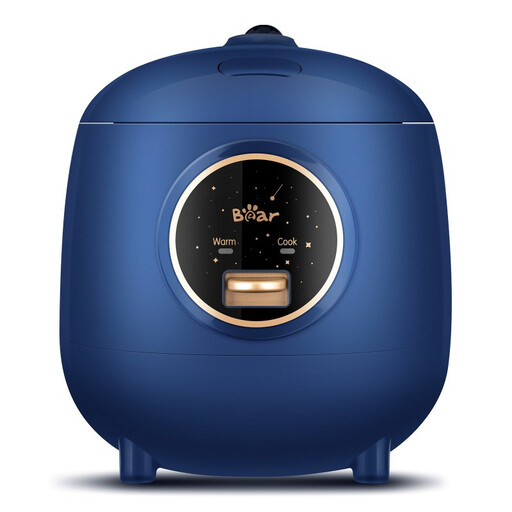 No image available
The product information describes one-button operation and use for one to two people.
Capacity: 1,2 litres; power: 200–238 W; non-stick inner pan; the product description says it can cook up to two cups of uncooked rice.
The instructions say to wait at least 15 minutes before starting another cooking cycle.
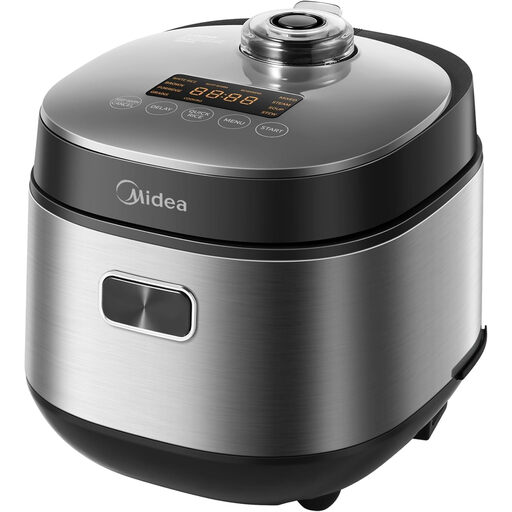 No image available
The product information says it’s suitable for one to three people and has programmes for different types of rice.
Capacity: 2 litres; stated capacity: four cups; nine functions, according to the product name.
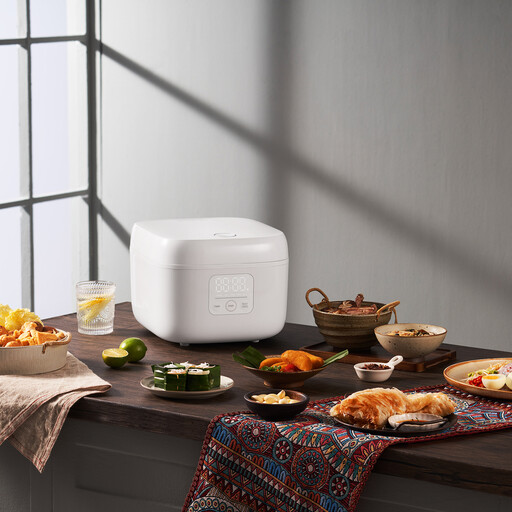 No image available
The product name lists a rice capacity of 1,6 litres and a water capacity of 4 litres.
The product name also lists 220 V; no unit is given for the figure ‘890’.
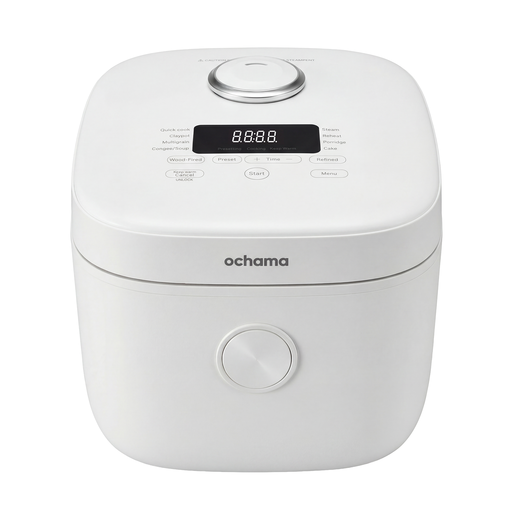 No image available
The product name says it’s suitable for a household of three to four people and comes with a steam basket.
Capacity: 4 litres; power: 860 W; inner pan: 1,7 mm thick; 22-minute quick-cook function, according to the product name.
The product information also lists keep-warm, porridge and soup functions.
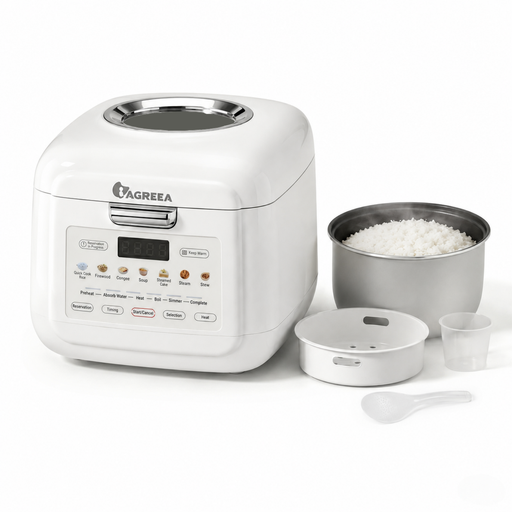 No image available
The product name lists one-touch operation and a viewing window.
Capacity: 2 litres; stated capacity: three cups of uncooked rice; 24-hour timer, according to the product name.
The product name also lists a steaming insert and keep-warm function.
No. The pan’s capacity and the quantity of uncooked rice it can cook are two different things. Check the manual for the exact model to find the minimum quantity for your portion.
Not necessarily: Reishunger describes cooking sushi rice in a basic rice cooker and gives a rice-to-water ratio of 1:1,5 for that recipe. Don’t automatically use that ratio with another model or type of rice; follow the instructions for your rice and appliance.
Voedingscentrum advises cooling cooked rice quickly, storing it in a sealed container in the fridge or freezer, and not leaving leftovers out of the fridge for more than two hours.
According to the Dutch government (Rijksoverheid), in many cases you have a 14-day cooling-off period when you buy online from a business. For a faulty product, statutory warranty in the Netherlands depends, according to ACM, on what you could reasonably expect from the product under normal use. A shorter manufacturer’s warranty doesn’t remove those rights.
For mains-powered electrical equipment designed for 50–1.000 V AC, EUR-Lex describes the applicability of Directive 2014/35/EU, which includes requirements relating to CE marking, conformity assessment and clear safety information. Check this for the exact version; details for a different regional model don’t prove that your appliance meets the applicable requirements.