
Anyone demonstrating Thai sticky rice
You want to show the soaking-and-steaming method and the distinctive texture of Thai sticky rice during your workshop. Check that the steaming set-up suits your recipe and the quantity you want to prepare.


For Thai sticky rice, a suitable steaming set-up matters more than a standard white rice programme. For Japanese sweet rice, you may need a specific sweet-rice setting that the model explicitly supports. Match the usable batch size and preparation time to your group, and check the parts and product documentation for the exact model before buying.
You want to show the soaking-and-steaming method and the distinctive texture of Thai sticky rice during your workshop. Check that the steaming set-up suits your recipe and the quantity you want to prepare.
You’re preparing rice for several participants and want to fit the portions, any successive batches and serving time into your workshop schedule.
You’re following a recipe that uses Japanese sweet rice and want a model whose manual confirms that the exact version has the required sweet-rice setting and water-level markings.
First, decide which type of rice and cooking method your workshop requires. Then compare the usable amount per batch, preparation time and how you plan to serve the rice.
Choose this method if: you want to show participants the Thai soaking-and-steaming method and the insert can hold the quantity you need.
Bear in mind: soaking, draining and steaming need to fit into your schedule. An included insert is not necessarily suitable for a batch of rice.
Choose this method if: your recipe calls for Japanese sweet rice and the manual for the exact model specifies a sweet-rice setting.
Bear in mind: a sushi rice or standard white rice programme doesn’t confirm that it’s suitable. Zojirushi specifies the setting for certain models and recipes.
Choose this method if: you also want to use the rice cooker for other workshop dishes and prepare Thai sticky rice using a separate, suitable steaming set-up.
Bear in mind: a separate steaming set-up requires extra equipment and worktop space. A large inner pot is no substitute for a suitable steaming method.
| Consideration | What to check before buying | Who this matters to |
|---|---|---|
| Type of rice and cooking method | Check the recipe instructions and whether the manual for the exact model describes the setting or steaming method you need. | I want to demonstrate the Thai soaking-and-steaming method, rather than assume that a sushi rice setting will do; around 36% of consumers prioritise this rice texture and cooking method. |
| Amount per batch | Compare the recipe portions with the stated cooking capacity and the separately confirmed usable capacity of the steaming insert. | I want to know whether one batch will cover the portions for my group; around 29% of consumers prioritise a suitable batch size for a group. |
| Preparation and serving time | Plan the preparation and steaming time, and check what the manufacturer says about keeping the rice warm. Follow the relevant guidance for serving food safely. | I want to serve the rice at the planned time without relying on a keep-warm button to handle cooking or storage; around 21% of consumers prioritise this. |
| Cleaning and reuse | Check which parts are removable and what the manual says about cleaning the pot and insert. | After several workshops, I want to be able to clean the parts easily and possibly use the cooker for other dishes too; around 14% of consumers consider maintenance and reuse most important. |
Thai sticky rice and sushi rice are not the same. A sushi rice programme doesn’t confirm that an appliance is suitable for a Thai sticky rice recipe. Hot Thai Kitchen makes the same distinction in its guide to Thai sticky rice.
First find out which type of rice your workshop recipe uses, then check the manual for the exact model.
The stated cooking capacity of a rice cooker doesn’t tell you how much soaked rice will fit in a steaming insert at once. For a group workshop, that could mean having to rethink your portions.
Compare your recipe and group size with the instructions for the steaming set-up. If necessary, check how much it can hold.
If one batch isn’t enough, you may need extra steaming equipment or to cook several batches.
A keep-warm function doesn’t measure food temperature. The Voedingscentrum warns about Bacillus cereus in rice that is stored for too long or not kept cold enough.
Plan when you’ll serve the rice and follow the relevant storage and temperature-check guidance. For professional food service, the NVWA sets out the relevant HACCP procedures.
Tefal Netherlands’ product page describes the Classic RK1038 as a mechanical rice cooker with a stated capacity of 1.8 litres or 10 cups, and a steaming accessory.
Panasonic Netherlands describes the SR-DA152WXE as having a stated cooking capacity of 1.5 litres or 8 cups, a steaming basket and automatic programmes.
Reishunger Netherlands lists a capacity of 1.5 litres, several programmes and an included steaming insert for its Digital Rice Cooker.
Yum Asia’s EU product page describes the Sakura as having a capacity of 8 cups of uncooked white rice.
Tristar describes the RK-6127 as a 1.5-litre rice cooker that automatically switches to keep-warm mode.
These Joybuy models offer rice cookers with a range of capacities and features, including some with a steaming insert or basket. For a workshop, check that the steaming accessory and capacity suit your recipe and portions. Before buying, also verify the documentation for the exact product version, including the applicable CE marking and EU Declaration of Conformity.
 No image available
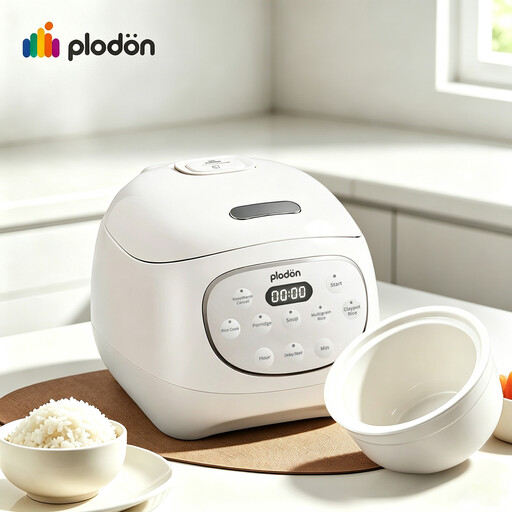
Its stated capacity and intended users make this model worth considering for a small session; check that the batch size suits your workshop recipe.
1.2 L, 300 W, for 1–2 people, 23-hour delayed start, 8 hours of automatic keep-warm and a ceramic non-stick inner pot.
 No image available
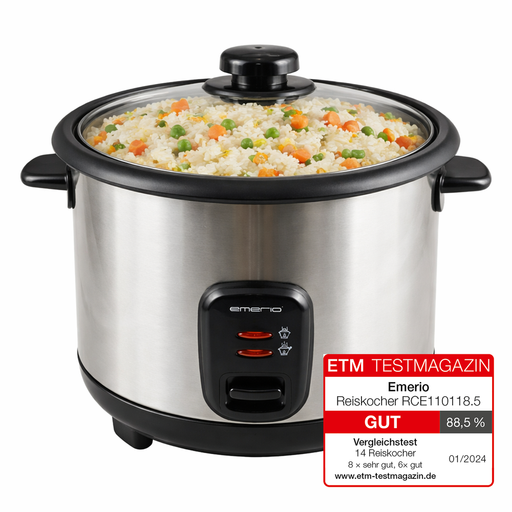
Read the terms of use carefully before choosing this model for a workshop.
The product information restricts use to domestic use indoors and excludes commercial use, so it isn’t suitable for a business workshop under those terms. The stated capacity is 1.5 L.
 No image available
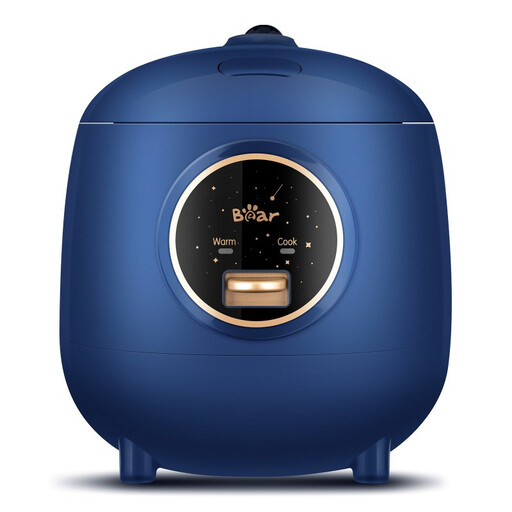
This compact model may be worth considering for a small batch; allow for the time between cooking cycles if preparing successive batches.
1.2 L, 200–238 W, for 1–2 people, one-button operation and automatic keep-warm. The instructions say to wait more than 15 minutes before cooking again.
 No image available
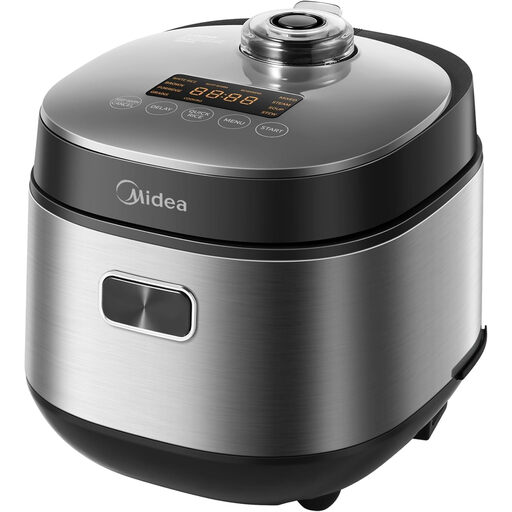
Worth considering if you’d also like a steaming insert; check separately whether it can hold the amount of sticky rice you need.
2 L, 9 functions and an included steaming insert.
 No image available
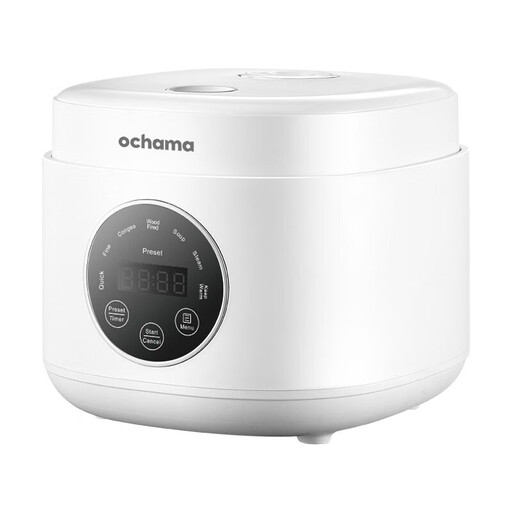
Consider this model if you need a steaming basket as well as a rice cooker; check that its size suits your workshop batch.
2 L, 500 W, for 2–3 people, 7 cooking functions, timer and keep-warm function. Includes a steaming basket and rice paddle.
No, they’re different types of rice. Hot Thai Kitchen describes Thai sticky rice as different from sushi rice, so a sushi rice setting doesn’t confirm that the appliance is suitable for a Thai sticky rice recipe.
Yes, for the traditional steaming method described by Hot Thai Kitchen: the recipe author recommends soaking it for at least 3 hours. The same source also describes an alternative for a specific recipe: soak for 20 minutes in hot water, then drain and steam for 25–30 minutes. This isn’t a universal setting for rice cookers.
Compare the number of portions in your recipe with the stated cooking capacity and the usable capacity of the steaming insert. The inner pot’s capacity alone doesn’t tell you how much sticky rice you can steam in it.
Don’t leave cooked rice at room temperature for longer than necessary. The Voedingscentrum warns about Bacillus cereus in rice that is stored for too long or not kept cold enough, and advises cooling leftovers quickly to 4 °C. Professional food service must also follow the relevant HACCP procedures and temperature checks set out by the NVWA; a keep-warm button doesn’t measure food temperature.
Check the applicable CE marking and EU Declaration of Conformity for the exact product version. Ondernemersplein explains that electrical appliances placed on the market in the Netherlands must meet the relevant European requirements, and that the manufacturer draws up an EU Declaration of Conformity for a compliant appliance. This general requirement doesn’t, by itself, confirm the documentation for an individual model.