
Workshop host for larger groups
You want to divide one batch between several participants and need to plan portions and serving times. The stated capacity for dry rice does not tell you how much porridge you can make.


Start with the recipe: for water-based congee, a porridge or congee setting is a useful starting point, while rice pudding made with milk needs extra care to prevent it boiling over and requires supervision. Then match the permitted porridge quantity and controls to your workshop; a dry-rice capacity figure does not tell you how much porridge the appliance can make.
You want to divide one batch between several participants and need to plan portions and serving times. The stated capacity for dry rice does not tell you how much porridge you can make.
You’re looking for a straightforward porridge setting that lets participants follow the cooking process during the class.
You want to cook with milk, so you’ll need to consider supervision, the risk of boiling over and cleaning, as well as whether the cooker has a porridge or congee setting.
If you’re choosing a rice cooker for making rice pudding at a cooking workshop, start by considering the recipe and how much you need to make in one batch.
| What to consider | What should you check? | Who should bear this in mind? |
|---|---|---|
| Suitable porridge setting | Check whether the manual for the exact model covers your planned recipe and the porridge setting. | If I want to demonstrate making porridge, I look for a programme that suits my recipe. Around 31% of consumers give porridge preparation top priority. |
| Amount per batch | Check the maximum permitted porridge fill level; don’t compare it directly with cups of dry rice. | For a group, I want to know how much of the workshop recipe I can make at once. Around 25% of consumers prioritise making enough porridge for the group. |
| Milk rice pudding | Check the model-specific instructions for cooking with milk and decide how the host will supervise the process. | If I’m making creamy rice pudding with milk, I want to know how to keep an eye on it during the class to prevent it boiling over. For around 25% of consumers, suitability for a milk-based recipe is the main consideration. |
| Cleaning and serving | Check which parts can be removed and plan how to store any leftovers safely. | If you’re serving the porridge after the class or have leftovers, I want to plan cleaning and storage in advance. Around 19% of consumers make this their top buying priority. |
The dry-rice measure doesn’t tell you how much liquid porridge the appliance is designed to make according to its instructions. If the permitted quantity is too small, you may need to plan several batches.
Work out how many portions you need for the workshop recipe, then check the porridge fill level for the exact model.
Making several batches may require extra class time and space.
Reishunger warns that milk can boil over in a rice cooker with the lid closed. A congee setting alone doesn’t confirm that you can cook a milk-based recipe without supervision.
Distinguish between water-based congee and milk rice pudding, follow the instructions for the exact model and stay nearby when cooking with milk.
Milk boiling over can mean extra cleaning during or after the workshop.
An appliance function doesn’t determine how long a rice dish can be stored safely. The Voedingscentrum advises cooling leftovers quickly to 4 °C, refrigerating them for no more than two days and heating them thoroughly before eating.
Plan in advance when you’ll serve the porridge and how you’ll cool and store any leftovers promptly after the class.
Tefal lists both the compact Pop RK5352E0, which has a porridge programme, and the more versatile RK8121.
According to the manufacturer, the Digital Rice Cooker and Digital Mini Rice Cooker have a congee setting; their stated capacities are 1.5 and 0.6 litres respectively.
For the HD3093/80 mini rice cooker, Philips lists eight programmes, including porridge, and a removable inner pot.
Yum Asia describes the Sakura as a rice cooker with a porridge function; the manual lists the YUM EN15 and YUM EN15W models as 1.5-litre versions.
Joybuy rice cooker picks for making rice pudding at a cooking workshop, from compact models to cookers for larger batches.
 No image available
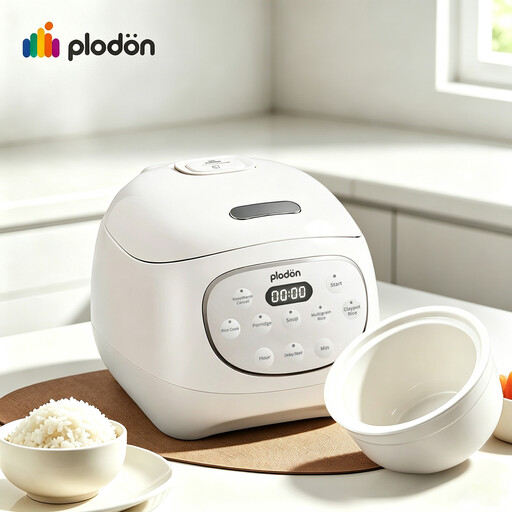
A compact option to consider for a small porridge demonstration; the stated serving size of 1–2 people is not a confirmed yield for porridge.
The product name lists a capacity of 1,2 L, 300 W and a ceramic inner pot.
Other listed features include a 23-hour timer, keeping warm for up to 8 hours and an eight-stage cooking cycle.
 No image available
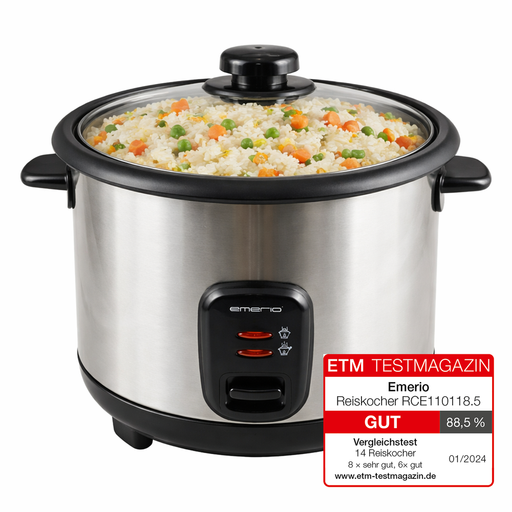
An option to compare if you’re planning a larger home-cooking batch; check that your intended workshop use is within the stated usage restrictions.
The product name lists a capacity of 1,5 L and a keep-warm function.
The product information limits use to domestic settings and excludes commercial use.
 No image available
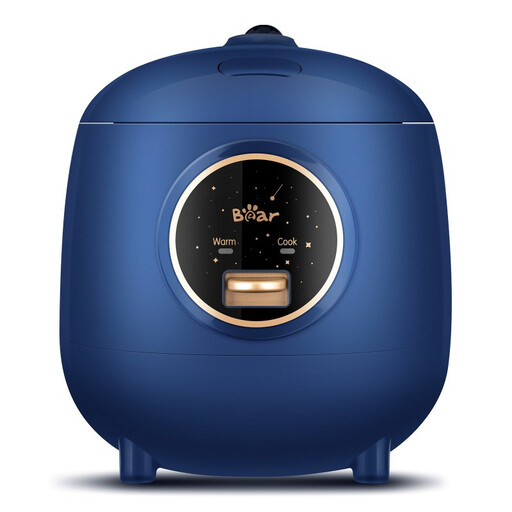
A compact option to compare with other models if your workshop uses small quantities; the stated serving size of 1–2 people doesn’t indicate the porridge yield.
The product name lists a capacity of 1,2 L, a power rating of 200–238 W and automatic keep-warm.
Other listed features include a non-stick inner pot and one-button operation.
 No image available
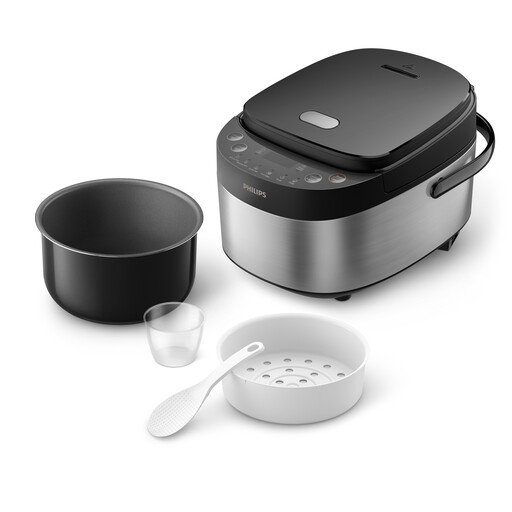
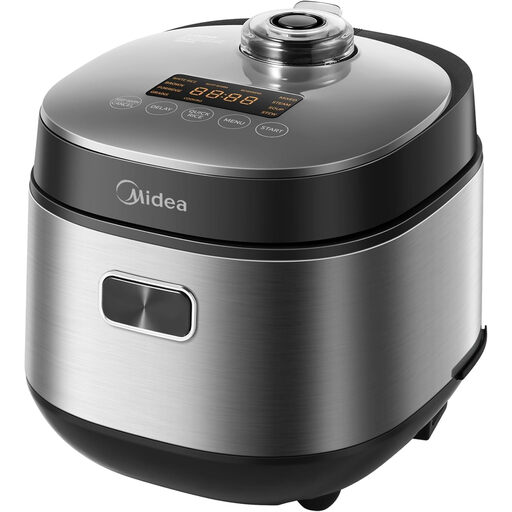
A compact option to compare for a small demonstration; Philips lists a porridge programme for this model.
The stated capacity of 0,85 L is for dry rice, not porridge.
The product information lists eight programmes, a removable inner pot and inner lid.
 No image available
A compact model to consider for a workshop batch; check that the manual supports your planned porridge recipe and quantity.
The product name lists a capacity of 2 L, four cups and a serving size of 1–3 people.
Other listed features include nine functions, a steaming basket and a 24-hour timer and keep-warm function.
No, the name of a programme doesn’t confirm that. Reishunger warns that milk can boil over under a closed lid and describes a method for its digital models that involves more than simply starting a standard programme. Follow the instructions for the exact model and stay nearby while it cooks.
You can’t tell from the capacity alone. Manufacturers may state capacity for dry rice or give serving sizes in bowls of rice. Work out the number of portions in your workshop recipe, then check the permitted porridge fill level in the model’s manual.
The Voedingscentrum advises cooling leftovers quickly to 4 °C, keeping them in the fridge for no more than two days and heating them thoroughly before eating. Don’t rely on a keep-warm function instead of following appropriate storage advice.
For businesses that prepare, process or sell food, the NVWA requires a HACCP food safety plan or an applicable hygiene code. Businesses that offer unpackaged food to consumers must provide allergen information, including information about milk. Whether these rules apply to a particular private workshop depends on how it is organised and how the food is offered.
The NVWA says that businesses which sell or supply food directly to consumers must register. Whether this applies to a particular workshop organiser depends on its activities and any relevant exemptions; simply describing it as a ‘cooking workshop’ doesn’t answer the question.