
If you regularly make congee
You want to make rice porridge regularly in a small kitchen and are looking for a clearly described porridge function, with straightforward instructions on how much to add.


Start with a rice cooker whose manufacturer specifies a porridge or congee setting, along with instructions for the exact model. Then check the external dimensions, the clearance around the appliance and the maximum quantity of porridge recommended in the manual. The stated rice capacity does not indicate how much porridge you can safely cook.
You want to make rice porridge regularly in a small kitchen and are looking for a clearly described porridge function, with straightforward instructions on how much to add.
You want to know whether the appliance will fit both when in use and when stored away. The word ‘mini’ alone doesn’t tell you how much space you’ll need.
You usually make one or a few portions and don’t want to mistake the rice capacity for the permitted quantity of liquid porridge.
First compare the porridge instructions for the exact model, then check whether its dimensions and portion size suit your kitchen and how you plan to use it.
| What to consider | What should you check? | Who is this important for? |
|---|---|---|
| Suitable for rice porridge | Check whether the exact model has a porridge or congee setting, and read the associated filling and cooking instructions. | If I mainly want to make rice porridge, I want to know whether the manufacturer provides instructions for this preparation method for my model. Around 36% of consumers put porridge suitability first. |
| Space for use and storage | Compare the external dimensions with your worktop and cupboard, and make sure the steam outlet and recommended clearance are unobstructed. | If my kitchen is short on space, the appliance needs to fit without blocking the space required for heat to escape. Around 29% of consumers prioritise fit. |
| Portion size | Check what the stated capacity refers to, and follow the quantities in the model’s manual when making porridge. | If I make one or a few portions, I want to be able to estimate how much porridge each batch will make without assuming the rice capacity is also the porridge limit. Around 21% of consumers look at portion sizes first. |
| Cleaning and storage | Read the cleaning instructions for the inner pot, lid and steam outlet; cool leftovers quickly before storing them in the fridge. | If I want to clean up quickly after cooking and handle leftovers safely, both steps matter. Around 14% of consumers make maintenance and storage their top priority. |
Rice porridge can foam more than plain rice and spill out through the steam outlet, leaving you with extra cleaning to do.
Only use the quantities and cooking method given in the manual for the exact model.
A compact rice cooker for plain rice won’t necessarily have a specified porridge programme or congee recipe.
If rice porridge is your main reason for buying, check before you buy that the model you’ve chosen supports it.
A keep-warm function isn’t general guidance on how long leftovers can be stored safely. The Voedingscentrum warns about Bacillus cereus in rice dishes that are stored for too long without being kept sufficiently cold.
Follow the Voedingscentrum’s advice for leftovers: cool them quickly to 4 °C, store them in the fridge for no more than two days, and reheat them thoroughly before eating.
Philips describes the HD3080/80 as a compact rice cooker for 1–3 people, according to the manufacturer, with a porridge setting.
According to Reishunger, the Dutch Digital Mini Rice Cooker is designed for small portions and has a congee setting.
Yum Asia describes the porridge function on its rice cookers as suitable for congee; the Panda Mini is an EU model for smaller households.
Tristar describes the RK-6117 as a compact 0.6 l rice cooker for small portions of rice.
These Joybuy products list a porridge function or programme. For the exact model, check the manual, the permitted quantity of porridge and the dimensions. Electrical appliances sold on the Dutch market are subject to applicable European requirements. The Dutch government’s Ondernemersplein explains the CE marking and EU Declaration of Conformity that manufacturers must provide when a product complies.
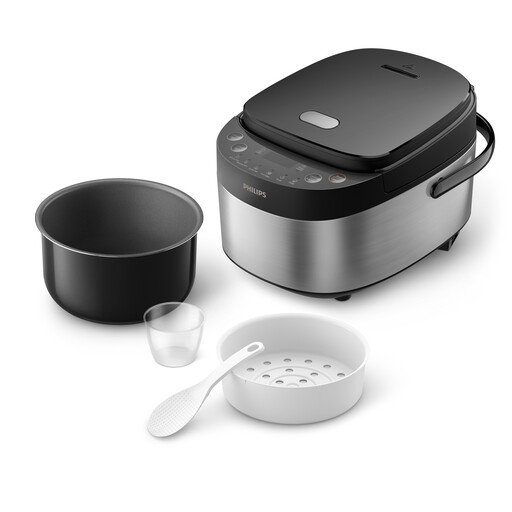 No image available
The product description lists a porridge programme; check the quantity and instructions for this model.
The title lists a capacity of 0.85 litres and eight programmes. The description mentions a removable inner lid and a non-stick coating.
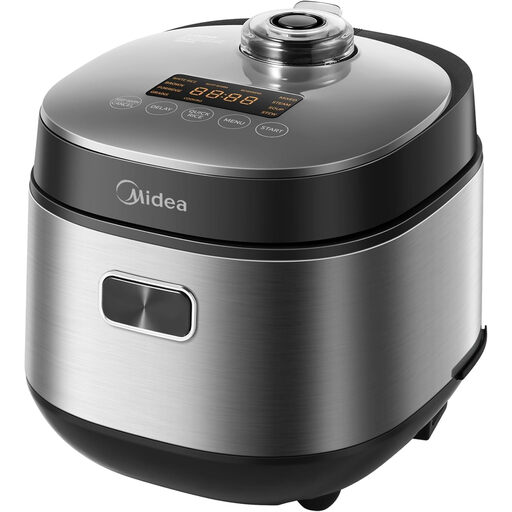 No image available
The product description lists porridge as a cooking function; check the corresponding quantities in the manual.
The title lists 2 l, 4 cups and 1–3 people, as well as a timer and a 24-hour keep-warm function. The description mentions a removable non-stick inner pot.
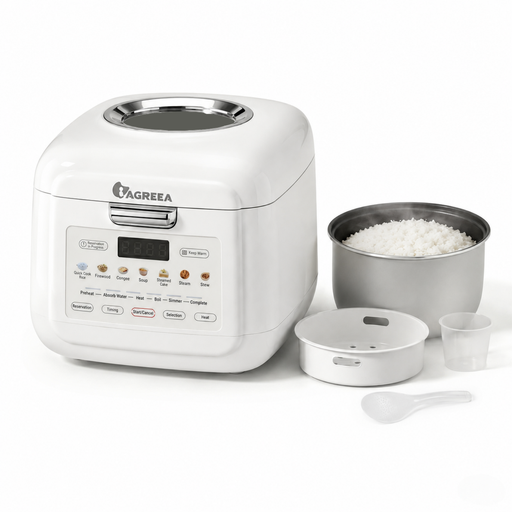 No image available
The product description lists a porridge programme; follow the instructions for this model when making rice porridge.
The title lists 2 l and 3 cups of uncooked rice, a viewing window, a steam tray and a keep-warm function. The rice capacity doesn’t tell you how much porridge you can cook.
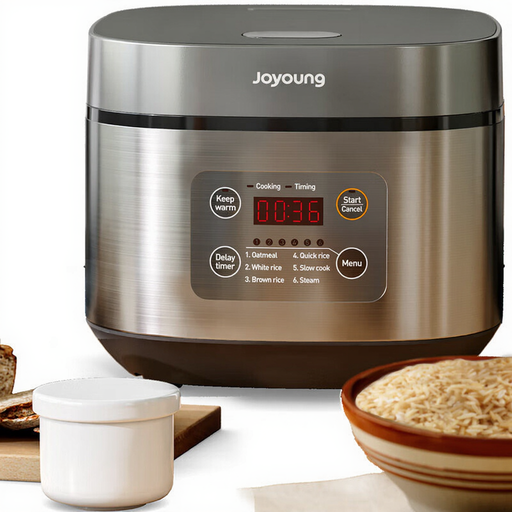 No image available
The title and product description list porridge as a cooking function; check the model-specific porridge instructions.
The title lists 860 W and 4 l. The description also mentions cooking rice and soup, a timer and a non-stick inner pot.
 No image available
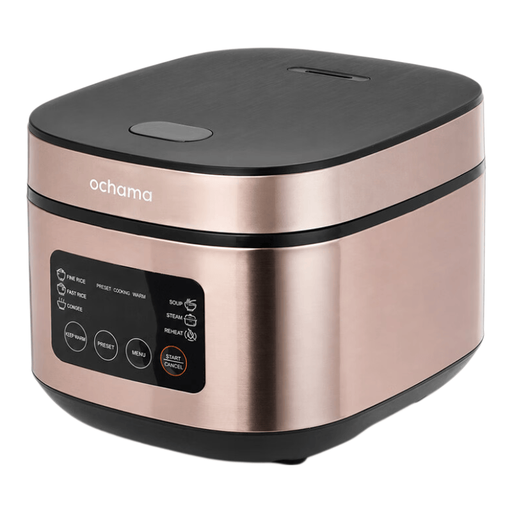
The product description lists porridge as a cooking function; check the quantity and cooking method for this model.
The title lists 4 l, 930 W and six cooking functions. It also mentions a timer, LED display, ceramic-coated inner pot, rice paddle and steam basket.
No, not just because it’s described as ‘mini’ or because of its stated rice capacity. Check whether the exact model has a porridge programme or explicit congee instructions, and stick to the recommended quantities. Porridge can boil over through the steam outlet.
Leave the clearance specified in the manual and make sure heat and steam can escape. Follow the cleaning instructions for the inner pot, lid and steam outlet for your chosen model; a removable inner pot isn’t automatically dishwasher-safe.
Don’t treat a stated keep-warm duration as general storage guidance. The Voedingscentrum advises cooling leftovers quickly to 4 °C, keeping them in the fridge for no more than two days and reheating them thoroughly before eating.
When you buy from a business online, you’re generally entitled to a 14-day cooling-off period. You’re also entitled to a product that is fit for purpose. According to the Dutch government, there is no fixed period for statutory warranty in the Netherlands, and the seller is your point of contact if a product is faulty.
Electrical appliances sold on the Dutch market are subject to applicable European requirements. The Dutch government’s Ondernemersplein explains that manufacturers must apply a CE marking and draw up an EU Declaration of Conformity when a product complies. A listing in an online shop doesn’t, by itself, confirm that a specific item complies.