
If you often make rice porridge
A clearly described porridge programme and the quantities for the specific model matter more than a general rice setting alone.


Start with a rice cooker whose manufacturer describes a porridge or congee function for the exact model. Then compare its external dimensions with your cupboard and follow the maximum porridge quantity in the model-specific instructions. A small cooker without confirmed porridge instructions is not automatically the most practical choice, and water capacity is not the same as porridge capacity.
A clearly described porridge programme and the quantities for the specific model matter more than a general rice setting alone.
If you want to put the cooker away after use, compare its external dimensions with the space available in your cupboard or on your shelf.
Check the permitted quantity for porridge; the rice or water capacity does not tell you this automatically.
These considerations apply to anyone who wants to make rice porridge and store their rice cooker in a limited amount of cupboard space after use.
| What to consider | What should you check? | Who is this important for? |
|---|---|---|
| Making porridge | Check whether the manufacturer describes a porridge or congee programme for the exact model. | If I mainly want to make rice porridge, I look for a clearly described porridge function rather than just a rice setting. Around 36% of consumers give porridge preparation top priority. |
| Storage | Compare the length, width and height with the available space in your cupboard. | If the cooker needs to fit in a small cupboard after use, I want to compare its external dimensions with the space I have before buying. Around 29% of consumers consider ease of storage their top priority. |
| Portion size | Look up the maximum quantity of rice for porridge in the manual for your chosen model. | If I make small portions, I want to know how much rice the porridge instructions allow, independently of the water or rice capacity. Around 21% of consumers prioritise finding the right portion size. |
| Cleaning | Check which parts are removable and whether they are dishwasher-safe. | After cooking, I want to know which parts I can remove for cleaning and which cleaning methods are permitted. Around 14% of consumers care most about easy maintenance. |
Rice capacity, water capacity and the porridge markings may each indicate different limits. Porridge can also foam, so it’s important to use the correct quantity for your model.
Follow the porridge markings and maximum quantities in the manual for the exact model.
Using too much can cause the cooker to boil over and create extra cleaning.
The word ‘mini’ doesn’t tell you whether the external dimensions will fit your cupboard opening or shelf.
Measure the available space and compare it with the length, width and height of the model you’re considering.
If the cooker doesn’t fit in the cupboard, you may need to find somewhere else to store it.
A rice cooker designed for standard rice won’t necessarily have a specified programme or instructions for rice porridge.
If automatic porridge preparation is important to you, choose a model with a confirmed porridge function and corresponding quantities for that exact version.
These brands are included because of specific model features; their mention does not in itself indicate that those models are available.
The Panda Mini is a compact range for anyone looking for a manufacturer-described programme for rice or oatmeal porridge.
According to Reishunger, the Digitaler Mini Reiskocher combines a capacity of 0.6 l with a congee mode.
The Multifunctional Rice Cooker 1.5L, model MFB05M0-1, has separate porridge markings.
The RK-6117 is a compact rice cooker for anyone who values cooking standard rice and easy storage.
This selection includes rice cookers for smaller households and models whose product information mentions rice porridge. Check the porridge instructions for each model and compare the external dimensions with your cupboard.
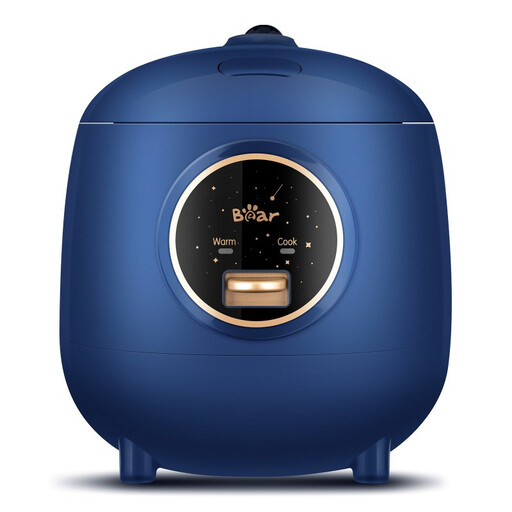 No image available
The product information says it’s suitable for one or two people. Compare the listed external dimensions of 21.7 × 19.0 × 21.7 cm with your cupboard. The product name lists a capacity of 1.2 l and 200–238 W.
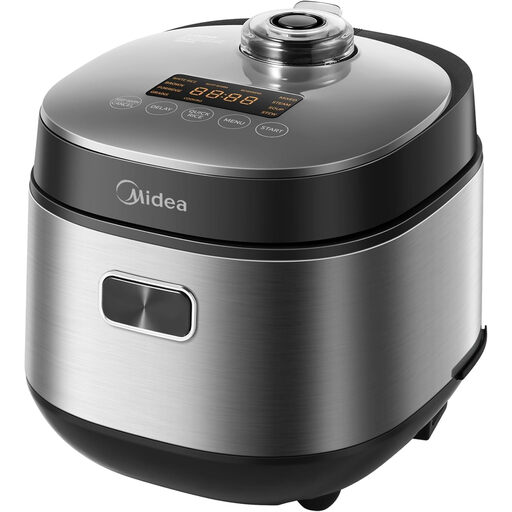 No image available
The product information lists porridge as a cooking option and says it’s suitable for one to three people; check the permitted porridge quantity for this model. The product name lists a capacity of 2 l and 9 functions.
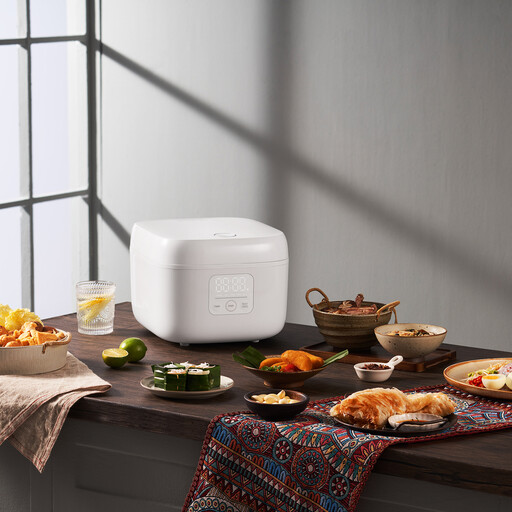 No image available
The stated rice and water capacities can help you compare the size with your cooking needs, but they don’t indicate the maximum amount of rice porridge you can make. Check the instructions for this model for that information.
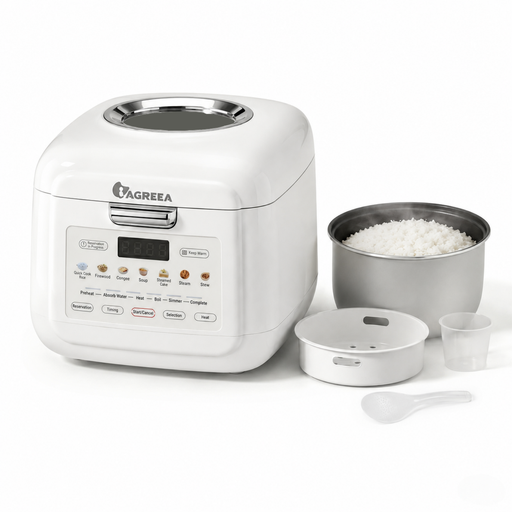 No image available
The product information lists porridge as a cooking option; check the model-specific quantity for rice porridge before measuring out a portion. The product name lists 2 l and 3 cups of uncooked rice.
 No image available
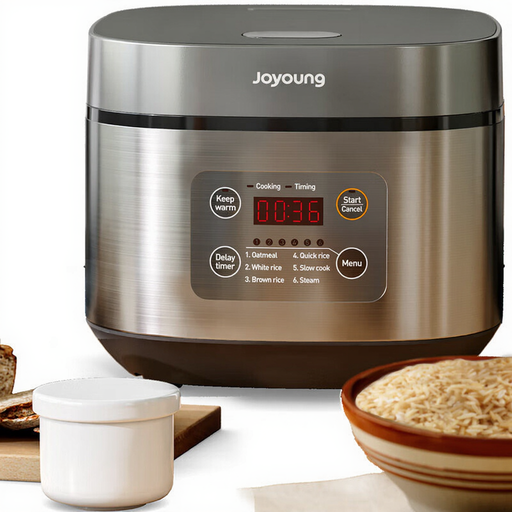
The product information lists porridge as a cooking option; check the instructions for the permitted quantity and preparation method for rice porridge. The product name lists a capacity of 4 l and a power rating of 860 W.
No. Don’t work out the maximum quantity for porridge from the rice or water capacity. For model MFB05M0-1, Xiaomi specifies a separate porridge line for up to half a measuring cup of rice. Yum Asia recommends following the quantities in the manual for your specific model because porridge can foam.
Follow the cleaning instructions for the exact model. Xiaomi describes the Multifunctional Rice Cooker 1.5L as having a detachable inner lid and removable steam valve; Reishunger states that the Digitaler Mini Reiskocher is not dishwasher-safe.
Voedingscentrum advises cooling leftover cooked rice quickly, storing it in a sealed container in the fridge or freezer, and not leaving it out of the fridge for more than 2 hours. A keep-warm function is no reason to leave cooled leftovers unrefrigerated for longer.
No. According to the Dutch Government, the Netherlands has no fixed statutory warranty period. What matters is what you could reasonably expect from the product, and the retailer is your point of contact if a product is faulty. A manufacturer’s warranty is in addition to this.
Electric appliances with a rated AC voltage of 50 to 1,000 V are subject to the applicable requirements of the Low Voltage Directive and CE marking rules, as explained by the Netherlands Food and Consumer Product Safety Authority and EUR-Lex. Parts intended to come into contact with food must also comply with the applicable rules for food contact materials, including Regulation (EC) No 1935/2004. Your Europe explains that no central EU body issues CE certificates.