
Teacher using different grain blends
You want to prepare different recipes during a lesson and need a programme that suits the mix. A dedicated grain setting doesn’t replace checking the recipe instructions and water ratio.


For changing grain blends, choose a rice cooker whose manual or product specifications confirm a programme for that mix. Match the batch size to the maximum fill level for your ingredients, rather than relying on the capacity in litres or the stated number of servings. A basic model may be enough for a recipe you’ve tested in advance, but a keep-warm setting doesn’t prove that the food stays at a safe temperature while it’s being served: check the food’s temperature.
You want to prepare different recipes during a lesson and need a programme that suits the mix. A dedicated grain setting doesn’t replace checking the recipe instructions and water ratio.
You’re planning one or more batches for participants and want to match the maximum quantity of uncooked ingredients to the recipe and serving time.
You usually make the same mix that you’ve tested in advance, and value simple operation and easy cleaning between sessions. For example, Tefal describes the RK1038 as a mechanical rice cooker with an automatic keep-warm setting.
A good fit if: you make different grain blends in your workshops and want a programme specifically designed for them.
Bear in mind: a stated capacity of 5 litres doesn’t tell you how much uncooked mix will fit.
A good fit if: you mainly demonstrate quinoa, individual grains or different types of rice.
Bear in mind: a general grain setting doesn’t confirm that every combination of grains and liquid is supported.
A good fit if: you usually make the same mix that you’ve tested in advance and prefer simple operation.
Bear in mind: test the recipe beforehand; an automatic keep-warm setting doesn’t check the temperature of the food.
For a workshop, the most important factors are whether the programme is suitable, the quantity per batch, when you’ll serve the food and how easy the cooker is to clean.
| What to consider | What should you check? | Who is this important for? |
|---|---|---|
| Programme for your mix | Check the manual to see which grains, ratios and maximum fill levels are suitable for the programme. | As a teacher, I want to make different workshop recipes using a suitable setting; around 31% of consumers prioritise programme suitability. |
| Batch size | Compare the quantity of uncooked ingredients you need with the model-specific maximum fill level; plan to cook more than one batch if necessary. | As an organiser, I want to prepare enough for the participants without guessing based on litres or rice servings; around 25% of consumers give batch size the highest priority. |
| Safe serving | Decide when you’ll serve the food and, if keeping it warm, check its temperature with a digital probe thermometer. | As an instructor, I want to coordinate the cooking and serving times; around 25% of consumers consider safe storage and serving their main concern. |
| Operation and cleaning | Check which parts can be removed and whether the inner pot of this exact model is dishwasher-safe. | As a teacher, I want to operate and clean the cooker quickly between workshops; around 19% of consumers prioritise ease of use and cleaning. |
The stated capacity can vary depending on the ingredient. For the Sakura, Yum Asia distinguishes between a maximum of 8 cups of uncooked white rice and 6 cups of uncooked brown rice.
Compare the maximum fill level for your ingredients with the recipe and the number of participants. If everything won’t fit in one batch, allow for another cooking cycle and extra workshop time.
A keep-warm setting doesn’t tell you the temperature of the food itself. The Netherlands Nutrition Centre warns that rice dishes kept for too long and not kept cold enough may pose a risk from Bacillus cereus.
If serving food hot, check its temperature in line with the applicable procedure and cool leftovers quickly. The Netherlands Nutrition Centre advises not leaving cooked rice leftovers out of the fridge for more than 2 hours.
A dedicated mixed-grain programme is different from a general grain or rice setting. The ingredients and cooking methods supported can vary from model to model.
Follow the instructions for the exact model and test your combination of grains and liquid before the workshop. A test batch takes extra preparation time.
Worth considering if you’re looking for a dedicated mixed-grain programme and a stated capacity of 5 litres.
The Sakura is worth considering if you want to compare capacity by rice type and a range of rice functions.
The digital rice cooker is worth considering for workshops covering quinoa, individual grains and different types of rice.
The SR-DA152WXE is worth considering if you’re looking at a model with a risotto or grain setting and a stated keep-warm temperature.
The mechanical RK1038 is worth considering for a simple workshop recipe you’ve tested in advance.
These rice cookers are options to compare for cooking rice and grains; check for each model whether the instructions support your specific mixed-grain recipe.
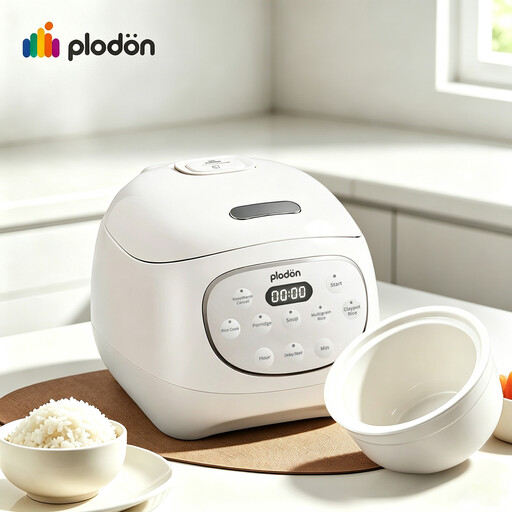 Image unavailable
Could suit a small workshop or test batch; the stated capacity is for 1–2 people.
The product description lists a multigrain rice programme, a delay start of up to 23 hours and an 8-hour keep-warm function at 65 °C.
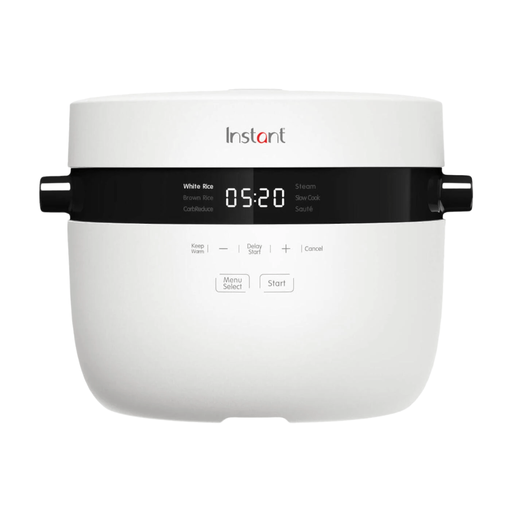 Image unavailable
An option to compare if you’re looking for a steamer function as well as the ability to cook rice and grains.
The product description lists automatic time and temperature control, a capacity of up to 12 servings, and a dishwasher-safe inner pot and accessories.
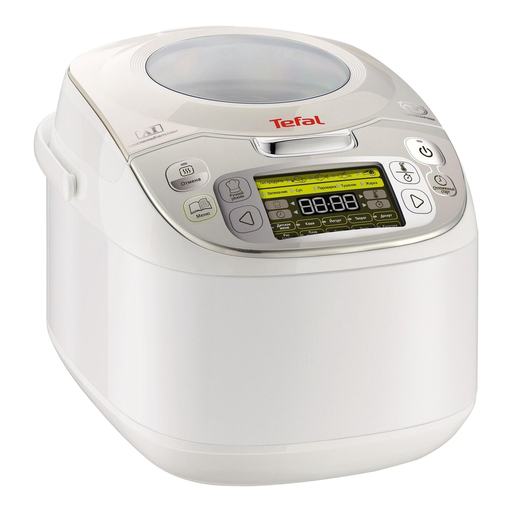 Image unavailable
Could be worth considering if you also want to make rice, porridge and risotto for your workshops, and remove the pot afterwards.
The product description lists 45 programme options, manual time and temperature settings, a capacity of up to 10 cups of rice, and dishwasher-safe parts.
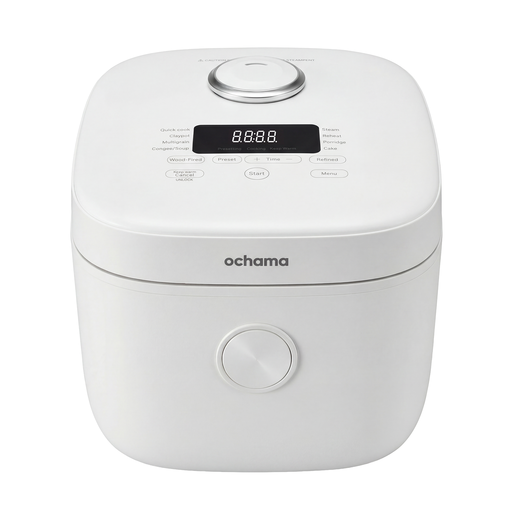 Image unavailable
An option for a workshop where you also want to make porridge or soup; the product title says it’s suitable for a household of 3–4 people.
The product description lists a timer, keep-warm function and steaming basket.
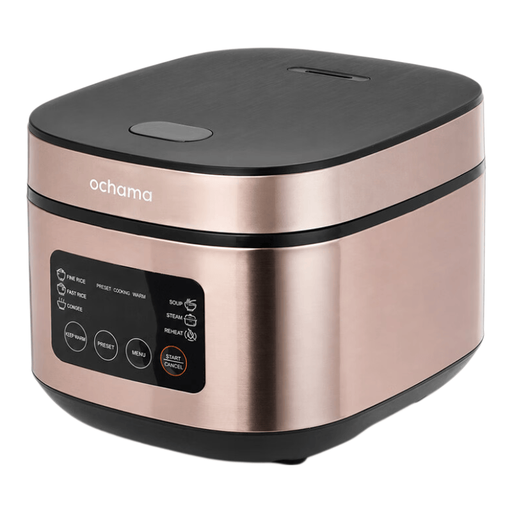 Image unavailable
Could suit workshops making rice and porridge, provided you check the programmes and batch size in advance.
The product title lists six cooking functions, a timer and an LED display. The product description lists a steaming basket.
Not without checking the recipe and maximum fill level. For the 5-litre model, Instant Pot lists 2 to 20 servings, but this doesn’t confirm the maximum for every uncooked grain mix. Test the quantity in advance.
The Netherlands Nutrition Centre advises cooling leftovers quickly, storing them covered in the fridge and not leaving them out of the fridge for more than 2 hours. Food businesses must also follow the applicable HACCP procedures and temperature requirements.
According to the Netherlands Food and Consumer Product Safety Authority, businesses that prepare, process or sell food must work with a HACCP food safety plan or an applicable hygiene code. Whether these rules apply to your workshop depends on how it is organised; the same requirement doesn’t apply to every private workshop.
Check the food’s temperature with a digital probe thermometer rather than relying on the keep-warm setting alone. For professional settings covered by the NVWA guidance, unpackaged perishable food in a hot-holding cabinet or bain-marie must be kept at 60 °C or above.
Check the manual for the exact model to see which parts can be removed and whether the inner pot and accessories are dishwasher-safe. Manufacturers differ, so don’t assume it’s the same as a similar-looking model or one with similar features.