
For cooks who use different grain mixes
You switch between rice, brown rice and other grains, and mainly want to find settings and instructions that suit your mix.


Choose a rice cooker based on the grains you want to cook together: a suitable setting and clear instructions matter more than simply having lots of programmes. Digital models and those designed with grains in mind offer more settings, while a simple one-button cooker can be easier to use. Neither feature alone guarantees that every homemade mix will cook properly.
You switch between rice, brown rice and other grains, and mainly want to find settings and instructions that suit your mix.
You want to know whether one cooking cycle will make enough for everyone at the table, and how the capacity compares with your recipe.
You make smaller quantities and need to weigh up a compact size against the space required to make enough portions for guests.
First, check whether the manual covers your grains and cooking method. Then compare the permitted quantity with your lunch recipe and the space available in your kitchen.
| What to consider | What should you check? | Who is this important for? |
|---|---|---|
| Setting for your mix | Check whether the manual covers the grains you use, how to mix them, the water ratio and whether they need soaking. | If I regularly switch between grains, I want to know which settings suit my particular mix. Around 36% of consumers give getting the right results top priority. |
| Capacity for lunch | Compare the amount of uncooked grain you need with the measuring cup, fill limit and instructions for the exact model. | If I’m cooking for several people, I want to know whether one cooking cycle will be enough. Around 29% of consumers prioritise making enough portions for lunch. |
| Size for your kitchen | Check both the external dimensions and the permitted quantity of grain; ‘mini’ on its own doesn’t tell you how much you can cook. | If worktop space is limited, I want to be able to fit the appliance in without it taking up more room than necessary. Compactness matters most to around 21% of consumers. |
| Serving and leftovers | Check whether the appliance has a keep-warm function. Follow separate storage advice for leftovers and don’t leave them at room temperature for a long time. | If I want to serve lunch at a particular time, I consider both the timing and what to do with any leftovers afterwards. Around 14% of consumers make serving arrangements their main priority. |
A grain setting or a recipe for one type of rice doesn’t automatically tell you which water ratio to use for a mix of grains with different cooking times.
Check the manual for the ingredients in your mix. When trying a new combination, start with a small quantity.
A new mix may need an extra test run; sometimes you’ll need to cook the ingredients separately.
Manufacturers describe capacity in different ways. Tefal lists both 1,8 l and 10 cups of rice for the RK1038; Instant Pot states that its 2,8L model makes up to 12 portions. Those figures aren’t necessarily equivalent to the quantity in your recipe.
Compare the maximum permitted quantity of uncooked grain for the exact model with the amount you want to cook.
If the quantity you need won’t fit in one cooking cycle, you may need to cook another batch.
Keeping food warm while serving isn’t the same as storing leftovers safely. The Netherlands Nutrition Centre warns that Bacillus cereus can be present in rice dishes that have been kept for too long without being chilled properly.
Cool any leftovers you want to keep quickly and store them in a sealed container in the fridge or freezer. The Netherlands Nutrition Centre advises not leaving them out of the fridge for more than two hours.
The Classic RK1038 and Multicook & Grains RK900142 offer different approaches: simple controls versus more grain and texture settings.
The 0,6 l and 1,5 l digital models are worth considering when weighing up size and rice settings.
The Rice Cooker, Slow Cooker & Steamer 2,8L combines rice cooking with extra functions that could come in handy for lunch.
The Panda Mini and Sakura are worth a look if size and programmable rice cooking matter to you.
This selection of Joybuy products ranges from small rice cookers to multicookers. For a mixed grain blend, check the instructions for the exact version; a mention of several programmes alone doesn’t tell you which mixes are suitable.
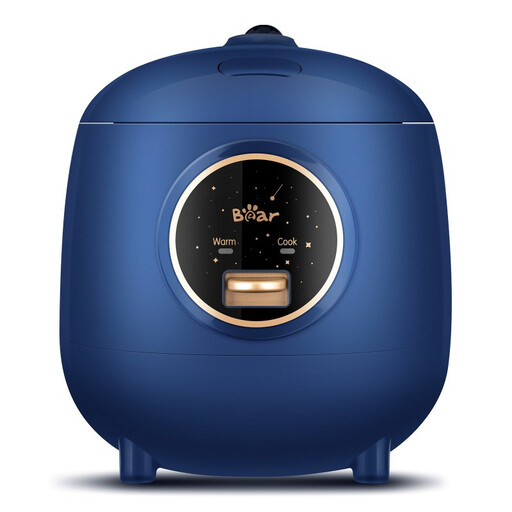 Image unavailable
The stated capacity and one-button operation make this a good fit for a smaller lunch where ease of use is the priority.
The product information states a maximum of 2 cups of uncooked rice and says it’s suitable for 1–2 people.
The title lists an automatic keep-warm function and a non-stick inner pot.
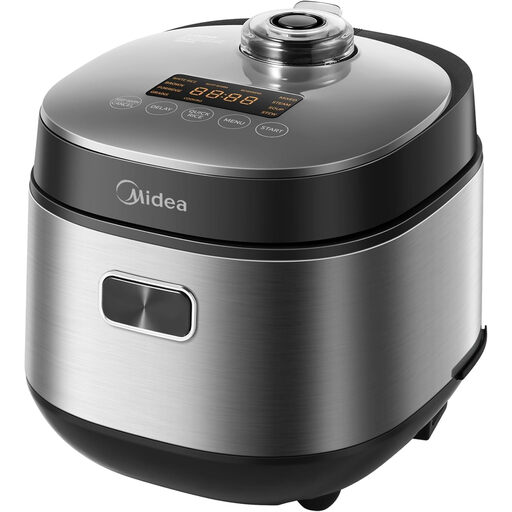 Image unavailable
The product information specifically lists a mixed rice function, making this model worth a look if you mix different types of rice.
The stated capacity is 2 l; the information lists a maximum of 4 cups of uncooked white rice.
A timer, six temperature stages and keep-warm for up to 24 hours are also listed. Check the manual to see whether the function suits the grains in your mix.
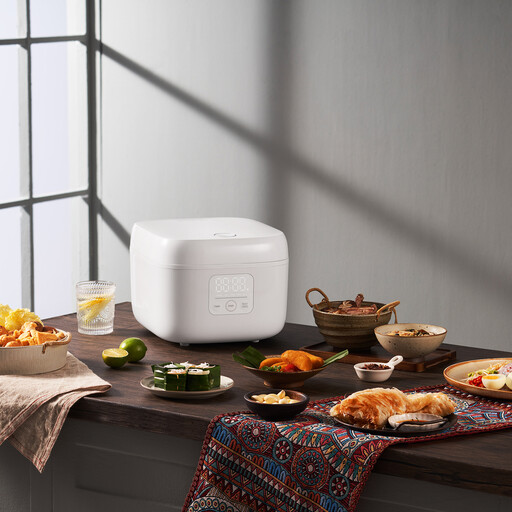 Image unavailable
The stated rice capacity may be useful if you’re looking for a rice cooker with more capacity than a mini model.
The product title lists a rice capacity of 1,6 l and a water capacity of 4 l. The product description also mentions steaming vegetables.
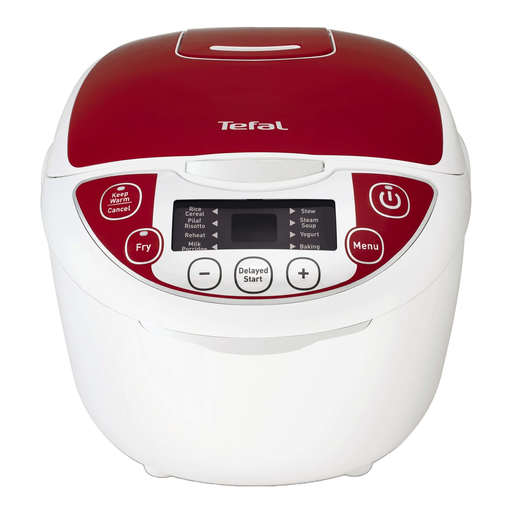 Image unavailable
This model could be a good fit if you’re looking for other cooking functions as well as rice cooking; the product information lists steaming and slow cooking, among others.
The title lists a capacity of 1,8 l and 12 cooking programmes. Check the manual to see which programmes are suitable for your grain mix.
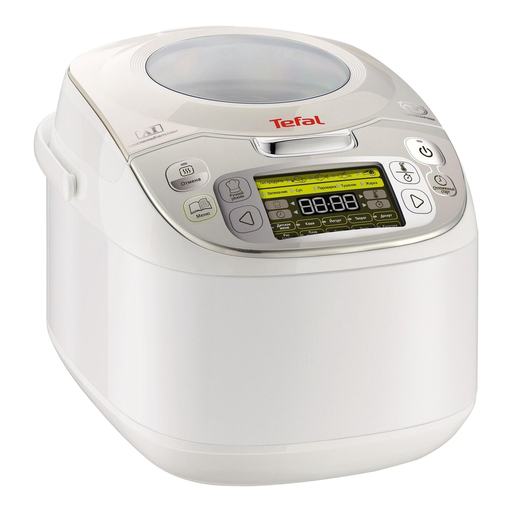 Image unavailable
The stated capacity could be useful if you’re cooking for a larger lunch, but make sure you check the permitted quantity for the grain you’re using.
The product information lists programmes for rice, porridge and risotto, and a capacity of up to 10 cups of rice.
A delayed start and keep-warm for up to 24 hours are also listed. This keep-warm function isn’t advice to store cooked rice as leftovers for an extended period.
Follow the manual for your exact model. Reishunger recommends the ‘BROWN’ setting for brown rice; don’t apply that advice to a mix with other grains or to another brand without checking first.
Treat rice you want to keep as leftovers: the Netherlands Nutrition Centre advises cooling leftovers quickly, storing them in a sealed container in the fridge or freezer, and not leaving them out of the fridge for more than two hours. For cooked brown rice, the Netherlands Nutrition Centre advises keeping it in the fridge for two days; a keep-warm function isn’t advice on how to store food.
Check the manual for the exact version. Instant Pot lists a dishwasher-safe inner pot and accessories for its 2,8L model; Tefal lists a removable inner pot for the RK1038. Don’t assume the same features apply to other models.
You don’t need an extra warranty package to benefit from your statutory rights. According to ACM ConsuWijzer, these rights also apply without an additional warranty if a product used normally doesn’t meet what you could reasonably expect. Compare any extra cover separately and check its terms.
CE marking is compulsory for products covered by EU rules that require it. The European Union explains which products this applies to; check the product information and marking for the exact version of the appliance being offered.