
Vandaag of morgen in huis

Kwaliteit gegarandeerd

Welkomstaanbiedingen ontgrendelen: GRATIS bezorging | Tot 80% korting | Gratis 30 dagen JoyPlus-proefperiode
Download de app
A rice cooker can make preparing rice, porridge and steamed ingredients easier, but not every model suits every kitchen. A compact cooker can be useful for one or two people, while a large electric rice cooker takes up unnecessary space if you usually cook small portions.
When comparing models, pay particular attention to the actual capacity, the inner pot and the functions you will genuinely use. Marketing terms such as “smart”, “multifunctional” or “fast” do not mean much on their own. Always check the product’s technical specifications and safety information.
A capacity of 4 or 5 litres does not automatically mean that you should prepare that amount of rice in one go. Rice expands during cooking, and foods such as porridge and grains can foam. Always use the maximum fill line in the inner pot and follow the instructions.
For a small meal, a mini rice cooker with a capacity of around 0.85 to 1 litre may be more practical. A 1.8 to 2-litre rice cooker is often better suited to a couple or a household of two to three people. Larger models are mainly worth considering as a rice cooker for families or if you regularly prepare meals in advance.
A multifunctional rice cooker may have programmes for rice, porridge, soup, steaming, slow cooking or even yoghurt. This is useful if you want to prepare several types of dish in one appliance. If you only cook white rice, a simple model with an automatic cooking setting and keep-warm function may be enough.
A timer or delayed start is particularly useful if you want to coordinate the cooking time with your return home. However, check whether the instructions provide guidance on safely using ingredients that may remain at room temperature for longer periods.
A rice cooker with a non-stick coating is generally easy to serve from and clean, but the coating requires careful use. Do not use metal spoons or abrasive sponges, and check whether the inner pot must be washed by hand.
If you are specifically looking for a PFAS-free rice cooker, read the product information carefully. The Instant Pot Rice Cooker 5 L and the Fritel Pasta - Rice Cooker RC 1377 list PFAS-free as a product specification. Other models may have a non-stick coating without stating that they are PFAS-free. Do not make assumptions.
As well as the number of litres, look at the stated portions or the amount of uncooked rice. The Philips 3000 Series Mini Rice Cooker has a capacity of 0.85 litres and, according to the product information, is suitable for two to three people. According to its description, the ochama 2L Rice Cooker is intended for households of two to three people.
For larger quantities, models with a capacity of 4 to 5 litres are more suitable. Consider the space available on your worktop: a larger cooker not only has a greater capacity, but also takes up more room in the cupboard.
A basic electric rice cooker often has one cooking setting and then switches automatically to keep warm. Models with several programmes offer more choice for dishes such as rice and porridge, but they also require more attention when setting them up.
Look out for the following functions:
Check claims about cooking results in the product description. According to Philips’ own information, the Philips 3000 Series uses temperature sensors and an automatic cooking curve, for example. This is a brand claim about how it works; it does not guarantee that every dish will produce the same results for every user.
A ceramic coating, aluminium with a non-stick coating or stainless steel each has different properties. Aluminium is often used for a lightweight inner pot and even heat distribution. Stainless steel is generally more hard-wearing, but rice may stick to the bottom more quickly if the rice-to-water ratio is incorrect.
Also check whether the inner pot is dishwasher-safe. The Instant Pot Rice Cooker 5 L lists a stainless-steel inner pot and dishwasher-safe accessories. The Alpina Rice Cooker 1.8L, on the other hand, states that the inner pot and accessories must be washed by hand.

Why it suits this profile: The 2-litre capacity is designed for households of two to three people. The simple controls and compact design are well suited to everyday use without unnecessary settings.
The capacity is clearly specified, and the model lists seven cooking functions, a timer and a keep-warm function. The ceramic coating is described as PFOA-free; check the current product page before buying.
2 litres, 500 watts, seven functions and a steaming basket included, according to the product information.

Why it suits this profile: This model offers plenty of space for larger households and meal preparation. The combination of rice programmes, steaming, slow cooking and sautéing makes it suitable when one appliance needs to handle several cooking tasks.
The 5-litre capacity and eight programmes are clearly specified. The inner pot and steaming basket are described as dishwasher-safe, which can reduce the amount of regular cleaning required.
PFAS-free specification, stainless-steel inner pot, eight programmes and a 5-litre capacity, according to the product details.
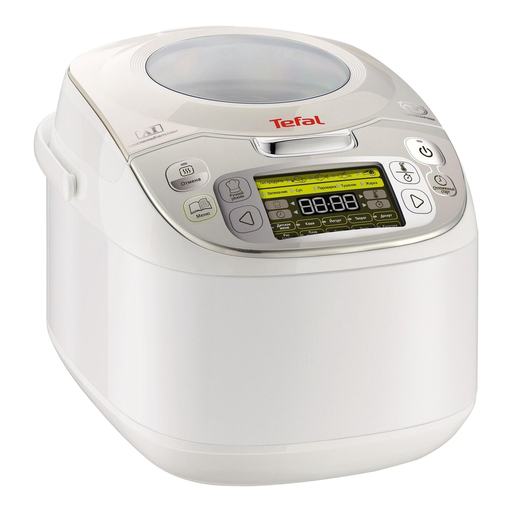
Why it suits this profile: If you want to prepare risotto, porridge, steamed dishes, slow-cooked meals or yoghurt as well as rice, this model offers a broad range of programmes. The 5-litre capacity is designed for larger portions.
The 45 programmes, delayed start, and adjustable temperature and time are clearly described. The many options are particularly worthwhile if you use them regularly.
45 programmes, steaming function, delayed start and a keep-warm function for up to 24 hours, according to the product description.
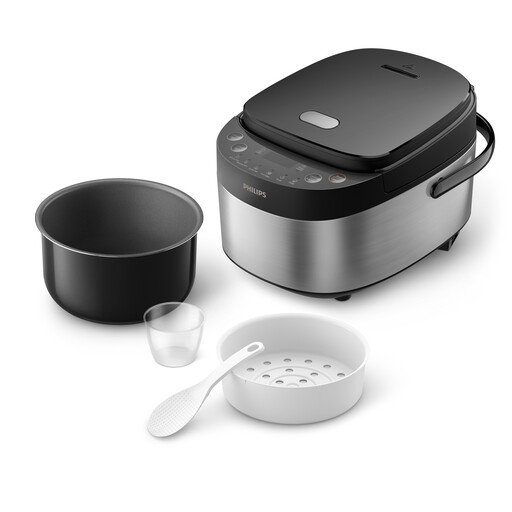
Why it suits this profile: The 0.85-litre capacity takes up relatively little space and is intended for two to three people. Eight programmes provide more choice than a simple basic cooker.
The uncooked rice capacity, eight programmes and included steaming basket are specified. The instructions advise rinsing the rice outside the inner pot to protect the coating.
0.85 litres, eight programmes, quick-cook setting and removable inner components, according to the product information.
We have put together a complete, up-to-date list of products that fully meet these strict selection criteria and the applicable European safety regulations.
A rice cooker does not have a fixed lifespan that is the same for every brand and type of use. The condition of the inner pot, lid, seal and controls often gives you a better indication than the age of the appliance alone. Damaged coatings, a loose cord or faulty switches are reasons to stop using the appliance.
For one or two people, around 0.85 to 1 litre is often sufficient. For two to three people, consider approximately 1.8 to 2 litres. A 4- or 5-litre model is better suited to families, larger portions or meal prep. Always check whether the stated capacity refers to uncooked rice, total capacity or water capacity.
This is possible with models that have a porridge or multifunctional setting. With a rice cooker with a steaming basket, you can prepare vegetables or other ingredients above the rice, provided the basket and instructions allow this. Bear in mind the maximum fill line and the additional steam released when opening the lid.
Consumption depends on the wattage, cooking time and how long the keep-warm function remains active. A 500-watt model does not use the same amount of power continuously throughout the entire cooking process. If you want to limit energy consumption, switch off the keep-warm function once the food has been served and choose a suitable capacity.
