
Organisers with staggered arrivals
You won't be serving everyone at the same time, and you want to check the rice temperature while it is being kept warm. The NVWA lists temperature checks as part of safe hot-holding in professional settings.


First, choose a rice cooker with a stated capacity that suits the amount of uncooked rice you need for each batch. Bear in mind that litres, cups and portions are not interchangeable. An automatic keep-warm setting does not prove that all the rice will stay safely hot while it is being served. The NVWA recommends checking the temperature in professional hot-holding situations, so check the rice itself and make a plan for leftovers too.
You won't be serving everyone at the same time, and you want to check the rice temperature while it is being kept warm. The NVWA lists temperature checks as part of safe hot-holding in professional settings.
You want to prepare the required amount in as few batches as possible. Manufacturers use different ways to state capacity, such as cups, portions, and quantities of uncooked or cooked rice.
You don't want to cook more rice than necessary in one go, and you need a plan for leftovers. The Netherlands Nutrition Centre recommends cooling cooked rice quickly and storing it in the fridge.
| What to consider | What should you check? | Who should consider this? |
|---|---|---|
| Temperature while serving | Measure the rice with a suitable food thermometer. A light or the temperature of the inner pot does not necessarily show the temperature of all the rice. | When guests arrive at different times, I want to check the rice temperature rather than rely solely on the keep-warm light. Around 36% of consumers say keeping food safely warm is their main concern when buying. |
| Capacity per batch | Make a note of how much uncooked rice you need and check what the stated capacity for the exact model is based on. | For a larger group, I want to prepare enough rice in a manageable number of batches. Around 29% of consumers prioritise having enough capacity per batch. |
| Changing numbers of diners and leftovers | Check whether the instructions allow you to cook smaller batches, and plan how to cool and store leftovers quickly. | When the number of guests is uncertain, I don't want to cook more rice than needed, and I want to know in advance how to store leftovers safely. Around 21% of consumers say changing attendance and leftovers are their main considerations. |
| Cleaning and parts | Check the cleaning instructions, whether the inner pot is removable and whether parts are available for the exact model. | After a shared meal, I want to be able to clean the pot easily and know what to expect if a part needs replacing. Around 14% of consumers prioritise maintenance and costs after purchase. |
Manufacturers state capacity in different ways. A capacity given in litres does not automatically tell you how much uncooked rice you can prepare or how many guests it will serve.
Make a note of how much uncooked rice you need and compare it with the measuring-cup and filling instructions for the exact model.
A cooker that is too small may mean an extra batch; an unnecessarily large pot may take up more space.
A keep-warm function or stated inner-pot temperature does not prove that all the rice will stay hot enough throughout the meal. The Netherlands Nutrition Centre warns of the risk of Bacillus cereus in rice that is stored for too long or not kept cold enough.
Check the rice temperature while serving, and follow the Netherlands Nutrition Centre's storage advice for leftovers.
The MaxiCook 23570-56 is a domestic model that the manufacturer positions as suitable for larger quantities.
The RK-6129 is a larger domestic rice cooker with simple controls.
The Classic RK1038 is a domestic rice cooker with an automatic keep-warm setting.
The Large Basic Rice Cooker is a domestic model that the manufacturer lists as suitable for up to 10 portions.
The professional J300 is worth considering if you are planning to cook one much larger batch than a domestic model can handle.
These Joybuy rice cookers are domestic models with a keep-warm function. Choose one to suit the quantity you need, and check the rice temperature while serving.
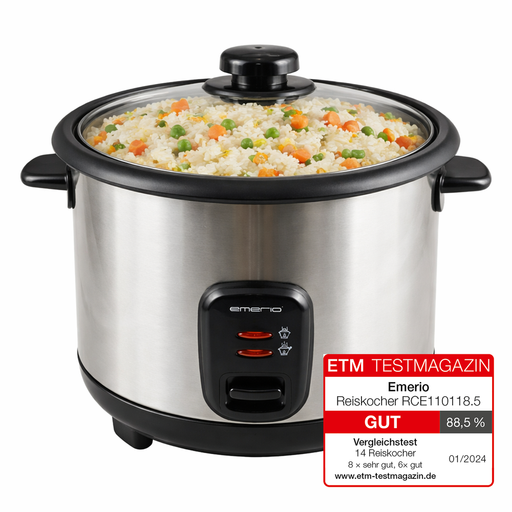 No image available
A good fit for a domestic batch if a 1.5-litre capacity suits the quantity you plan to cook.
The product description lists a removable non-stick pot, a glass lid and automatic switching to keep-warm mode. It is described as intended for indoor domestic use.
A keep-warm function does not prove that all the rice will stay safely hot while being served; check the rice temperature.
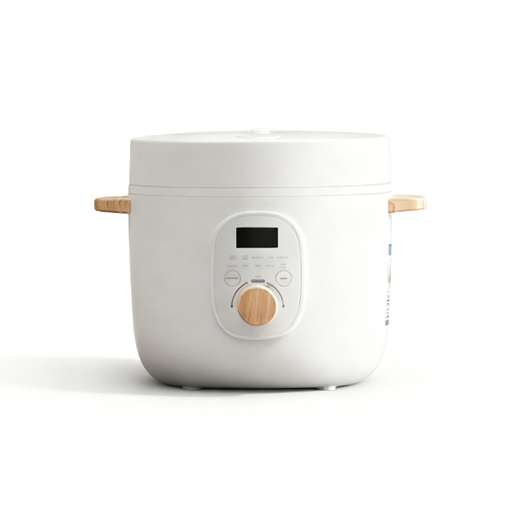 No image available
The capacity may suit your needs if 2 litres is enough for the amount you want to cook per batch.
The product information lists 8 cooking functions, a non-stick pot, a timer and 400 W. The description also mentions automatic keep-warm, steaming and porridge functions.
Check the temperature of the rice while serving; the keep-warm function is no substitute for this.
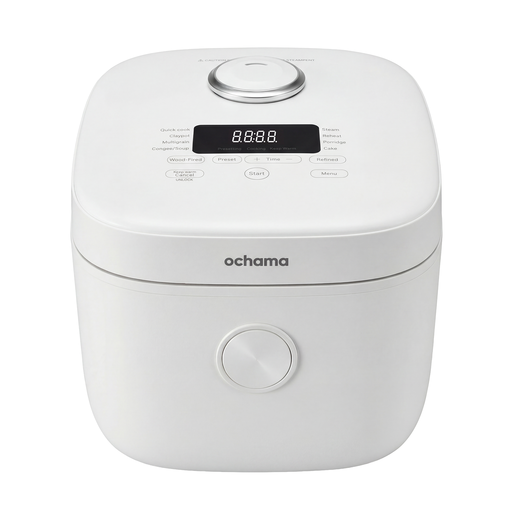 No image available
The title says it is suitable for a household of 3–4 people; compare this with the number of portions you need for your meal.
The product name lists a 1.7 mm inner pot, a timer, a 22-minute quick-cook setting and keep-warm. A steamer basket and rice paddle are also mentioned.
The stated cooking time does not tell you how long the rice will stay safely hot; check the temperature while serving.
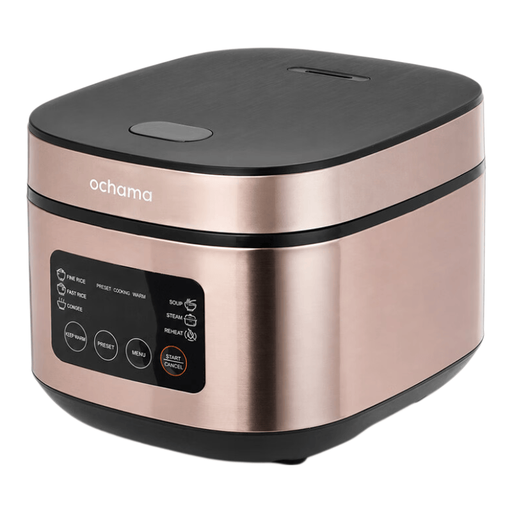 No image available
A 4-litre capacity may suit your needs if it is right for the amount you want to cook in one batch.
The product name lists a PFOA-free ceramic coating, an intelligent timer, 6 cooking functions and an LED display. A rice paddle and steamer basket are also mentioned.
Check the rice temperature while serving; the keep-warm function alone does not show that all the rice stays hot enough.
 No image available
The 6-Cup capacity can help when comparing models, but check the manual to see how much uncooked rice this refers to.
The product description lists a removable steaming tray, a glass lid and automatic switching to keep-warm mode.
The keep-warm setting is no substitute for checking the rice temperature while serving.
Measure the rice temperature with a suitable digital probe thermometer; don't rely solely on the light or the stated inner-pot temperature. For unpackaged perishable food in a professional hot-holding cabinet or bain-marie, the NVWA specifies a temperature of 60 °C or higher. This is guidance for food businesses and does not prove that a domestic rice cooker will reach this temperature in every serving situation.
Yes, if you cool the rice quickly after the meal and store it in the fridge in line with the Netherlands Nutrition Centre's advice. It recommends storing leftovers at 4 °C if possible and using them within two days at most. The Netherlands Nutrition Centre highlights the risk of Bacillus cereus in rice that is stored for too long or not kept cold enough.
Check the instructions for the exact model before washing the pot or lid. Tefal lists a removable non-stick inner pot for the RK1038; this does not automatically mean that all parts are dishwasher-safe.
No. Don't assume they apply just because the event is called a ‘community meal’. The NVWA describes HACCP requirements for food businesses, including restaurants and catering run from home. If the meal is sold as a business or catering is provided, the organiser must check which business rules apply. This does not establish whether they apply to a private meal.
For a consumer purchase in the Netherlands, the retailer is your point of contact for your statutory guarantee. According to the Dutch government, there is no single fixed statutory guarantee period that applies to all products; an additional guarantee does not replace your statutory rights.