
Vandaag of morgen in huis

Kwaliteit gegarandeerd

Welkomstaanbiedingen ontgrendelen: GRATIS bezorging | Tot 80% korting | Gratis 30 dagen JoyPlus-proefperiode
Download de app
A rice cooker can save you a lot of time, but not every model is right for every kitchen or household. A compact rice cooker for one or two people needs different features from a multi-function rice cooker for a family. Terms such as “lots of functions”, “quick cooking” and “large capacity” only tell you so much, so always check the technical specifications.
Most costly mistakes come down to three common pitfalls:
Don’t just look at the capacity in litres; check how much uncooked rice the manufacturer recommends too. A rice cooker for 1 to 4 people, for example, may have a capacity of 1.2 to 2 litres, while a family-sized model may hold 4 or 5 litres.
As a guide:
Bear in mind that a product description may list both the pot’s total capacity and the number of rice cups it holds. These are not the same thing.
A basic electric rice cooker usually has one automatic cooking setting and a keep-warm function. It’s suitable if you mainly want to prepare white rice, brown rice or porridge.
A multi-cooker or electric cooking pot often has extra programmes for soup, stews, steaming, pasta or slow cooking. Higher power can speed up heating, but it doesn’t automatically mean better cooking results. Also look for:
A rice cooker with a timer is useful if you want to prepare the ingredients in the morning and eat later. Only use the delayed-start function as directed by the manufacturer, especially with ingredients that need to be kept chilled.
A rice cooker with a non-stick pot is easy to empty and clean. Use a soft sponge and wooden or plastic utensils. Metal spoons can damage the coating.
Some models have a ceramic or PFAS-free coating. Check exactly what the product specifications say. A PFAS-free inner pot doesn’t, by itself, tell you anything about the other components or how long the appliance will last.
Also look for a removable inner pot, a detachable lid and a steam vent that’s easy to clean. Never immerse the electrical base in water.
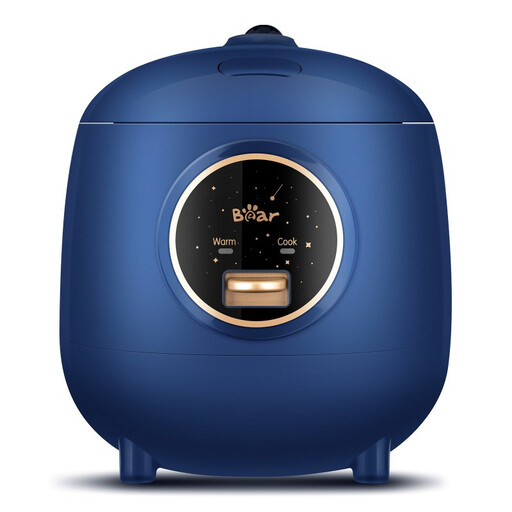
Why it suits this profile: Its 1.2-litre capacity is designed for one or two people. The one-button controls are easy to use for students, people living alone and first-time users.
Its small capacity means you won’t end up buying an unnecessarily large pot for a small household. According to the product information, the inner pot and lid can be removed for cleaning.
1.2-litre capacity, automatic keep-warm function, non-stick inner pot and a stated power rating of 200–238 W.
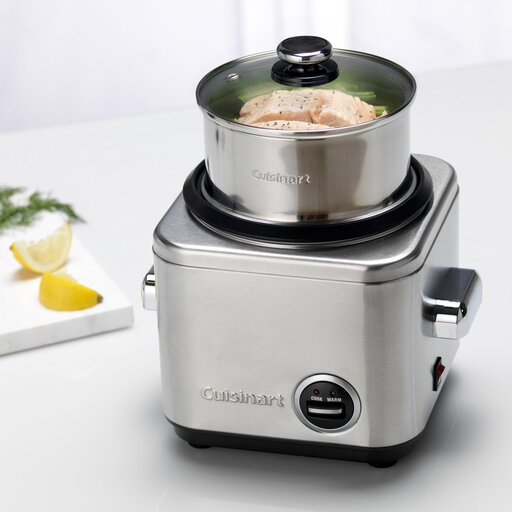
Why it suits this profile: This model combines automatic cooking with a steaming basket, so you can cook rice alongside vegetables or meat in one go.
Its features are geared towards everyday use rather than offering a long list of programmes. The glass lid and automatic keep-warm function make it easy to keep an eye on the cooking process.
450 W power, steaming basket, removable non-stick pot and dishwasher-safe parts, according to the product description.
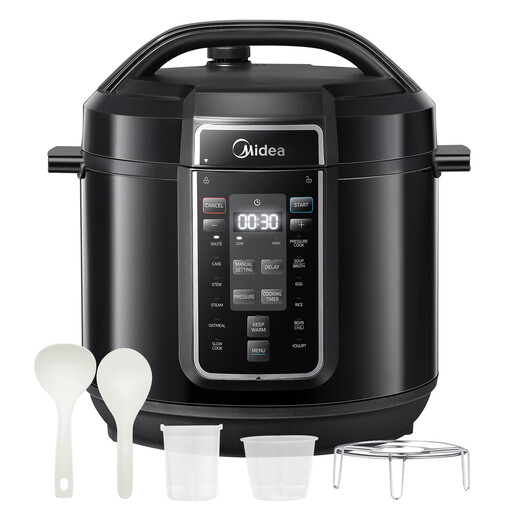
Why it suits this profile: This spacious multi-cooker is designed for larger portions and a variety of cooking methods, including rice, soup, steaming, slow cooking and sautéing.
The large capacity and programmes are clearly specified, so it’s easy to see that this model isn’t intended as a compact rice cooker for one person.
9 functions, 12 pre-set programmes, a 24-hour delayed start and an automatic keep-warm function, according to the product information.
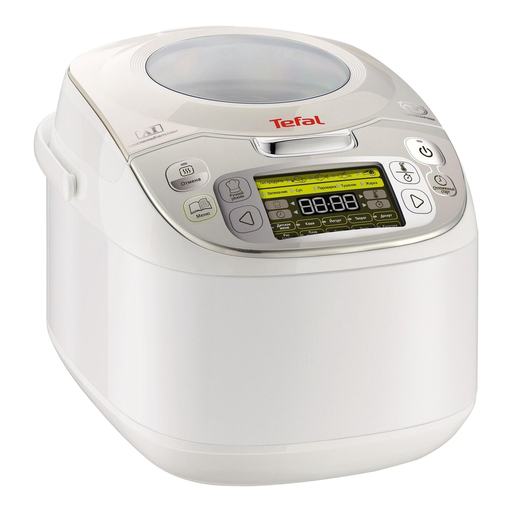
Why it suits this profile: With a 5-litre capacity and a wide range of automatic programmes, this model is aimed at households that want to make more than just rice, including porridge, risotto, yoghurt, steamed dishes and stews.
The extra features are useful if you’ll actually use them. The manual setting lets you adjust the temperature and cooking time, rather than limiting you to pre-set programmes.
5-litre capacity, 45 programmes, delayed start, 24-hour keep-warm function and a removable pot, according to the product specifications.
We’ve put together a complete, up-to-date list of products that meet these strict selection criteria and current European safety regulations.
For one or two people, a capacity of around 1 to 1.5 litres is usually practical. Also check how much uncooked rice the manufacturer recommends. If you also want to make soup, pasta or porridge, you could choose a model of around 2 litres.
Its lifespan depends on how it’s used and cleaned, as well as the condition of the inner pot. Don’t use metal utensils, avoid overheating and clean the steam vent regularly. A damaged non-stick coating or a lid that no longer closes properly are reasons to stop using the appliance.
Energy use depends on the power rating and cooking time. A 200 to 500 W model will generally use less energy per cooking cycle than a more powerful 800 to 1,600 W multi-cooker, but the actual cost depends on how long the programme runs and your local electricity price. The keep-warm function continues to use electricity while it’s switched on, so turn it off when you no longer need to keep the food warm.
