
Vandaag of morgen in huis

Kwaliteit gegarandeerd

Welkomstaanbiedingen ontgrendelen: GRATIS bezorging | Tot 80% korting | Gratis 30 dagen JoyPlus-proefperiode
Download de app
A rice cooker can cook rice without you having to keep an eye on the pan. However, there are big differences between models. A compact electric rice cooker for one or two people works differently from a rice cooker for a family with several programmes. Terms such as “smart”, “quick” and “multifunctional” don’t tell you much on their own if the capacity, inner pot and controls aren’t right for the way you’ll use it.
Joybuy’s Product Recommendation Officer has put together the key things to consider. This will help you avoid paying for features you’ll hardly use, or buying an appliance that’s too small, difficult to clean or impractical for your kitchen.
A capacity of 1.8 or 2 litres doesn’t automatically mean you can cook that amount of dry rice. Manufacturers don’t always describe capacity in the same way. Check whether they mean the capacity of the inner pot, the amount of dry rice or the amount of water.
A 0.85-litre rice cooker may be enough for a small household. A 1.8-litre model is better suited to households with several people or families who also want to steam vegetables. A 4-litre rice cooker gives you extra room for family meals, porridge or soup, but it also takes up more space on your worktop.
A multifunctional rice cooker may have programmes for white rice, porridge, soup, steaming or stewing. These are useful if you’ll actually use them. If you only want to cook rice, a simple model with automatic shut-off and a keep-warm function is often easier to use.
Pay attention to the controls, too. A rice cooker with a timer and clear display can be handy for busy households, but check whether the timer lets you delay the start or simply set the cooking time. These two functions are sometimes confused.
A non-stick coating makes serving and cleaning easier, but metal utensils and scouring pads can damage it. A rice cooker with a ceramic inner pot may appeal if you’re looking for an alternative to a standard non-stick coating. Always check the manufacturer’s care instructions.
Also look for a removable inner pot, a removable lid and included accessories. A steaming basket is useful for vegetables or fish, but only if it’s large enough for your portions.
Use the guide below as a practical starting point:
Check the markings inside the pot for each model. The right ratio of rice to water depends on the type of rice. Basmati, pandan, parboiled and risotto rice may all need different amounts of water.
The wattage indicates how much electrical power the appliance uses while heating. A model rated at 600 to 700 watts may suit smaller quantities. A larger pot rated at 860 to 930 watts has more power available for larger portions.
A higher wattage doesn’t automatically mean the rice will cook better. The design of the inner pot, temperature control and programme settings also play a part. According to the product description, the ochama 4L Rice Cooker has a power rating of 930 watts and a ceramic-coated inner pot. Joyoung’s product description lists a power rating of 860 watts, a capacity of 4 litres and a smart timer.
Some rice cookers with a keep-warm function switch to keep-warm mode automatically once the rice has cooked. This is practical when everyone isn’t eating at the same time. Be sure to check the instructions: Philips, for example, advises that rice should not be left in the keep-warm mode of its mini model for more than 12 hours.
A timer is particularly useful if you want to plan when the rice will be ready. A measuring cup and rice paddle help you measure consistent portions. A rice cooker with a steaming basket can also save you from using a separate pan for vegetables or fish.
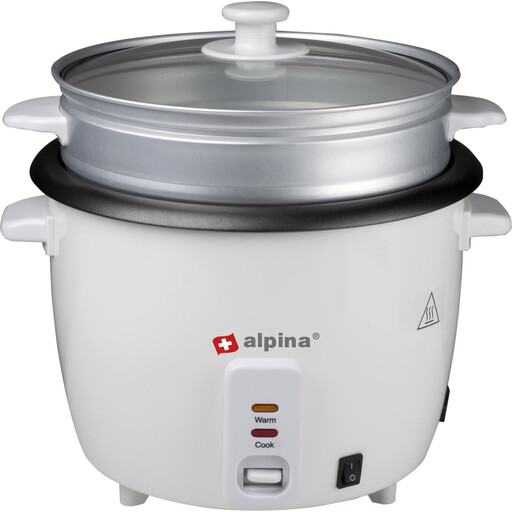
Why it suits this profile: Indicator lights make it simple to use, and the 1.8-litre capacity suits everyday household cooking.
The specifications clearly state the capacity, power rating and keep-warm function. That means you don’t have to rely as much on vague programme names.
700 watts, glass lid, removable aluminium inner pot, steaming tray and measuring cup.
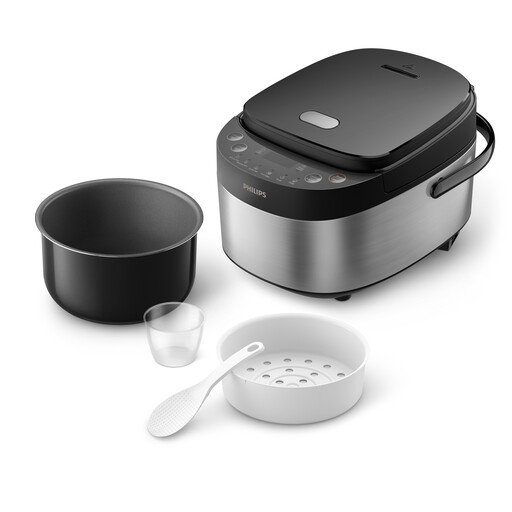
Why it suits this profile: A good choice if compact dimensions, several programmes and straightforward controls are important to you.
The stated dry rice capacity is 0.85 litres. This makes it easier to choose the right size and avoids buying a large pot for small portions.
8 programmes, quick-cook mode, removable inner lid and steaming basket.
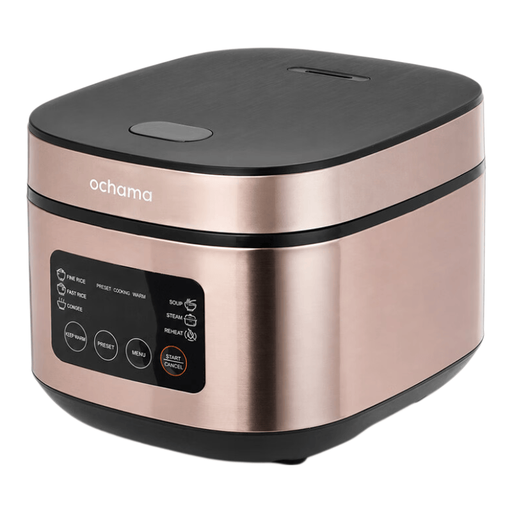
Why it suits this profile: The large capacity and several cooking functions are designed for families, meal prep and dishes such as porridge or soup.
The product listing specifies a 4-litre capacity, 930 watts, 6 functions and an LED display. This lets you compare capacity and controls before you buy.
Ceramic-coated inner pot according to the product description, timer, 6 cooking functions and steaming basket.
We’ve put together a complete, up-to-date list of products that meet these strict selection criteria and the applicable European safety regulations.
Before buying, check that the appliance is suitable for 220–240 volts and comes with a suitable plug for the Netherlands. Use it on a stable, dry surface and plug it into a suitable socket. It’s best not to share the socket with another high-powered appliance.
Hot steam escapes during cooking. Open the lid carefully, directing it away from you, and keep your hands and face away from the steam outlet. Let the inner pot cool before cleaning it. Never immerse the housing, plug or power cord in water.
Start with the measuring cup and the water markings inside the pot. The right amount varies depending on the type of rice. It’s best to rinse rice in a separate bowl if the instructions warn that rinsing it in the pot could damage the non-stick coating.
Its lifespan depends on how often you use it, how you clean it and the condition of the inner pot. Don’t use metal spoons, avoid scratching the surface and dry the outside of the inner pot before putting it back in the cooker. Also check the warranty and your statutory consumer rights when you buy.
Consumption depends on the power rating and cooking time. A 600-watt model uses up to 0.6 kWh in one hour; a 930-watt model uses up to 0.93 kWh. In practice, a rice cooker often switches to a lower-power keep-warm setting once the rice has cooked. Calculate the exact cost using: consumption in kWh × your electricity rate.
