
Holiday cook for one or two
Wants to cook basmati rice with little worktop or storage space, so is comparing small, simple and digital models. Tristar and Reishunger offer examples of these types.


Start by considering how many people you’re cooking for, the space available and the power supply. Then compare a simple small cooker with a digital mini model in terms of controls and the basmati instructions for the exact model. A larger cooker makes most sense when you’re cooking for more people, but it needs more storage space. Before buying, check that the appliance on offer is electrically suitable and carries the required CE marking.
Wants to cook basmati rice with little worktop or storage space, so is comparing small, simple and digital models. Tristar and Reishunger offer examples of these types.
Needs enough capacity for one cooking cycle and may find a steam basket useful, as long as the larger cooker fits in the kitchen. Russell Hobbs and Tefal describe models with a steaming accessory.
Wants to check in advance that there’s space, the connection is suitable and cooked rice can be stored correctly. Brandweer Nederland and the Voedingscentrum offer practical guidance on this.
Best for: cooking basmati rice without choosing a programme, if a capacity of around one litre suits your group.
Keep in mind: follow the water instructions for the exact model; those for a digital cooker won’t necessarily apply.
Best for: a small group who want to choose between different rice settings.
Keep in mind: having more programmes doesn’t prove that the rice will turn out better. Check the space required and the ratio specified for that model, too.
Best for: cooking for a larger group or steaming vegetables at the same time.
Keep in mind: the larger capacity takes up more space and doesn’t, by itself, tell you how a small portion of basmati will turn out.
| What to consider | What should you check? | Who should pay particular attention? |
|---|---|---|
| Cooking basmati | Find the basmati rice-to-water ratio in the manual for this exact model and use the measuring cup supplied with it. | If I want to cook basmati without using a ratio from another appliance, I look up the instructions for my model. Around 40% of consumers put the correct cooking instructions for basmati first. |
| Space and storage | Compare the dimensions with your worktop and cupboard space; also check whether the inner pot is removable. | If my holiday kitchen has little space, I want to be able to set the cooker out and store it away without it getting in the way. Around 30% of consumers make compactness their top buying priority. |
| Capacity per cooking cycle | Work out how many people you’re cooking for and compare the stated capacity or maximum number of measuring cups. | If I’m cooking for a group, I want to be able to make enough rice in one go and know how many portions I need. Around 20% of consumers prioritise capacity for groups. |
| Positioning and connection | Ask which appliances are permitted, and check the connection and CE marking of the appliance on offer. | If I don’t know the kitchen or sockets in the holiday cottage, I want to know in advance where the cooker can be placed and connected safely. Around 10% of consumers base their choice mainly on the available connections. |
Reishunger gives different ratios for basmati for its digital mini and basic models. Using the wrong ratio could mean having to cook the portion again.
Follow the manual and use the measuring cup supplied with the exact model. In its own table, Reishunger gives a rice-to-water ratio of 1:1,25 for the digital mini and 1:1,5 for the basic model.
Measuring a portion incorrectly can waste ingredients or mean you have to cook again.
Models vary in capacity; the maximum capacity doesn’t automatically tell you how a small portion will turn out in every cooker.
First decide how many people you’re cooking for. Then check the dimensions and the minimum and maximum amounts of rice allowed in the manual.
According to the Voedingscentrum, leaving rice warm for too long or not chilling it sufficiently can pose a risk of food poisoning.
Follow the Voedingscentrum’s storage advice for leftovers; don’t rely on the appliance’s keep-warm function alone.
The RK-6126 is a simple 1-litre rice cooker for anyone who wants minimal settings.
The range includes a 0.6-litre digital mini and a simple 1.2-litre basic cooker.
The Classic 6 kops RK1028 is a mechanically operated 1-litre rice cooker with a steaming accessory.
With a capacity of 1.8 litres, the Cook@Home 19750-56 is an option to compare for a larger group.
These rice cookers cater for different group sizes and preferences for controls. Compare portion size, available space and the features you’ll actually use. Before buying, also check that the appliance on offer is electrically suitable.
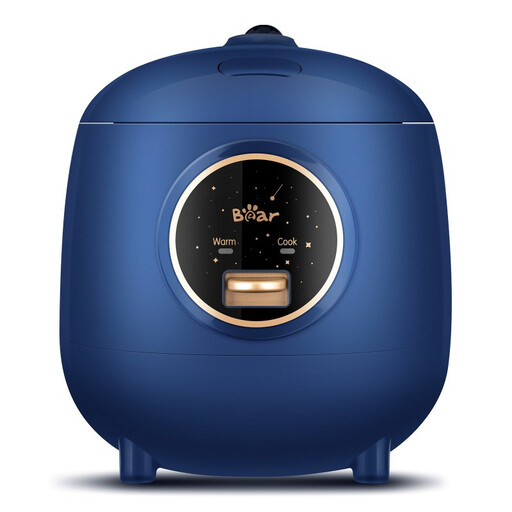 No image available
A simple option to compare if you’re cooking for one or two and want one-button operation.
1.2 L capacity, 200–238 W, one-button operation, automatic keep-warm function and a non-stick inner pot.
According to the instructions, wait more than 15 minutes after a cooking cycle before cooking again.
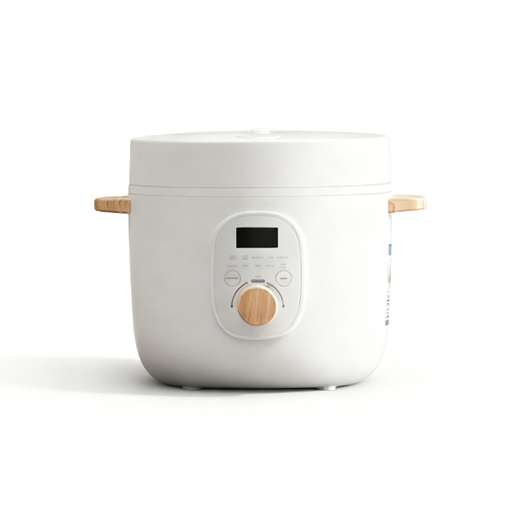 No image available
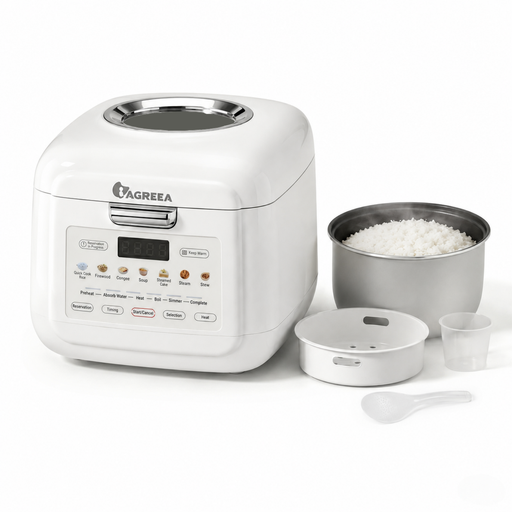
An option to compare if you want several cooking functions and the capacity suits your portions.
2 L capacity, 400 W, eight functions, non-stick pot and keep-warm function.
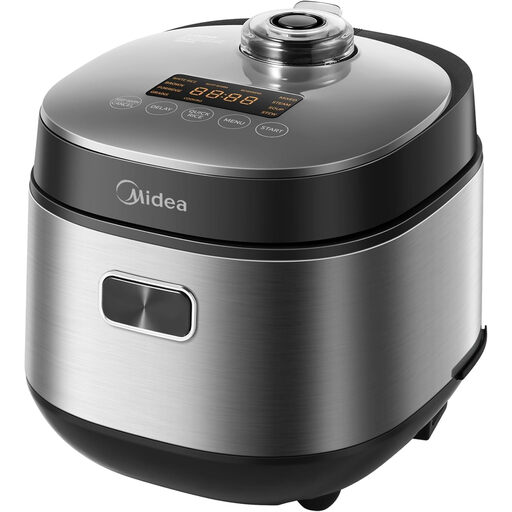 No image available
An option to compare if you’re looking for a cooker with several functions and a timer.
2 L capacity, stated as suitable for 1–3 people, with nine functions, a steam basket and a non-stick coating. The title also mentions a timer and keep-warm function for up to 24 hours.
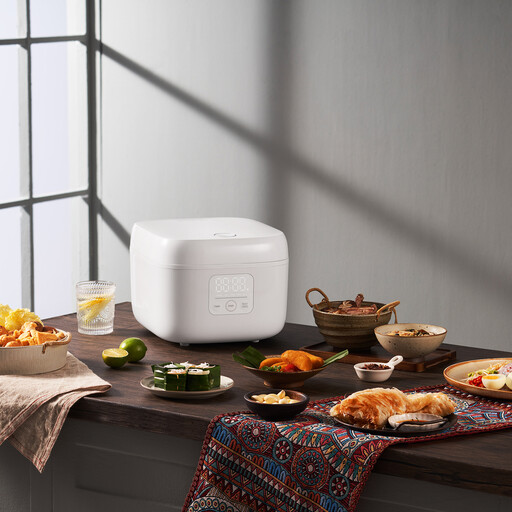 No image available
An option to compare if you’re looking for a rice cooker with smart controls and the stated capacity suits your group.
Stated capacity: 1.6 L of rice and 4 L of water.
 No image available
An option to compare if a viewing window and steaming accessory suit the way you want to cook.
2 L capacity, stated as suitable for 3 cups of uncooked rice, with a viewing window, steaming accessory and keep-warm function.
No, follow the instructions for the exact model. In its own table, Reishunger gives a rice-to-water ratio of 1:1,25 for basmati in the digital mini and 1:1,5 in the basic model; don’t automatically use these figures for another brand or model.
Don’t use the keep-warm setting as a way to store rice until the next day. The Voedingscentrum advises cooling leftovers quickly to 4 °C, keeping them in the fridge for no more than two days and heating them thoroughly before eating.
First check the connection and the holiday cottage’s rules. Brandweer Nederland advises fully unwinding any cable reel in use and plugging high-power appliances directly into a socket wherever possible.
Electrical products covered by the relevant rules must carry a CE marking. The Low Voltage Directive applies to equipment with a nominal AC voltage of 50 V to 1000 V. According to the Nederlandse Voedsel- en Warenautoriteit, the manufacturer is responsible for the conformity documentation.
In the Netherlands, you have statutory rights in addition to any manufacturer’s guarantee. ACM ConsuWijzer states that if a product breaks under normal use sooner than reasonably expected, the seller must repair or replace it free of charge or, where applicable, refund your money. There is no single fixed statutory guarantee period for every rice cooker.