
If you want to serve toppings separately
Plain rice cakes provide a crisp base for guests to add their own sweet or savoury toppings. You’ll need to put the toppings on the table, though.


Choose plain rice cakes if you want guests to add their own sweet or savoury toppings. Digestive biscuits are a better fit when you want to serve a biscuit with coffee without any preparation. Salted and sweet-flavoured rice cakes are different options: if guests have specific dietary requirements, always check the ingredients, allergens and nutritional information on the current packaging.
Plain rice cakes provide a crisp base for guests to add their own sweet or savoury toppings. You’ll need to put the toppings on the table, though.
A digestive biscuit is ready to serve, with no toppings or other preparation needed. Plain and wholemeal varieties are different products, so be sure to compare their labels.
If someone has an allergy or other dietary requirement, the ingredients, allergens and nutritional values of the specific product matter more than the general name ‘rice cake’ or ‘digestive’.
First, decide whether your guests would like to add their own toppings or prefer to pick up a biscuit straight away. Then compare the exact varieties, especially if ingredients or nutritional values affect your choice.
| What to consider | What to check when buying | Who it matters to |
|---|---|---|
| Base for toppings | Choose a plain variety if you want the toppings to provide the flavour; also check how many cakes are in the pack. | If I want guests to choose their own sweet or savoury toppings, I’d rather offer a neutral-tasting cake than a biscuit with a set flavour. An estimated 40% of consumers prioritise this. |
| Ready to serve | Compare plain and wholemeal digestive biscuits by ingredients and portion size, not just by name. | I want something to serve with coffee without toppings or extra preparation. An estimated 30% of consumers prioritise this. |
| Labels and dietary requirements | Check the ingredients and allergens; compare sugars, salt, saturated fat and fibre per 100 g and, where provided, per serving. | If a guest needs to avoid certain ingredients, I want to be able to check the packaging of that exact variety before serving it. Around 30% of consumers prioritise these checks. |
Plain, salted, multigrain and sweet-flavoured varieties don’t necessarily have the same ingredients or nutritional values.
Check the exact flavour and whether it has a coating. If you’re serving a selection of toppings, a plain rice cake is a more suitable choice than one with a strong flavour.
The product name AH Digestive wholemeal with wheat flour explicitly mentions wheat; ‘wholemeal’ does not mean ‘gluten-free’.
If gluten-free is essential, base your choice on the current gluten-free claim and allergen information for the specific product.
Albert Heijn and PLUS point out that product information can change. So an ingredients list you checked previously may not match the packaging you receive.
If someone has an allergy or dietary restriction, check the packaging of the variety you’ve chosen again before serving it.
Albert Heijn offers plain, salted and sweet-flavoured rice cakes, as well as AH Digestive and AH Digestive wholemeal with wheat flour.
Jumbo offers plain, multigrain, sea salt and other varieties of rice cakes.
PLUS offers thick rice cakes with sea salt and thick multigrain rice cakes.
ALDI offers Goud Gebakken rice cakes with sea salt, as well as rice cakes with a sweet coating.
Lidl offers rice cakes and describes Sondey as a range that includes cakes and biscuits.
This selection includes a digestive biscuit that’s ready to serve, sweet-flavoured rice cakes and a salted rice cake that can be used as a base for toppings. It doesn’t include a plain rice cake.
 No image available
A digestive biscuit for anyone who wants to serve a biscuit with coffee without adding toppings.
400 g pack. Check the current packaging for ingredients and allergens before offering it to guests.
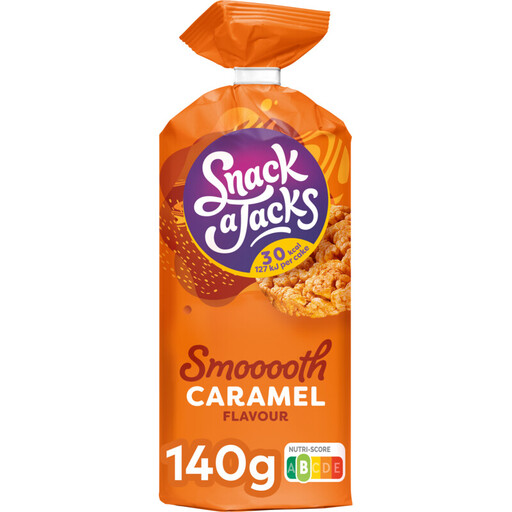 No image available
A caramel-flavoured rice cake for anyone looking for a sweet snack with coffee; not a neutral choice for savoury toppings.
140 g pack. Check the current packaging for this variety’s nutritional information and allergens.
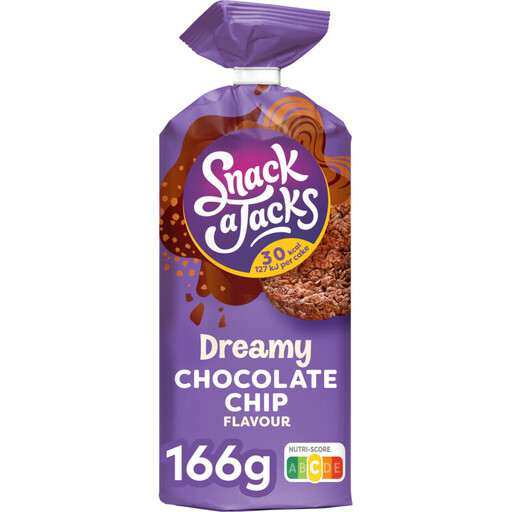 No image available
A chocolate-flavoured rice cake for a sweet coffee break, rather than a neutral base for your choice of toppings.
166 g pack. Before serving, check the current packaging for nutritional information and allergens.
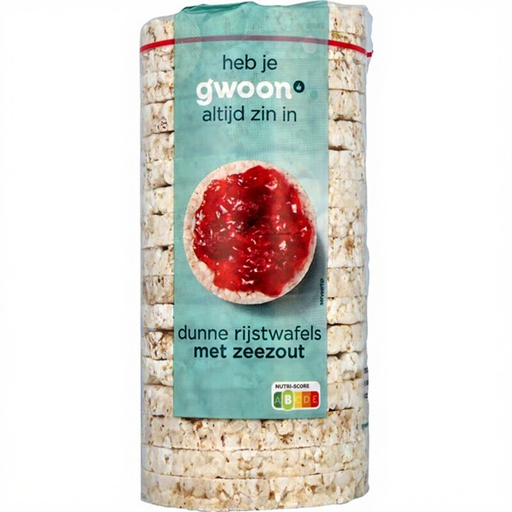 No image available
A salted rice cake you can serve with toppings, but it doesn’t have the same neutral flavour as a plain variety.
130 g pack. For guests, check the current ingredients, allergens and nutritional information.
No, it depends on what you want to serve and which variety you choose. Plain rice cakes work well with toppings; a digestive biscuit is ready to serve. Compare the ingredients and nutritional information for each product rather than judging its nutritional value by the category name.
Check the ingredients, highlighted allergens and any warnings on the current packaging of the exact product you’re serving. The European Commission explains this labelling information for prepacked food in the EU; Albert Heijn notes that product information can change.
‘Wholemeal’ doesn’t mean gluten-free: the product name AH Digestive wholemeal with wheat flour mentions wheat. If gluten-free is essential, check for an explicit, current gluten-free claim and the product’s allergen information.
Follow the storage instructions on the packaging you’ve chosen. Jumbo advises storing its plain rice cakes in a cool, dry place and its thick multigrain rice cakes in a dry place; keep the pack tightly closed after opening.