
If you regularly top up the biscuit tin
You want to know how many rice cakes are in a pack and whether you’ll finish an opened roll before the quality starts to deteriorate.


For several coffee breaks at home, a plain roll is a practical staple if you can keep the rice cakes dry and sealed after opening. Choose individual portions if you want to spread them across separate occasions, or a coated variety if you’re mainly looking for a treat. Whichever you choose, compare the quantity and check the ingredients and allergens again for flavoured varieties.
You want to know how many rice cakes are in a pack and whether you’ll finish an opened roll before the quality starts to deteriorate.
You’re looking for a plain rice cake for everyday coffee breaks, but are also considering a variety coated in chocolate or yoghurt.
You look at the ingredients, salt, allergens and storage advice. If children often eat rice products, variety matters too: as a precaution, the Netherlands Nutrition Centre advises against giving them to children every day.
First, work out how many rice cakes suit your coffee breaks and how you’ll store an opened pack. Then decide whether a plain staple, individual portions or a treat flavour is the best fit.
| What to consider | What to check when buying | Who it matters to |
|---|---|---|
| Quantity | Check the net weight and, if stated, the number of rice cakes. One roll isn’t automatically a family pack. | If I’m stocking up for several coffee breaks, I want to know how many rice cakes I’m actually bringing home; around 33% of consumers prioritise quantity. |
| Storage after opening | Check whether you’re buying one roll or individual portions, and follow the storage advice on the pack. | When my coffee breaks are spread throughout the week, I want to be able to seal an opened pack properly; around 25% of consumers give storage their top priority. |
| Treat flavours | For a coated variety, check the ingredients and nutritional information for that specific flavour. | If I want something sweet with my coffee, I’m more likely to look for a treat than a plain rice cake; this flavour is the deciding factor for around 25% of consumers. |
| Ingredients and how often you eat them | Check the ingredients, allergens and salt per 100 g. Bear in mind the Netherlands Nutrition Centre’s advice not to give children rice products every day. | If children are eating them too or allergens are a concern, I want to know what’s in the rice cakes and how often we eat them; this is the main consideration for around 17% of consumers. |
The words ‘family pack’ don’t tell you how many coffee breaks a roll will last. For example, Albert Heijn lists 18 portions for its 130 g plain roll, while ALDI lists 17 rice cakes for its 130 g sea salt variety.
Compare the weight and number of rice cakes with how many you use at home. Only stock up on multiple rolls if you can store them as directed on the label.
These descriptions don’t mean the same thing. Albert Heijn lists 0,23 g of salt per 100 g for its plain variety with sea salt and 0,03 g per 100 g for its variety with no added salt.
Check the ingredients and salt content for the exact pack rather than relying on the flavour name.
As a precaution, the Netherlands Nutrition Centre advises against giving children rice or rice products every day.
Alternate rice cakes with other snacks and buy according to how often your household eats them.
Albert Heijn lists a 130 g plain roll and a thicker variety with no added salt. Its range also includes coated rice cakes.
Alongside a 130 g plain roll, Jumbo offers thicker and coated rice cakes.
PLUS lists a 130 g plain roll; the wider category also includes a chocolate variety and thicker multigrain rice cakes.
ALDI lists a sea salt variety under Goud Gebakken, as well as rice cakes coated in chocolate or yoghurt.
Lidl also lists rice cakes under Sondey, with varieties including coated and sea salt options.
These Joybuy products are rice cakes in chocolate, caramel or cheese flavours, for when you fancy a change at coffee time. Use the stated weight or number of pieces to assess the pack size; these products aren’t described here as family packs.
 No image available
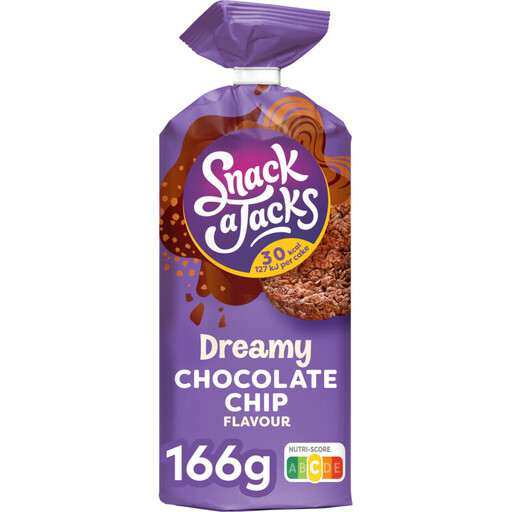
A chocolate flavour for anyone looking for a treat with their coffee. The product name states that the roll contains 166 g; check the ingredients and allergens on the pack.
 No image available
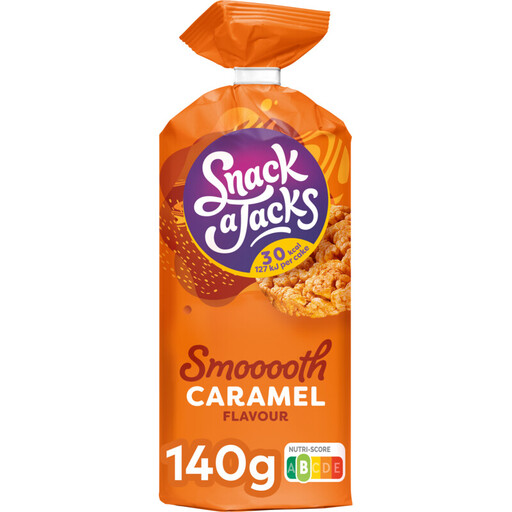
A caramel variety for a sweeter coffee break. The product name states that the roll contains 140 g; check the label if the ingredients or allergens matter to your choice.
 No image available
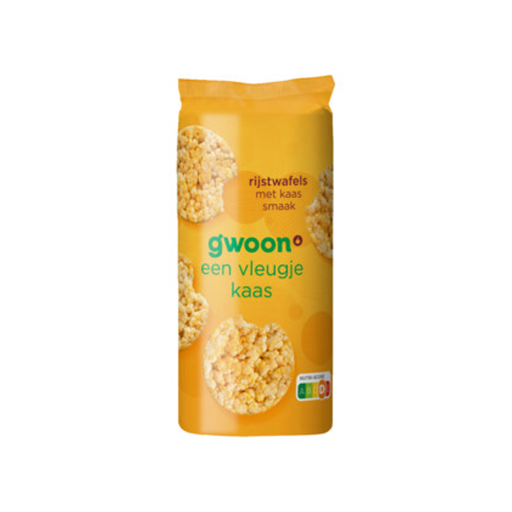
A savoury option if you’d rather have cheese than a sweet flavour with your coffee. The product name states that it contains 12 pieces; check the allergen information on the pack, especially if milk is a concern.
Compare the net weight and stated number of rice cakes with the number of coffee breaks you have at home. As specific examples, Albert Heijn lists 18 portions for its 130 g plain roll and ALDI lists 17 pieces for its 130 g sea salt variety. Always check the quantity for the variety you’re buying.
Follow the storage advice on the pack and seal the rice cakes well after opening. For its plain rice cakes, PLUS advises storing them in a cool, dry place and transferring them to an airtight container after opening.
No, this description doesn’t mean the stated salt content is zero. Albert Heijn lists 0,03 g of salt per 100 g for its variety with no added salt, so check the nutritional information for the exact variety.
Yes. Check the allergens for the specific variety of rice cake, especially if it’s coated or has added flavouring. The Netherlands Food and Consumer Product Safety Authority explains which allergens must be listed on the labels of prepacked foods.
As a precaution, the Netherlands Nutrition Centre advises against giving children rice or rice products, including rice cakes, every day. So alternate rice cakes with other snacks.