
Player with one free socket
This player wants to assess the mains sockets needed and how to connect the whole set-up safely before choosing a PC form factor.


If you want to play without a separate monitor, a laptop is an obvious option to compare, as its screen and keyboard are built in. You could also consider a mini PC if you have a suitable screen; a desktop may be a better fit if expandability matters more than a compact set-up. Always count the connections needed for the complete set-up, and check each game’s requirements and controls: fewer plugs doesn’t automatically mean lower power consumption.
This player wants to assess the mains sockets needed and how to connect the whole set-up safely before choosing a PC form factor.
This player wants to play rhythm games on a suitable screen and pays attention to the controls required by each game.
This player could consider a compact PC, but should also check the screen’s power requirements, the connections available and whether their preferred controls are supported by the game.
A good fit if: you want to play without a separate monitor or move your set-up around.
Trade-off: the laptop’s power adapter still needs a mains socket; if you add a screen, you’ll need to check its power requirements separately.
A good fit if: you already have a suitable screen and the exact PC configuration meets the needs of your games.
Trade-off: the computer has its own adapter, and the screen may also need power. Check what’s included in the configuration, too.
A good fit if: you can use an existing monitor and upgrading components matters to you.
Trade-off: check the power requirements and connections for the PC, monitor and other equipment separately; there’s no basis for declaring one option the overall winner for performance or power consumption.
| What to consider | What should you check? | Who may place more importance on this? |
|---|---|---|
| Sockets and safe connections | Count the power requirements of the PC, screen and any active audio equipment. The Netherlands Fire Service advises using approved, undamaged extension blocks and recommends not connecting extension leads to one another. | If I have few free sockets, I want to know first whether it’s practical and safe to connect the complete set-up. Around 36% of consumers put this question first. |
| Game and screen suitability | Compare the requirements of the specific game with the complete PC configuration, and check the screen too. A stated refresh rate is not a measured guarantee of input lag. | Anyone who mainly wants to know whether their rhythm games and preferred screen are suitable will prioritise this check. Around 29% of consumers put game and screen suitability first. |
| Connections for your controls | Compare the connections needed for your keyboard, headset or controller with those available on the exact PC, and check which controls each game supports. Spin Rhythm XD lists MIDI DJ equipment as a control style; that doesn’t tell you what other games support. | If I want to play with a specific controller or keyboard, I want to know in advance that both the connection and game support are right. Around 21% of consumers start with their preferred controls. |
| Complete configuration | Check the full model code and whether the adapter, memory, storage and operating system are included in that configuration. | Anyone who doesn’t want to work out which parts are missing wants to know in advance what’s in the box and what arrangements apply if something is faulty. Around 14% of consumers prioritise buying a complete set-up. |
The number of connections your set-up needs doesn’t, by itself, tell you how much power it uses or what load is safe.
List all your devices and power supplies, and check the guidance for the connections and extension block you use.
HP lists an adapter as included with the Victus 15-fb3611nd, while the recommended adapter for the 15-fb3611ndx is sold separately.
Compare the full model code and check which accessories are included with the configuration you choose.
If the adapter is sold separately for your configuration, you may need to buy it separately.
A mini PC needs a separate screen. ASUS describes the ExpertCenter PN54-S1 barebone as not having a pre-installed operating system, memory or storage.
Check the exact configuration and make a list of the components, screen and power supply you’ll need before choosing.
Missing components such as a screen, operating system, memory or storage may need to be bought separately.
The Victus laptops are worth a look if you want the screen and keyboard in one device.
The A6 is a compact mini PC worth comparing if you already have a suitable screen.
The ExpertCenter PN54-S1 illustrates the difference between a fully configured mini PC and a barebone.
The LOQ range is a laptop option worth comparing if you’re also considering components and upgrade options.
These product picks are gaming laptops with a built-in screen, for anyone comparing options for rhythm games without needing a separate monitor as part of the basic set-up.
 No image available
The built-in screen could suit you if you want to play without a separate monitor.
Intel Core 7 240H; NVIDIA GeForce RTX 5070 8GB; 16GB DDR5; 1TB SSD; 144 Hz WUXGA screen; Windows 11 Home; Dutch QWERTY keyboard.
 No image available
The built-in screen suits a basic set-up without a separate monitor; check that the keyboard type works for you.
Intel Core i7-14700HX; RTX 5070; 32GB; 1TB; 16-inch 2560 × 1600 240 Hz IPS screen; UK RGB keyboard.
 No image available
The built-in 15.6-inch screen could suit you if you don’t want to use a separate monitor.
AMD Ryzen 9 270 8-Core; RTX 5070 8GB GDDR7; 16GB DDR5; 512GB SSD; 144 Hz Full HD screen; Windows 11 Home.
 No image available
The built-in screen is handy if you want to keep your basic set-up free of a separate monitor.
Core i7-13650HX; NVIDIA GeForce RTX 5060; 16GB DDR5; 1TB SSD; 16-inch QHD+ 240Hz screen; RGB keyboard.
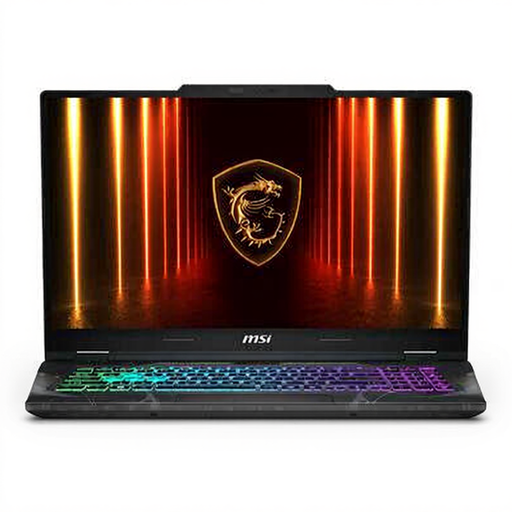 No image available
The built-in 17.3-inch screen could suit you if you don’t want to connect a separate monitor as part of your basic set-up.
Intel Core 7 240H; NVIDIA GeForce RTX 5050; 16GB DDR5; 512GB SSD; 144 Hz Full HD screen; Wi-Fi 6E; Windows; QWERTY keyboard.
It depends on the complete set-up, not just the mini PC. According to the manufacturer, the GEEKOM A6 has a separate adapter and display connections; check the power requirements of your screen and any other devices as well.
Check the load and guidance for all connected devices. The Netherlands Fire Service advises using approved, undamaged extension blocks and recommends not connecting extension leads to one another. It also recommends plugging high-power devices directly into a socket wherever possible.
Check support for each game and device. Spin Rhythm XD lists MIDI DJ equipment as a supported control style; this doesn’t confirm that other rhythm games support it.
No. A stated refresh rate alone isn’t a measured guarantee of input lag or timing in your game. Compare the requirements of the specific game, and consider your preferred controls and the full configuration too.
No. The laptops in this product selection have a built-in screen, according to their product names or descriptions. Do check that the screen and the rest of the configuration suit your games; an optional external screen will need a separate check of its connections and power requirements.