
Do you only store rhubarb occasionally?
You want to freeze a few portions after a trip to the market and first check whether your existing freezer has enough room. Voedingscentrum says rhubarb can be frozen without blanching it.


If your existing freezer has enough room for your portions of chopped rhubarb, you won’t need an extra appliance: according to Voedingscentrum, you can freeze rhubarb without blanching it. If you regularly need more space, choose between a compact tabletop freezer, a larger upright freezer or a chest freezer based on how much you need to store and the space available. Also compare freezing capacity, the permitted ambient temperature and annual energy consumption.
You want to freeze a few portions after a trip to the market and first check whether your existing freezer has enough room. Voedingscentrum says rhubarb can be frozen without blanching it.
You’re looking for extra freezer space, but want to compare the available space with an appliance’s external dimensions first. Consumentenbond points out that freezer drawers can make food easier to access.
You store other foods as well as rhubarb and want to match the capacity and layout to the freezing capacity you need.
Start by asking whether your current freezer has enough room. If you do need extra capacity, choose a size and layout that suit what you want to store and where the appliance will go.
A good fit if: you have room for your portions of rhubarb and can keep the freezer at the recommended −18 °C.
Consider: you won’t need another appliance, but your portions will take up space that could be used for other foods.
A good fit if: you regularly need extra room for smaller portions and have space for a compact appliance.
Consider: a tabletop freezer offers less space for large stocks of food than a larger upright freezer.
A good fit if: you want to store plenty of other food in drawers too and have room for a larger appliance.
Consider: compare the external dimensions and annual energy consumption; a larger model will take up more space.
A good fit if: you mainly want to store larger or awkwardly shaped items and have room for an appliance with a top-opening lid.
Consider: a freezer with drawers may make small, separate portions easier to access.
| Concern | What to look for | Who is this most relevant to? |
|---|---|---|
| Not buying more freezer space than you need | Check how many portions will fit in your current freezer. If you’re considering a new appliance, compare its capacity and stated annual energy consumption in kWh. | If you only want to store a few portions after a trip to the market, first check whether your current freezer has enough room. Around 30% of consumers prioritise making use of the space they already have. |
| Finding a suitable place for your freezer | Measure the space and access route, and check the appliance’s external dimensions. If it’s going in a cold shed or garage, also check the permitted ambient temperature for the exact model. | If space is limited or the freezer will be kept in an unheated room, the model needs to fit physically and be suitable for that location. Around 30% of consumers prioritise the space available. |
| Freezing larger quantities in an organised way | Compare the capacity, drawer layout and stated freezing capacity in kg per 24 hours with the amount you want to freeze at one time. | If you regularly store larger quantities as well as rhubarb, you’ll want enough capacity and a layout that helps you find individual portions. Around 20% of consumers have this need in particular. |
| Taking ongoing energy consumption into account | Compare the stated annual energy consumption in kWh of models with enough space; an energy rating alone doesn’t tell you their annual consumption. | If you need extra freezer space but want to keep electricity use in mind, compare the annual consumption of suitable models. Around 20% of consumers make energy consumption a priority. |
If your existing freezer has room for the rhubarb, you may not need another appliance.
First check how many portions you usually freeze and how much space you already have available.
An extra appliance also adds to your ongoing electricity use.
The rating doesn’t replace the annual energy consumption figure in kWh. The appliance’s size and capacity also matter.
Compare the stated annual energy consumption of models that suit the amount of food you need to store.
Stated freezing capacity varies by model. For example, ETNA lists 4 kg per 24 hours for the VV856WIT, while Bosch lists 16 kg per 24 hours for the larger GSN36VLCG. These models also differ in size.
Compare the amount you usually freeze at one time with the capacity of the exact model.
The permitted ambient temperature varies by model. A claim about where one appliance can be installed doesn’t automatically apply to other freezers.
Check the installation requirements for the full model number against the temperatures at your intended location.
If the location isn’t suitable, you may have to move or replace the appliance later.
The VV856WIT is an example of a compact tabletop freezer with drawers.
The FNE1074N is a compact model to consider if you’re thinking of keeping your freezer in a cold room.
The GSN36VLCG is an example of a larger freestanding upright freezer for rhubarb and other food.
The FNd 525i is an example of a larger freestanding freezer with NoFrost.
This selection includes freestanding tabletop and compact upright freezer models for anyone looking for extra freezer space.
 No image available
A tabletop model to consider if you need extra space and want to freeze portions and fresh food at the same time.
Capacity: 87 litres. Freezing capacity: 5 kg per 24 hours. Stated energy consumption: 145 kWh per year. Product information lists No Frost, Fast Freeze, a D energy rating and dimensions of 84.5 × 55 × 59.5 cm.
 No image available
The three drawers can help you keep individual portions neatly organised.
Capacity: 87 litres. Freezing capacity: 4.4 kg per 24 hours. Stated energy consumption: 84 kWh per year. Product information lists a B energy rating and three transparent drawers. This model doesn’t have No Frost, so you may need to defrost it manually if ice builds up.
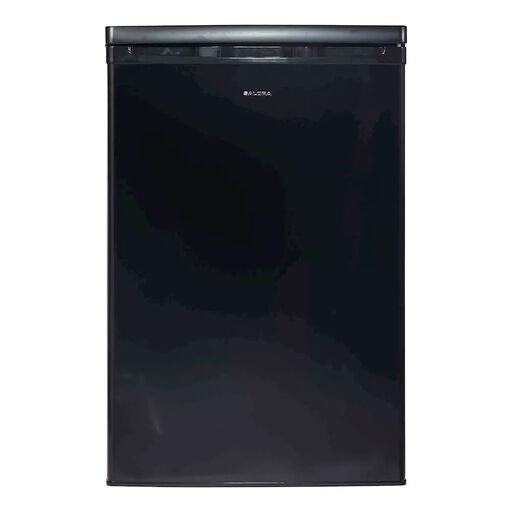 No image available
This model is an option if you want to store other food alongside rhubarb in separate drawers.
Capacity: 91 litres. Freezing capacity: 4.4 kg per 24 hours. Stated energy consumption: 166 kWh per year. Product information lists an E energy rating, four transparent drawers and dimensions of 85 × 55 × 58 cm. This model doesn’t have No Frost, so you may need to defrost it manually. The product name mentions a reversible door and adjustable thermostat.
 No image available
A compact model with three drawers for keeping small portions separate.
Capacity: 60 litres. Freezing capacity: 6 kg per 24 hours. Stated energy consumption: 195 kWh per year. Product information lists three drawers, dimensions of 472 × 446 × 845 mm and a temperature range of −12 to −20 °C. This model doesn’t have No Frost, so you may need to defrost it manually.
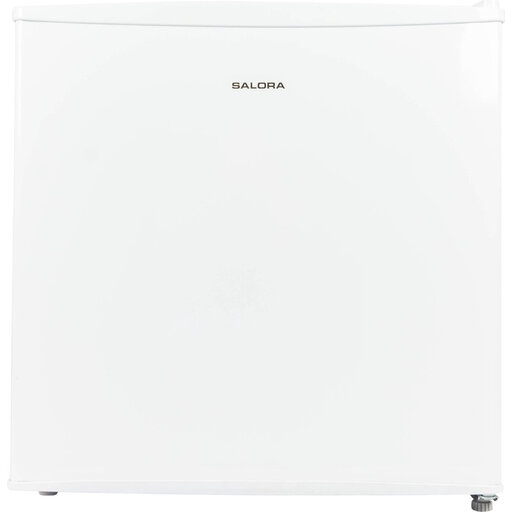 No image available
Its limited capacity suits anyone looking for just a little extra freezer space.
Capacity: 31 litres. Freezing capacity: 2 kg per 24 hours. Product information lists two compartments and dimensions of 492 × 472 × 450 mm. Bear the stated capacity in mind if you want to freeze more than 2 kg at a time.
No, you don’t. Voedingscentrum says rhubarb can be frozen without blanching it.
Voedingscentrum recommends keeping raw rhubarb in the freezer for up to one year; after that, its quality may deteriorate. Voedingscentrum recommends −18 °C as the ideal freezer temperature.
Divide the rhubarb into portions and write the contents and freezing date on the packaging. Voedingscentrum suggests resealable containers and stickers as practical options.
No, don’t assume so. Check the permitted ambient temperature for the exact model against the temperatures at your intended location; Consumentenbond points out that some freezers may not work properly in surroundings that are too cold or too warm.
According to Rijksoverheid, there is no fixed statutory two-year guarantee period. If there’s a problem with a product, contact the seller.