
Vandaag of morgen in huis

Kwaliteit gegarandeerd

Welkomstaanbiedingen ontgrendelen: GRATIS bezorging | Tot 80% korting | Gratis 30 dagen JoyPlus-proefperiode
Download de app
A reusable lunchbox seems simple until sauce leaks into your bag, a lid is difficult to close or the contents do not suit your mealtime. For children, students, employees and families who prepare meals in advance, the choice is therefore not just about colour or shape. The material, closure, size and care requirements determine whether a lunchbox remains practical for everyday use.
Pay particular attention to these three common pitfalls:
First, consider how much food you usually take with you. A small lunchbox with compartments works well for fruit, bread, vegetables and snacks. For a hot meal or a larger portion, you will need more capacity.
A bento lunchbox divides food into fixed compartments. This is useful when you want to keep different ingredients separate. A lunchbox with one large compartment is more practical for dishes that you mix together, such as couscous, pasta or salad. As well as the capacity, check the external dimensions. A container may have a suitable volume but still not fit in your rucksack or lunch bag.
Look for a clear capacity stated in millilitres or litres in the product information. If the stated capacity does not match the product name or dimensions, request further information before placing your order.
For yoghurt, dressing, juicy fruit or leftovers, a well-fitting lid and sealing ring are important. A leak-proof lunchbox is only a safe choice if the closure and seal are clearly described. Look for:
A double closure can be practical for everyday transport, but also check whether children can open and close the clips independently. A mechanism that is difficult to use could mean that the lunchbox is not sealed properly.
Stainless steel lunchboxes are sturdy and generally less likely to absorb odours or stains than some plastic containers. They are often suitable for lunches, snacks and meal prep. However, always check whether the lid is made from plastic or silicone and whether that component is dishwasher-safe.
Glass food storage containers are useful at home for leftovers and portioning. Borosilicate glass is heat-resistant according to the product specification, but glass is still heavier and more fragile than plastic or steel. For children taking lunch to school, weight is therefore a practical consideration.
Check the following symbols or information before buying:
Wash a new lunchbox according to the instructions before using it for the first time. Regularly remove a loose silicone ring from the lid to clean all the components.
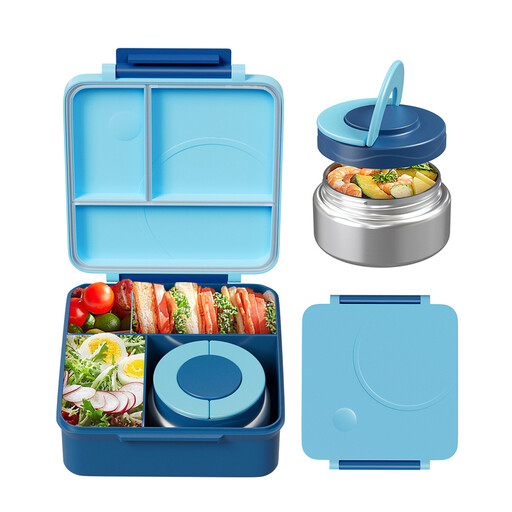
Why it suits this profile: The divided layout is practical for bread, fruit and snacks without having to buy a complete set of food containers straight away.
The product name specifies a divided design and a single closure. Before buying, check the exact compartment layout and whether liquid food is recommended.
Divided lunchbox with a capacity of 54 oz stated in the product name and a compact design for portions and snacks.
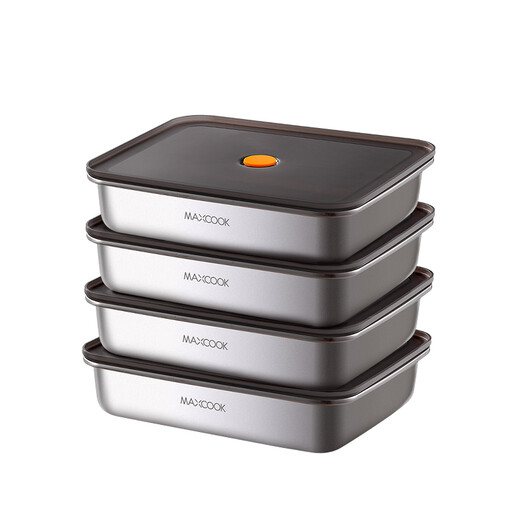
Why it suits this profile: Four identical 1600 ml containers are ideal for families storing leftovers or preparing several meals at once.
According to the product description, the containers are suitable for the dishwasher and freezer. Do not use them in the microwave and check the lids before transport.
316L stainless steel, four 1600 ml containers, lids included, and dishwasher- and freezer-safe according to the listing.

Why it suits this profile: The combination of 600 ml, 1100 ml and 2200 ml is useful for snacks, individual lunches and larger portions at home.
The different sizes reduce the risk of using a container that is too large or too small. According to the product information, they are dishwasher- and freezer-safe; microwave use is not permitted.
Set of three sizes: 600 ml, 1100 ml and 2200 ml. According to the listing, the containers come with matching lids and are suitable for meal prep.
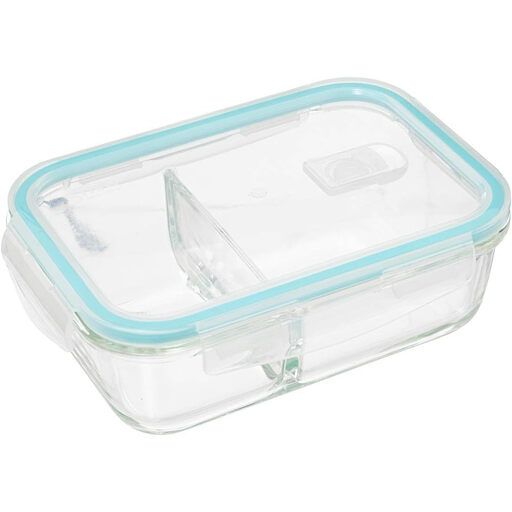
Why it suits this profile: The compartmentalised glass storage container is suitable for portioning and storing food in the kitchen, where convenience and visibility matter more than weight.
The listing mentions borosilicate glass, a silicone closure and dishwasher safety. The stated capacity does not appear to correspond fully with the product name; check this before ordering.
Dimensions of 21,5 × 15,3 × 7,5 cm, compartments and dishwasher safety according to the product information. The listing states that a minimum two-year statutory guarantee applies.
We have put together a complete, up-to-date list of products that fully meet these strict selection criteria and the applicable European safety regulations.
Do not fill a lunchbox right to the brim. Some space is particularly important for sauces, fruit and food that may expand. Allow hot dishes to cool before closing the lid, unless the manufacturer explicitly recommends another method. This helps to limit condensation and pressure inside the container.
For meal prep, meal prep containers in matching sizes are useful because they are stackable and make portion sizes predictable. For families, a combination of small and large food containers with lids may be more practical than several identical lunchboxes.
Check the seal after every wash. A silicone ring that has twisted, stretched or not been positioned correctly can affect the closure. Replace a lunchbox when the lid no longer closes, the seal is damaged or the material shows cracks.
For school, a lightweight model with a well-organised layout is usually practical. A bento lunchbox with compartments works well for separate snacks and bread. For work, a larger lunchbox or stainless steel food container may be better suited to a complete meal. Always check the dimensions and weight.
This varies by product. According to the product information, some stainless steel food containers are suitable for freezer use. Leave room for expansion and check whether the lid is suitable as well. Stainless steel containers must not be used in the microwave.
Its lifespan depends on the material, closure and care. A metal or glass container can remain usable for a long time, while a silicone seal may show signs of wear sooner. Wash the lunchbox according to the instructions, avoid deep scratches and replace loose components when they no longer seal properly.
