
Livraison le jour même et le lendemain

Qualité garantie

Débloquez vos offres de bienvenue: Livraison GRATUITE | Jusqu'à -80 % | 30 jours d'essai gratuits à JoyPlus
Téléchargez l'application
A reusable lunchbox may seem straightforward to buy, but small design choices determine whether you enjoy using it every day. For example, a lunchbox described as leak-proof on the product page may only close properly when the silicone seal is fitted correctly. Likewise, having lots of compartments may seem useful, while leaving little room for a normal meal.
For work, school, train journeys or days out, these are the three main pitfalls to consider:
With the right checks beforehand, you can choose a bento lunchbox, stainless steel lunchbox or insulated food container that better suits your daily routine.
The material affects the weight, durability and maintenance requirements.
The material name alone does not tell you everything. Also look at the fastening, seams and included care instructions.
Do not just consider the total capacity; think about the shape too. A tall, narrow container may fit better in a rucksack, while a rectangular lunchbox with compartments offers a clearer layout for bread, fruit and snacks.
Useful guidelines:
When planning meals, also consider how easily the containers stack. Meal-prep containers should not only have enough capacity; they should also fit efficiently in the fridge.
A leak-proof lunchbox usually has a well-fitting lid, fastening clips and a silicone rim. You should interpret “leak-proof” in practical terms: according to a manufacturer’s product description, a well-sealed lid construction can help prevent spills, but some models still advise against turning the lunchbox upside down or carrying it on its side.
Therefore, check:
An ordinary lunchbox is not always suitable for soup or hot meals. An insulated food container or thermal food container is usually the more logical choice. According to Maxcook’s product description, vacuum insulation helps keep hot dishes hot and cold dishes cold. The stated storage time of 4 to 6 hours is a product claim made by the brand and is not a general guarantee for every meal or ambient temperature.
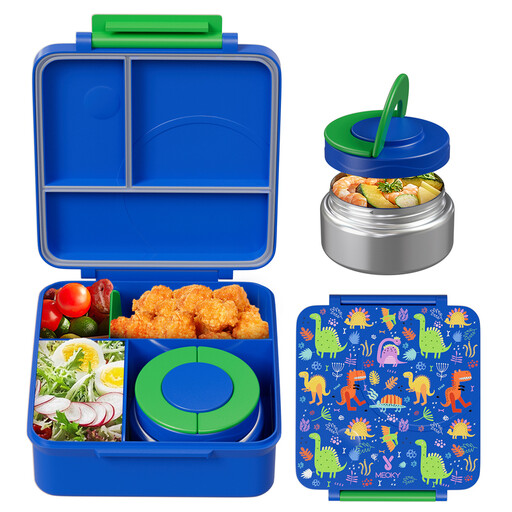
Why it suits this profile: The divided design is practical for a simple lunch with several components, without having to carry separate containers.
The compartments limit food shifting and make the contents easier to organise than one large open section.
Divided design and a single fastening; suitable as a lunchbox for work and school.

Why it suits this profile: If you want to take several small portions with you, the five compartments provide a clear layout in a metal food container.
The five compartments prevent dry foods and different snack items from coming into direct contact with one another.
316 stainless steel according to the product name and five separate compartments for varied lunches.

Why it suits this profile: Suitable for anyone who wants to take soup, pasta or a larger hot meal on the go instead of a dry lunch.
The wide opening makes filling and cleaning easier than with a narrow, bottle-shaped container. The manufacturer advises against turning the jar upside down or carrying it on its side.
1.4-litre capacity, 304 stainless steel and a wide opening; hand washing is recommended according to the product description.
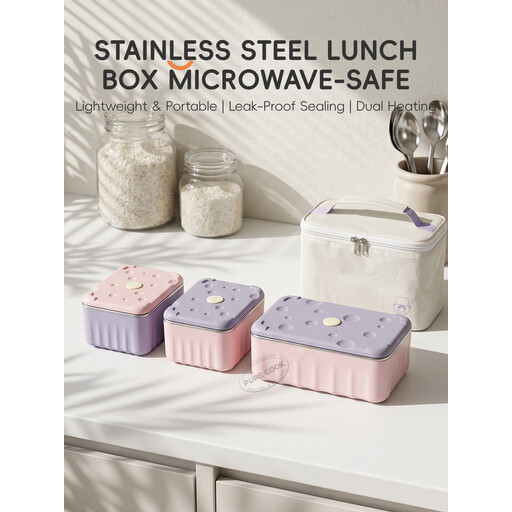
Why it suits this profile: A set of three containers is useful when preparing several portions at once or providing food for different family members.
Several separate sizes mean you do not have to carry an oversized container for every meal.
Set of three, 304 stainless steel according to the product name and an insulated bag included according to the product listing.
The lifespan of a reusable lunchbox depends heavily on how it is used. Rinse away food residue as soon as possible, leave the container open to dry and check the silicone seal regularly. A deformed rubber seal or damaged fastening clip can reduce its leak resistance.
For a thermal food container, preheating it with hot water or pre-cooling it with cold water is recommended preparation according to the product description. Do not use a dishwasher when the manufacturer specifies hand washing. For dry goods, airtight storage containers are more suitable than a lunchbox; for pasta, rice or snacks, food storage containers and meal-prep containers may be more practical.
We have put together a complete, up-to-date list of products that fully meet these strict selection criteria and the applicable European safety regulations.
Check that the lid is fully closed and that the silicone rim is sitting flat in the groove. Ideally, carry liquid dishes upright in a separate bag. For soup, a dedicated insulated food container is usually more suitable than an ordinary bento lunchbox.
A fixed lifespan cannot be guaranteed in advance. Stainless steel can last a long time with normal use, while sealing rubbers and clips may show signs of wear sooner. Replace the lunchbox when the lid no longer closes properly, the rubber seal splits or persistent odours and damage develop.
They can be practical when you prepare meals at home and want to be able to see the contents clearly. However, glass is heavier than plastic or stainless steel. Therefore, check the dimensions, weight and care instructions before buying a set for everyday transport.
