
Vandaag of morgen in huis

Kwaliteit gegarandeerd

Welkomstaanbiedingen ontgrendelen: GRATIS bezorging | Tot 80% korting | Gratis 30 dagen JoyPlus-proefperiode
Download de app
A reusable lunch box might seem straightforward, but small design choices often determine whether you’ll enjoy using it every day. A lid that doesn’t quite seal properly, compartments that aren’t deep enough, or a size that won’t fit in your bag can quickly make a lunch box impractical.
Marketing terms can also be confusing. “Leak-proof”, “durable” and “dishwasher-safe” don’t always mean the same thing from one product to the next. So always check the concrete product specifications and usage instructions before you order.
A lunch box with a single simple closure can work perfectly well for dry items such as bread, fruit or crackers. For yoghurt, sauce or chopped vegetables, a well-fitting seal is more important. Pay attention to locking clips, a silicone sealing ring and the instruction to transport the box upright.
A claim about leak resistance is based on the brand’s product description. That doesn’t automatically mean the box will stay completely sealed at every angle or with every liquid dish. So test a new box at home with water first before you put it in a full work bag or school bag.
A bento lunch box or lunch box with compartments helps keep different dishes separate. However, fixed, small compartments are less flexible when you want to take a large salad, leftover pasta or a sandwich.
Don’t just look at the number of compartments, but also at the layout and total capacity. A roomy single box can be more convenient for a full meal, while several small meal prep containers are better suited to portions you prepare in advance.
Stainless steel generally absorbs fewer odours and stains than some plastic varieties. However, not every stainless steel lunch box is suitable for the microwave. With the Maxcook 316L containers, for example, it is explicitly stated that use in the microwave is not permitted.
Also check whether the lid, silicone ring and locking mechanisms are dishwasher-safe. Sometimes only the container can go in the dishwasher and the lid must be cleaned by hand.
For a lunch box for work and school, the right capacity depends on your portion size and bag. A box of around 500 to 800 ml can be suitable for a light lunch. If you’re taking a full meal, snacks and fruit, you’ll often need more space or several food storage containers with lids.
A bento layout is practical when you want to keep different components separate. For meal prep, a set with multiple sizes is often more flexible than one large container. Also check whether the dimensions fit in your rucksack, bike bag or cool lunch bag.
A leak-proof lunch box needs more than just a firm click. Check whether the product information mentions a silicone seal, lockable clips or a snug-fitting lid. With a thermal food jar, it’s especially important that the lid seals properly and that you transport the jar according to the instructions.
According to the product description of the Maxcook insulated food containers, the food jars are designed with a vacuum insulation layer, wide opening and leak-resistant closure. The same description advises not to transport the jar upside down or tilted.
Many products in this selection are made from 304 or 316 stainless steel. The brands’ product descriptions link 316 stainless steel to corrosion resistance and durability. This is a material specification from the manufacturer, not a guarantee that a product will remain undamaged under all conditions.
Also pay attention to practical instructions:
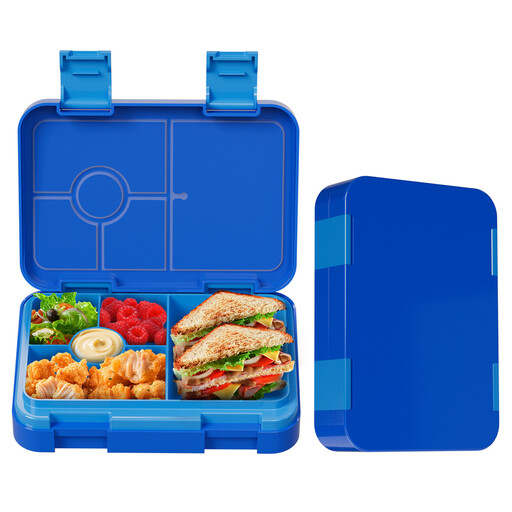
Why this fits the profile: The five compartments offer a clear layout for bread, fruit, snacks and side dishes. The double closure is practical for daily use at school or the office.
The fixed compartments prevent small snacks from sliding all over the box. Do check before purchase whether the dimensions fit your bag.
Five compartments and double latches according to the product name; suitable for a varied lunch without separate small containers.

Why this fits the profile: This set is aimed at meal prep, storing leftovers and larger portions. The four rectangular containers each have a capacity of 1,600 ml.
The set prevents reliance on one small container. However, note that according to the product information, the containers are not suitable for the microwave.
Four containers of 1,600 ml; according to the product description, dishwasher- and freezer-safe, with well-fitting lids.

Why this fits the profile: This insulated food container with a 1.5-litre capacity is designed for hot or cold meals on the go. The included lunch bag makes carrying it to work, school or a short trip easier.
The wide opening makes filling and cleaning easier than with a narrow jar. Preheat or cool the jar beforehand according to the product instructions and transport it upright.
1.5-litre capacity, 316 stainless steel, vacuum insulation and an included carry bag according to the product description.
We’ve put together a full, up-to-date list of products that fully meet these strict selection criteria and comply with current European safety regulations.
Wash the box as soon as possible after use, especially after sauces, dairy or hot meals. Check the sealing ring regularly for food residue and replace parts when the closure no longer fits properly. Do not use metal containers in the microwave and always follow the specific maintenance instructions from the manufacturer.
If you mainly take bread and snacks, a bento lunch box will serve you well. For soup, curry or porridge, a thermal food jar makes more sense. And for preparing several days in advance, meal prep containers or a set of stainless steel food storage containers with lids are more practical.
That depends on your meal occasion and portion size. For a small lunch, a compact model is often sufficient. For a full meal with snacks, multiple compartments or a capacity from around 1 litre is more practical. Always check the external dimensions, not just the volume.
Don’t overfill the box, check that the silicone ring is lying flat and close all clips fully. Preferably transport liquid dishes upright. A product description that says “leak-resistant” gives an indication, but the actual performance also depends on use, maintenance and the condition of the seal.
Stainless steel withstands a lot of daily use, but the lifespan depends on the closure, lids and maintenance. Avoid sharp objects inside, do not use a microwave and dry the parts thoroughly. This will minimise wear and odours.
